

* Item pictured for illustrative purposes only, actual item not pictured. See ‘Notes’ next to grade for included items.
Panasonic Lumix GH5 Mirrorless MFT (Micro Four Thirds) Camera Body, Black, with V-Log L Upgrade {20.3MP}
-
$625.00
Select Payment Method

-
KEH Certified™ pre-owned gear, expertly inspected†
-
All rental gear is between Excellent and Like New Minus condition
-
Standard accessories included
Panasonic GH5: the Micro Four Thirds body built around video.
The GH5 arrived in 2017 as a definitive statement about what a mirrorless camera could do for working videographers, and its spec sheet still holds up. Internal 10-bit 4:2:2 recording at up to 4K UHD 60p or Cinema 4K (4096x2160) at 24p, with V-Log L included, gives colorists genuine latitude in post. Simultaneously, the full-size HDMI port outputs 4:2:2 10-bit to an external recorder while the camera writes to card, both UHS-II slots, running at full speed, handle the data load without bottlenecking. The 3.5mm mic and headphone ports are standard, and the hotshoe accepts the optional DMW-XLR1 adapter for professional audio without a cage or external box.
For stills, the 20MP Digital Live MOS sensor pairs with 5-axis in-body stabilization and Dual IS 2 support, giving handheld shooters meaningful correction across any lens mounted to the body. The 225-point DFD autofocus system tracks moving subjects at 12 fps, and the 3,680,000-dot electronic viewfinder at 0.76x magnification (35mm equivalent) delivers one of the clearest EVF experiences in the Micro Four Thirds system. The 1/8000 sec mechanical shutter and 1/16000 sec electronic ceiling cover fast-light situations, while the fully articulated 3.2-inch touchscreen makes low-angle and on-camera framing genuinely workable.
At 725g in a weather-sealed magnesium body, the GH5 is a proven production tool that punches considerably above the weight class its sensor size implies.
Who It's For
Documentary and run-and-gun filmmakers get 4K 60p, 10-bit 4:2:2 internal recording, and V-Log L without external recorders or extra hardware. Event photographers working in mixed conditions benefit from the weather-sealed body, 12 fps burst, and low-light AF down to -4EV. Hybrid shooters, photographers who also deliver video to clients, gain a fully articulated touchscreen, dual UHS-II card slots for simultaneous backup recording, and 5-axis IBIS that stabilizes any lens on the mount. Wildlife and sports photographers using long telephoto glass in the Micro Four Thirds ecosystem get real-world tracking at 9 fps with continuous AF and a 2x focal length multiplier that extends reach without adding mass.
Key Features
- 20MP Digital Live MOS sensor with Four Thirds mount
- 10-bit 4:2:2 video recording at 4K UHD 60p or Cinema 4K 24p internally
- 5-axis in-body stabilization with Dual IS 2 support for any lens
- 225-point DFD autofocus with four customizable AF profiles and 12 fps burst
- 3,680,000-dot electronic viewfinder at 0.76x magnification with 1280×960 resolution
- Dual UHS-II SD card slots with simultaneous 10-bit 4:2:2 HDMI output and card recording
- Fully articulated 3.2-inch touchscreen LCD with 1.62MP resolution
- Weather-sealed magnesium body at 725g with V-Log L color grading included
FAQ
- Does the GH5 still hold up for 4K video in 2025?
- Yes. Internal 10-bit 4:2:2 recording at up to 4K UHD 60p or Cinema 4K 24p with V-Log L included remains genuinely usable for professional colorwork. The full-size HDMI port outputs the same specs simultaneously while writing to card, and both UHS-II slots handle the data load without bottleneck.
- What's the autofocus like for video and stills?
- The 225-point DFD contrast-based system tracks moving subjects at 12 fps for stills with four customizable AF profiles for different motion types. For video, it uses Depth-by-Defocus technology to predict focus direction-not phase-detect, but the implementation is mature enough that it handles both static pulls and continuous tracking without obvious hunting on modern lenses.
- Can you use the GH5 handheld without a stabilizer?
- The 5-axis in-body stabilization plus Dual IS 2 support (when paired with compatible lenses) gives genuine handheld correction. Walking, low-angle work, and even slow pans are workable without external stabilization, though you're still constrained by physics at longer focal lengths and wider apertures.
- Is the electronic viewfinder actually good?
- The 3,680,000-dot 0.76x EVF at 1280×960 resolution is one of the clearest you'll find in Micro Four Thirds. It resolves fine detail, avoids moire, and the magnification is large enough for comfortable framing. Lag during high-speed continuous shooting is present but manageable.
- Do you need external audio gear?
- The 3.5mm mic and headphone ports handle standard wireless systems and lavaliers without additional boxes. If you need XLR inputs, the optional DMW-XLR1 hot-shoe adapter provides two balanced channels and mounts direct to the camera without a cage.
- What's the practical burst rate for RAW?
- 12 fps sustained with both UHS-II card slots running at full speed. Buffer depth is roughly 65 RAW frames before write speed becomes the limiting factor-adequate for most work, though not a machine-gun experience.
- Is the articulated screen actually useful or just a gimmick?
- Fully articulated means low-angle framing and on-camera work without compromise. The tradeoff is two steps to open versus one for tilt-only, and connected cables (HDMI, USB) interfere when angled upward. Worth it if you shoot much video or portrait orientation.
- How does 6K Photo mode work in practice?
- The camera records 6K video at 30 fps, then lets you extract 18MP JPEG stills in playback. Three modes: Burst (records while holding shutter), Burst S/S (press to start/stop), and Pre-burst (keeps one second of rolling buffer before and after your button press). Pre-burst is the most useful for decisive moments. Post Focus mode lets you refocus after capture by tapping the screen.
| Specification | Value |
|---|---|
| Sensor | Four Thirds (17.3 x 13 mm) |
| Resolution | 20.0 MP |
| Mount | Micro Four Thirds |
| AF Points | 225 |
| ISO Range | Auto, 200-25,600 (expandable to 100-25,600) |
| Burst Rate | 12.0 |
| Shutter Speed | 60 sec |
| Video | 4,096 x 2,160 (4K DCI, 24p) / 3,840 x 2,160 (4K UHD, 60p) |
| Stabilization | Sensor-shift, 5-axis; supports Dual IS 2 |
| Viewfinder | Electronic |
| Card Slots | Dual SD/SDHC/SDXC slots (UHS-II compatible) |
| Connectivity | Built-in 802.11b/g/n/ac with Bluetooth 4.2 LE |
| Battery | DMW-BLF19 lithium-ion battery & charger |
| ISO Boosted Minimum | 100 |
| Shutter Speed Max Electronic | 1/16,000 sec |
| Image Ratios | 1:1, 4:3, 3:2, 16:9 |
| Uncompressed Format | RAW |
| JPEG Quality Levels | Fine, Standard |
| Digital Zoom | Yes (2x, 4x) |
| Manual Focus | Yes |
| Screen Size | 3.2" |
| Screen Dots | 1,620,000 |
| Screen Type | TFT LCD |
| Articulated LCD | Fully articulated |
| External Flash | Yes (via hot shoe or flash sync port) |
| Flash Modes | Auto, Auto/Red-Eye Reduction, Forced On, Forced On w/ Red-Eye Reduction, Slow Sync, Slow Sync w/ Red-Eye Reduction, Forced Off |
| Video Resolutions | 4096 x 2160 (24p), 3840 x 2160 (60p, 50p, 30p, 25p, 24p), 1920 x 1080 (60p, 50p, 30p, 25p, 24p) |
| HDMI Output | Yes (4:2:2 10-bit output up to 30p; 4:2:2 8-bit with internal recording at >30p 4K) |
| Microphone | Stereo |
| Speaker | Mono |
| Microphone Port | Yes |
| Headphone Port | Yes |
| USB | USB 3.2 Gen 1 (5 Gbit/s) |
| Remote Control | Yes (via cable release or smartphone) |
| Battery Life Cipa | 410 |
| Weight With Battery | 725 g (1.60 lb / 25.57 oz) |
| GPS | No |
| V Log L | Yes |
| Dimensions | 139 x 98 x 87 mm (5.47 x 3.86 x 3.43") |
This description was generated using AI based on KEH's internal product standards, product expertise, and knowing what customers care about most. While we strive for accuracy, details may vary by individual item.
| Brand Name | Panasonic |
|---|---|
| Flash System | Olympus/Panasonic TTL |
| Focus Type | Autofocus (lens motor) |
| Lens Mount | Micro Four Thirds |
| Memory Card Type | SD, SDHC, SDHC UHS-I, SDHC UHS-II, SDXC, SDXC UHS-I, SDXC UHS-II |
Learn what to expect from each condition, cosmetically. Images are representative of each grade and may not show the exact item you receive. All equipment is guaranteed to work as intended, unless otherwise noted. We also occasionally offer items that fall .
Exceptions
- New
- New in box complete with manufacturer's USA warranty. Not previously owned or used.
- Like New
- Essentially new with no signs of use. “Open box.” In manufacturer's packaging with original accessories and instructions. 180-day warranty.
- As Is
- Non-functional or damaged. Equipment will not work. Usable for parts. Not covered under KEH warranty and non-returnable.
Like New Minus
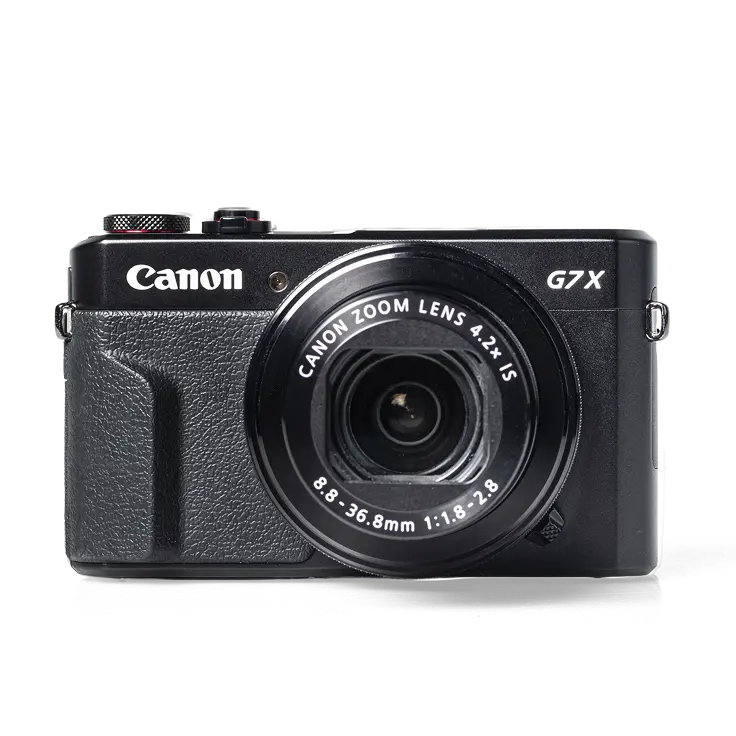
Like New Minus
Barely used with virtually no traces of wear. Only the closest inspections will reveal slight use. Lens glass could contain light dust or debris. Excellent picture quality. Accessories usually not included, unless noted in listing. 180-day warranty.
Excellent Plus
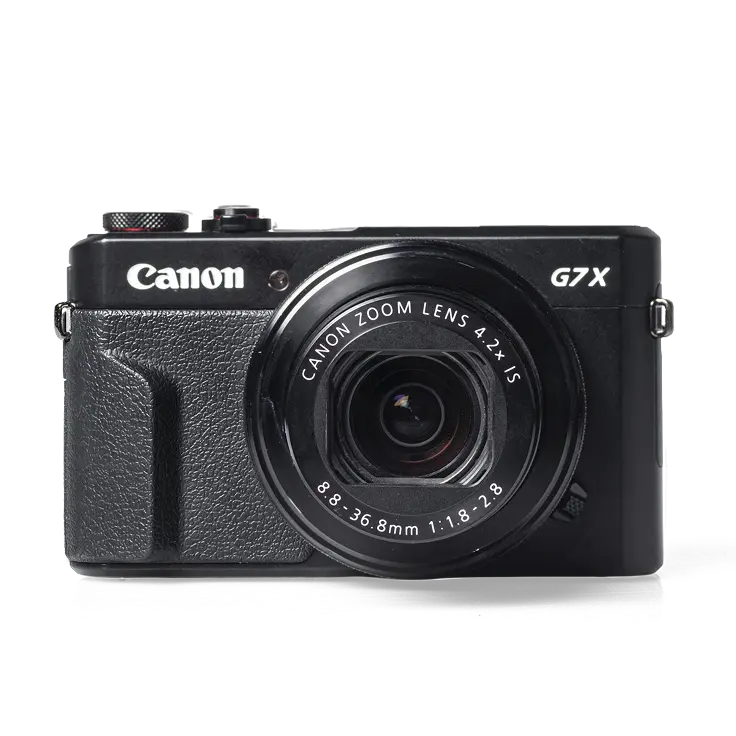
Excellent Plus
Lightly used with limited signs of wear. Exceptionally nice but may have slight wear on finish visible. Lens glass could contain light dust or debris. Excellent picture quality. Accessories usually not included, unless noted in listing. 180-day warranty.
Excellent
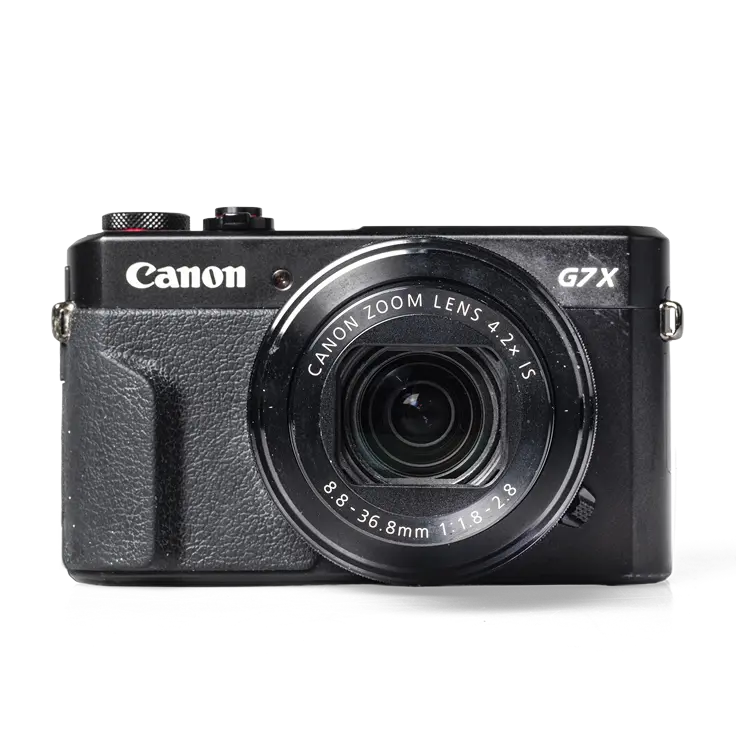
Excellent
Noticeably used with average signs of wear. Shows moderate wear for the age of the item, with the possibility of blemishes and/or minimal dings. Lens glass may have average dust and zoom/focus ring tension may have slight looseness or tightness overall, but will not affect picture quality. Accessories usually not included, unless noted in listing. 180-day warranty.
Bargain
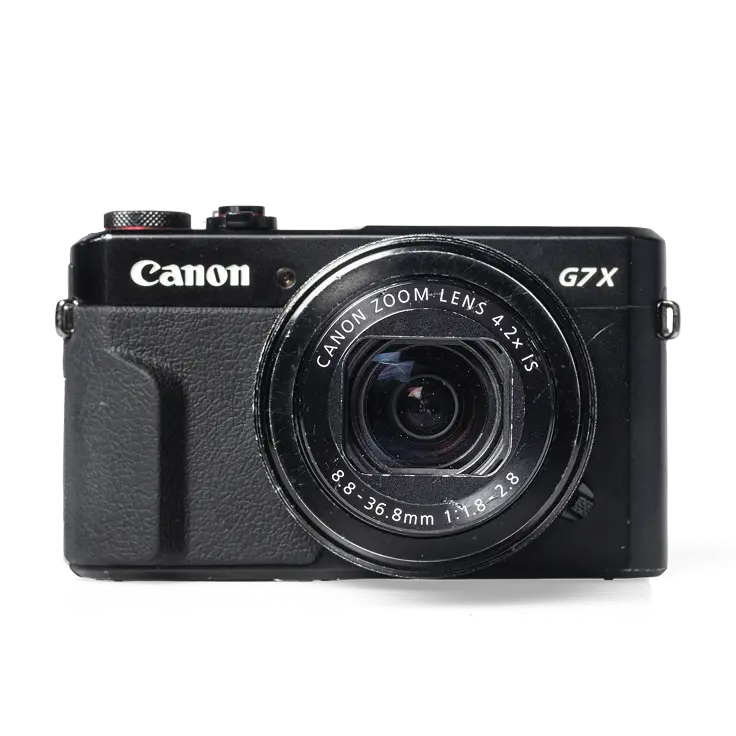
Bargain
Frequently used with above-average wear. May have dents, dings, or finish loss. Lens glass may have small scratches, dust, and blemishes, and zoom/focus ring tension may have moderate looseness or tightness overall, but should not affect picture quality. Accessories usually not included, unless noted in listing. 180-day warranty.
Ugly
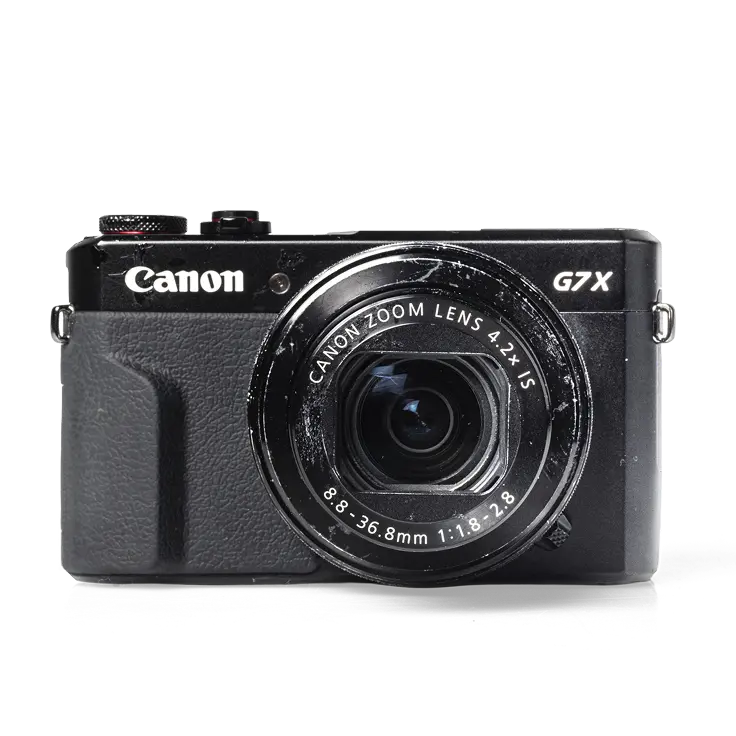
Ugly
Heavily used with extensive visible wear. Equipment is rough, with multiple impressions in the finish, excessive finish loss and brassing. Glass will have marks, fungus and/or heavy/cloudy haze which could affect picture quality. Accessories usually not included, unless noted in listing. Not covered under KEH warranty.