You
have no items in your shopping cart.
Best Film Cameras for Beginners: 35mm Picks to Start Shooting Film
April 07, 2026
1 min read

There’s a distinct, satisfying weight to the “thunk” of a mechanical shutter that a smartphone simply cannot replicate. While global estimates from Rise Above Research suggest we capture over a trillion digital images annually, few of those snapshots carry the same level of intention as a physical photograph.
This tactile experience defines the analog world. Instead of tapping a screen, you engage a mechanism that briefly opens a gate, allowing light to permanently capture a scene on a strip of film.
Unlike the bottomless storage of a cloud drive, the standard 35mm format limits you to 24 or 36 exposures per roll. That limitation becomes a creative advantage. You slow down, think more, and focus on capturing the right moment instead of shooting endless backups.
Getting started with film photography doesn’t require a darkroom or a big budget. The right camera is about reliability, simplicity, and a shooting experience that helps you learn. For many photographers, starting with pre-owned gear is also a smarter, more circular way to build a kit with top film cameras. It keeps quality cameras in use and delivers real value without compromise.
Choosing your first film camera often comes down to how much control you want.
Manual mode is like driving a stick shift. You control every setting. Aperture Priority is closer to cruise control. You choose the aperture, and the camera handles shutter speed.
Manual shooting gives you full control, but it takes time to learn. Semi-automatic modes make it easier to react quickly while still building your understanding of exposure. If you’re coming from digital, Aperture Priority is a natural transition. You can focus on composition while the camera helps you stay properly exposed.
Most manual cameras include a built-in light meter. Inside the viewfinder, a needle or simple LED system shows whether your settings are under, over, or correctly exposed. It turns exposure into something visual and intuitive.
Reliability also matters. Mechanical cameras rely on springs and gears, so they can still shoot without a battery. Electronic cameras depend on power, which means no battery, no photo. That difference is at the center of one of the most common beginner comparisons.
Are you a beginner looking for pro film inspiration? Check out this interview with Beatriz Valim.
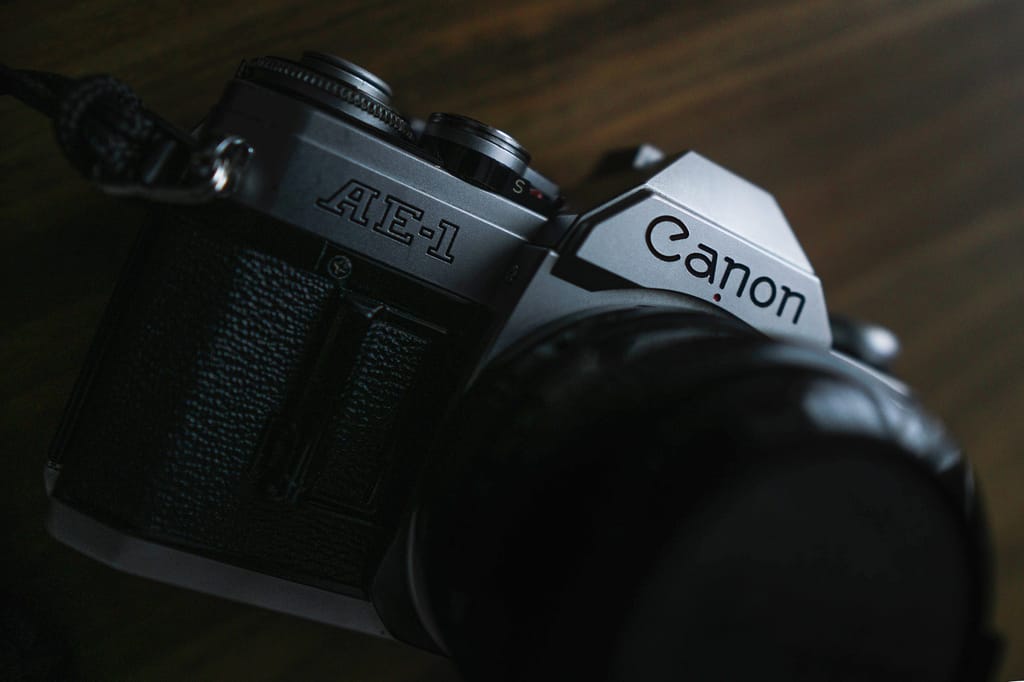
When people talk about the best film cameras for beginners, two models always come up: the Pentax K1000 and the Canon AE-1. Both deliver excellent image quality. The real difference is how they help you shoot.
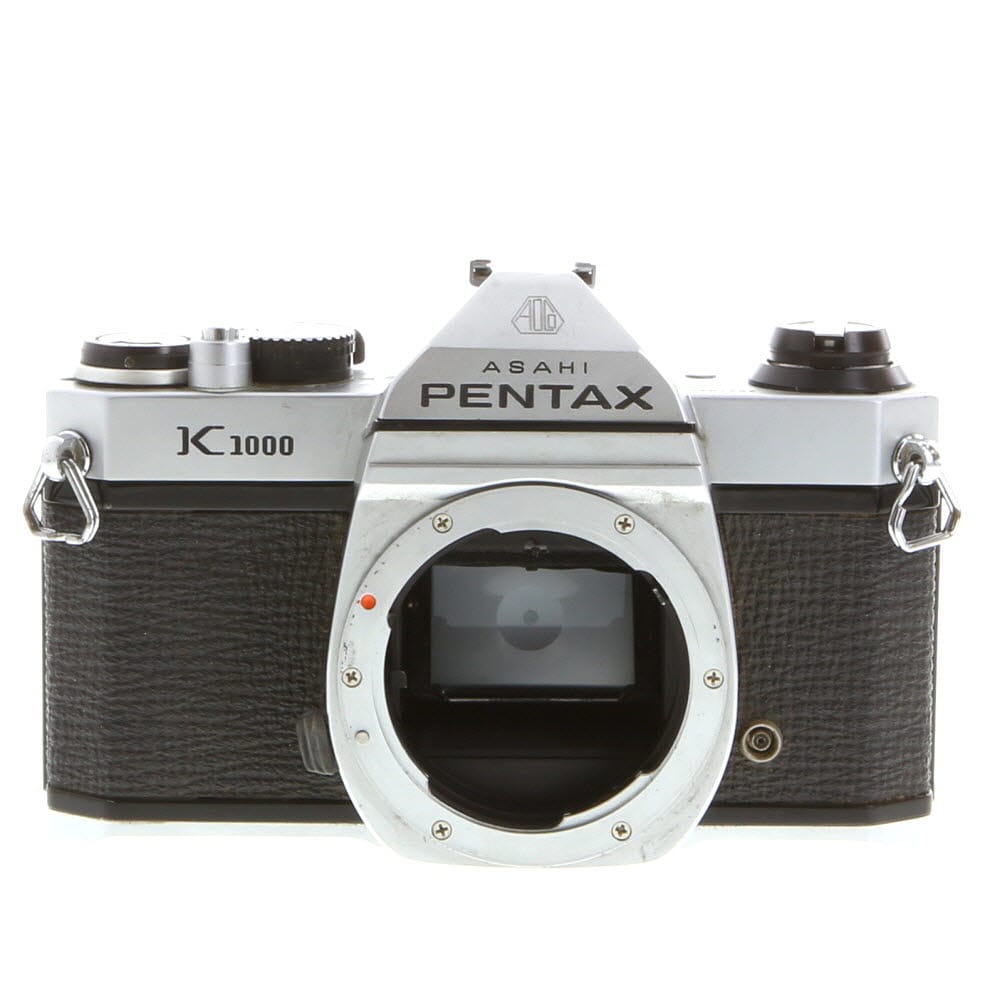
Pentax K1000
Fully mechanical and built to last. It works without a battery and uses widely available K-mount lenses. It’s simple, durable, and designed to teach you the fundamentals of photography.
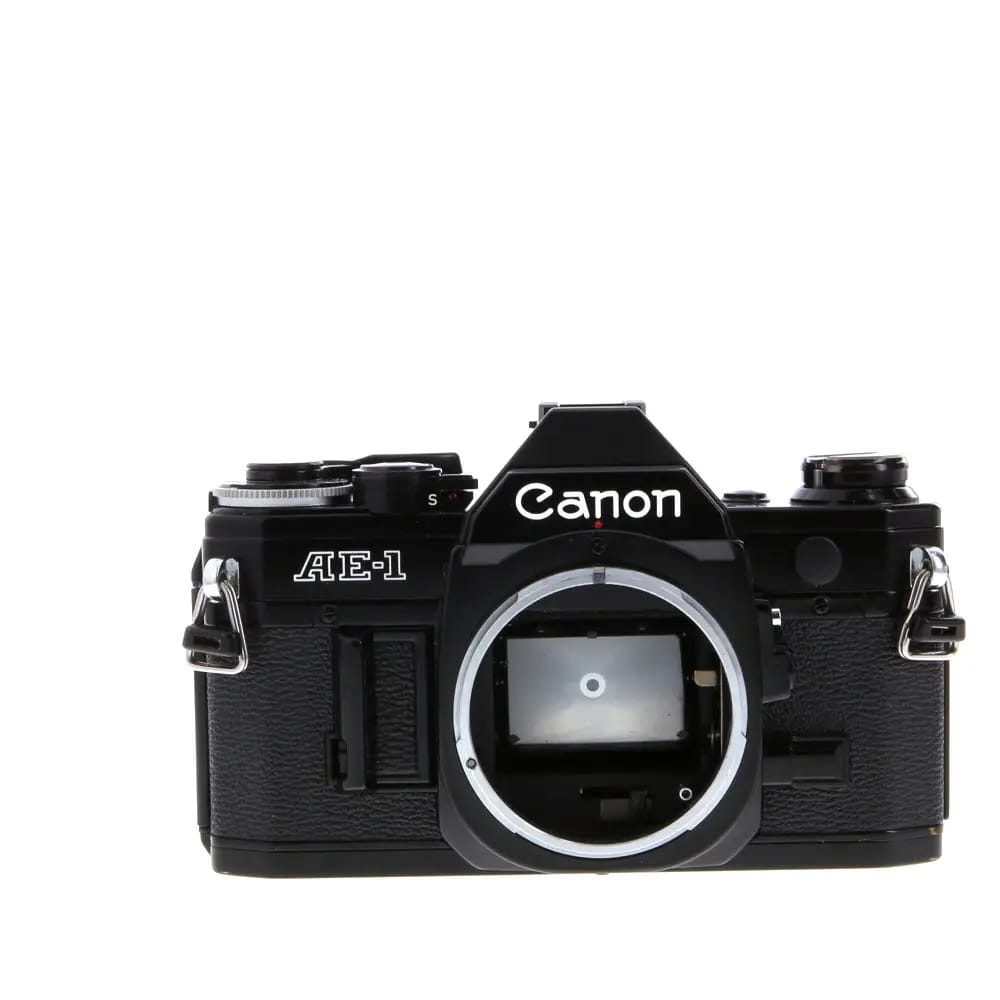
Canon AE-1
Electronic with Shutter Priority automation. It uses FD lenses and offers a more guided shooting experience. You get more assistance while still maintaining creative control.
Lens ecosystems matter too. Pentax K-mount lenses are easier to find at lower prices on the pre-owned market. Canon FD lenses are known for their quality, but they often come at a higher cost.
If the Pentax feels like a tank, the Olympus OM-1 feels like a precision instrument. It’s compact, comfortable, and offers a bright viewfinder that makes focusing easier.
The Nikon FE blends mechanical reliability with electronic convenience. Its Aperture Priority mode helps you focus on composition while still learning exposure. Cameras like these are a strong example of buying smarter. Investing in well-built, pre-owned gear can extend the life of equipment and support a more circular system where great cameras stay in use longer.
35mm not for you? Explore this blog about shooting medium-format 6×7 film.
Not everyone wants to think about settings while capturing a moment. Point-and-shoot film cameras handle the technical side for you.
Top film camera picks include:
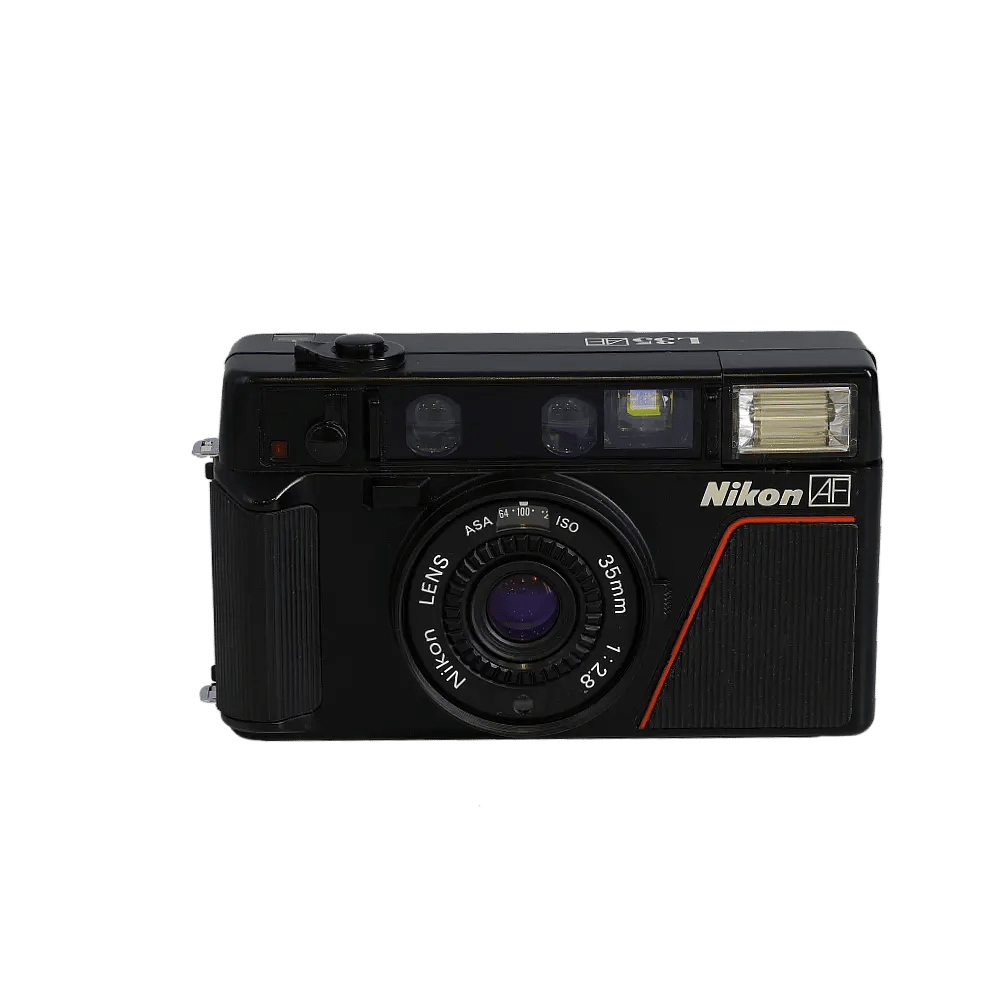
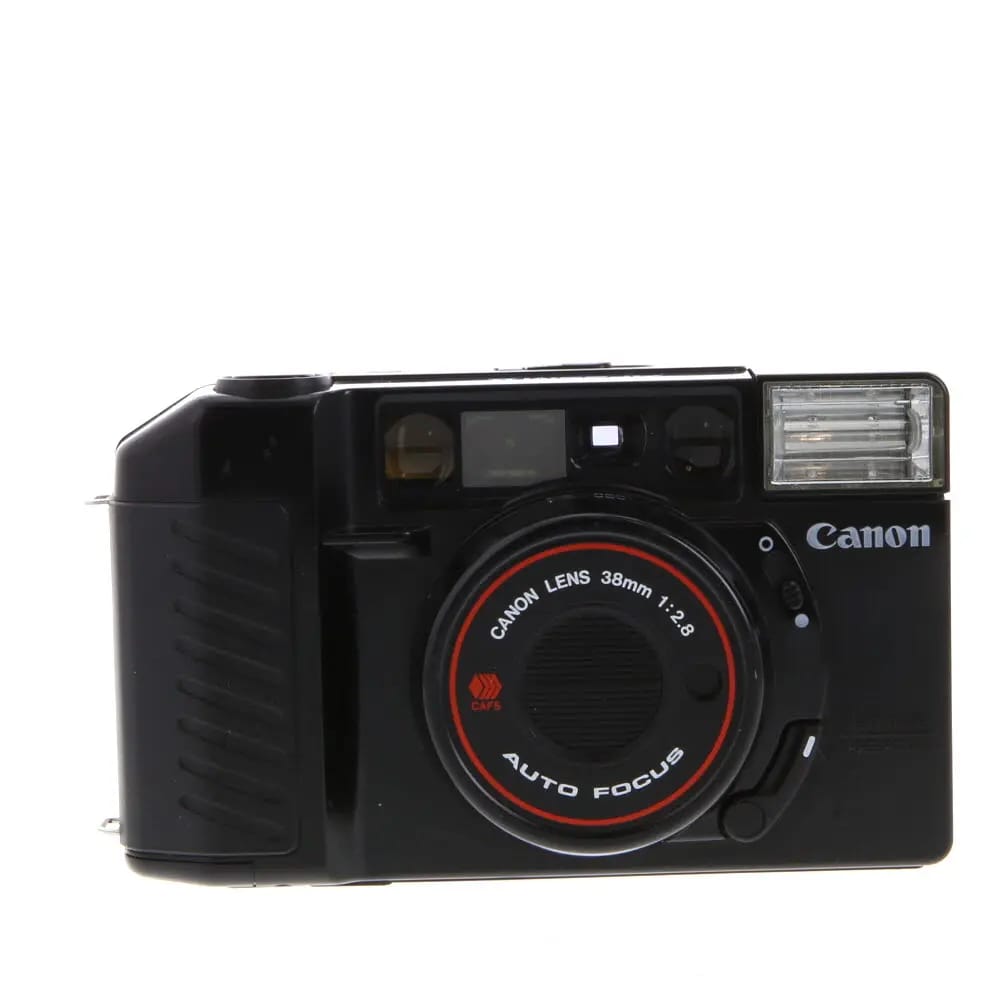
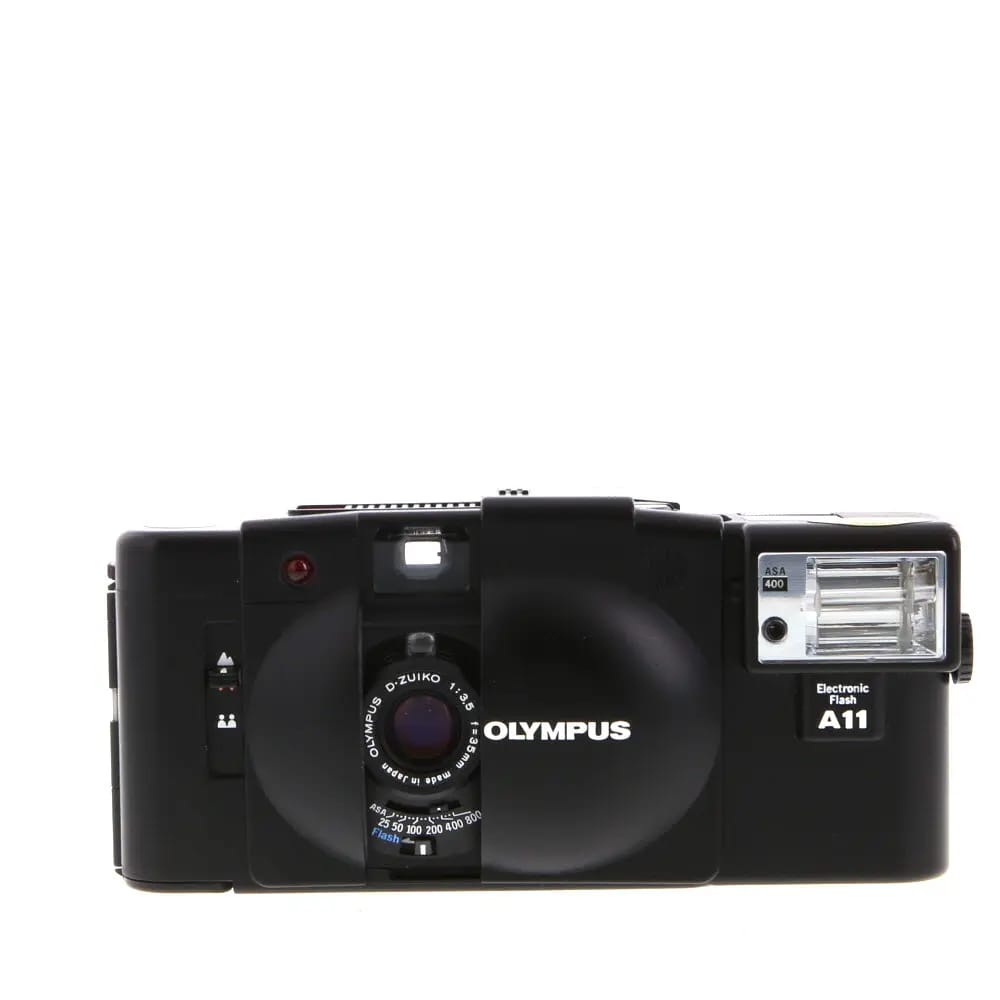
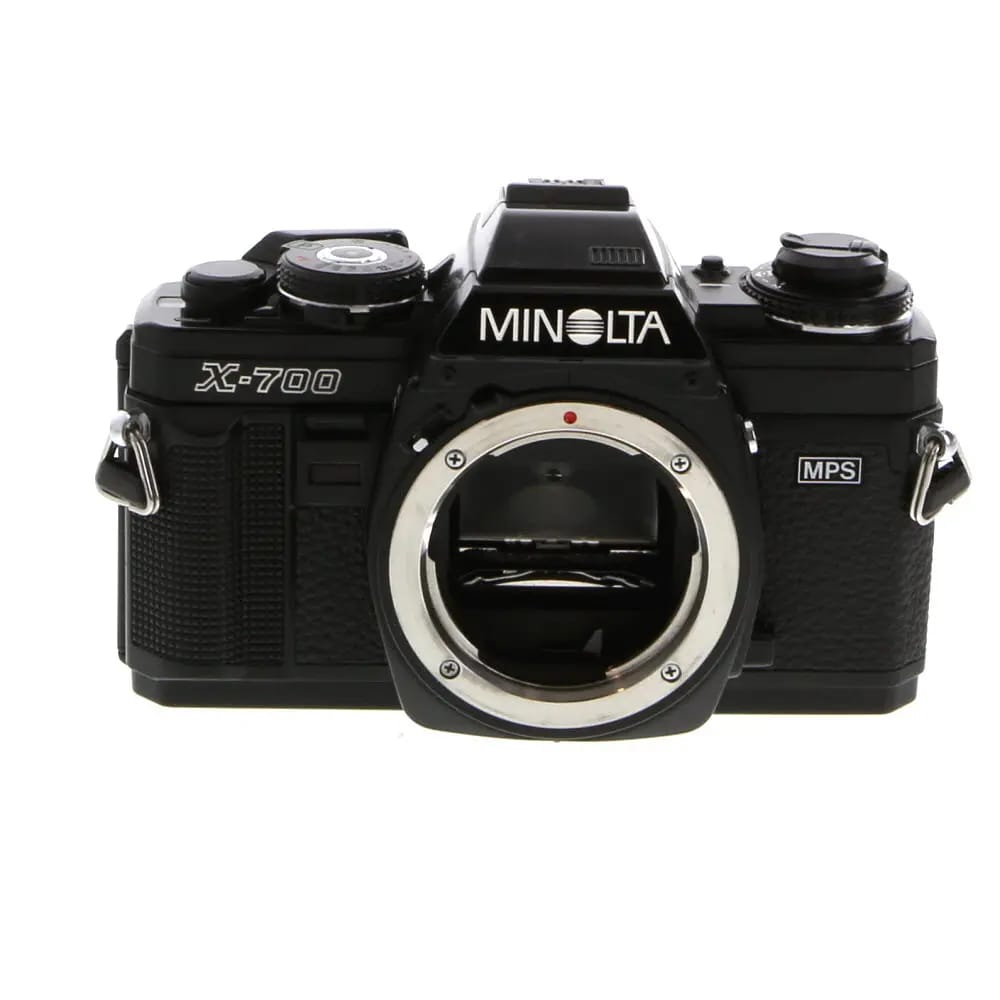
These cameras are perfect if you want the film look without the learning curve. They’re also widely available pre-owned, making them an easy entry point into film photography.
When buying a vintage camera, a quick check can save you frustration.
If you’d rather skip the guesswork, KEH Certified™ pre-owned cameras are inspected, graded, and ready to shoot. It’s a more reliable way to buy used gear and a practical way to participate in a circular camera economy.
Loading film is simple once you know the steps. Attach the film leader to the take-up spool, make sure the sprockets catch, and advance a couple of frames before closing the back.
Starting with a versatile film stock like Kodak Gold or Portra helps you get consistent results. Taking a moment to load carefully prevents common mistakes like blank rolls.
After shooting, you’ll send your film to a lab for development and scanning. Most labs offer standard and high-resolution scans.
JPEG scans are perfect for sharing online. Higher-resolution files give you more flexibility for printing. Always ask for your negatives back. They hold the most information and give you the option to rescan later.
Holding onto your negatives is also part of a more thoughtful, circular approach to photography. You’re preserving the original instead of relying on a single digital version.
Start simple. Pick a camera, load a roll of film, and document a day in your life. Treat each frame with intention.
Film slows you down in the best way. It helps you see differently, shoot with purpose, and value every image you make. Choosing the right camera is just the beginning. The real reward comes when you press the shutter and know that moment is captured for good.
With KEH Certified™ pre-owned cameras, you’re not just saving money. You’re choosing a smarter way to shoot that keeps great gear in use and supports a more circular future for photography.