You
have no items in your shopping cart.
How to Use DSLR Lenses on Mirrorless Cameras
October 10, 2026
1 min read

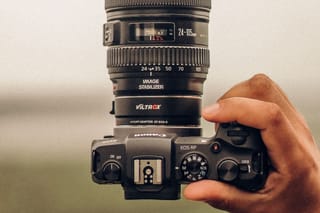
Moving to mirrorless doesn’t necessarily mean starting your lens collection over.
With the right adapter, many DSLR lenses can continue working on mirrorless bodies—with autofocus, aperture control, stabilization, and lens data intact. The key is knowing what your lens, camera, and adapter combination actually supports.
Yes, you can use DSLR lenses on mirrorless cameras in many cases, as long as the lens mount and camera mount are compatible with the correct adapter. Mirrorless bodies usually have a shorter flange distance than DSLRs, which creates physical room for an adapter between the camera and lens while still allowing the lens to focus properly. That is why adapting DSLR lenses is common on systems such as Sony E, Canon RF, Nikon Z, Fujifilm X, and Micro Four Thirds.
The adapter’s job is simple in concept: it positions the lens at the correct distance from the sensor and, in more advanced models, passes electronic signals between the lens and camera. A basic camera lens adapter may only provide a mechanical connection, while electronic mirrorless camera lens adapters can support aperture control, image stabilization, EXIF data, and sometimes autofocus.
Flange distance is the space between the lens mount and the camera sensor or film plane. DSLR systems were designed around a mirror box, so they typically need more space behind the lens. Mirrorless cameras lack a mirror mechanism, so the lens mount can sit closer to the sensor.
That shorter mirrorless design leaves room for lens adapters. For example, a DSLR lens can often be mounted on a mirrorless body with an adapter that recreates the spacing it expects. If the adapter is made accurately, the lens can focus to infinity and behave much like it did on its original camera body. This is also why adapting in the other direction is usually not practical. A lens made for a short mirrorless mount cannot easily be adapted to a DSLR body that requires a longer registration distance, at least not without optical correction that may reduce image quality.
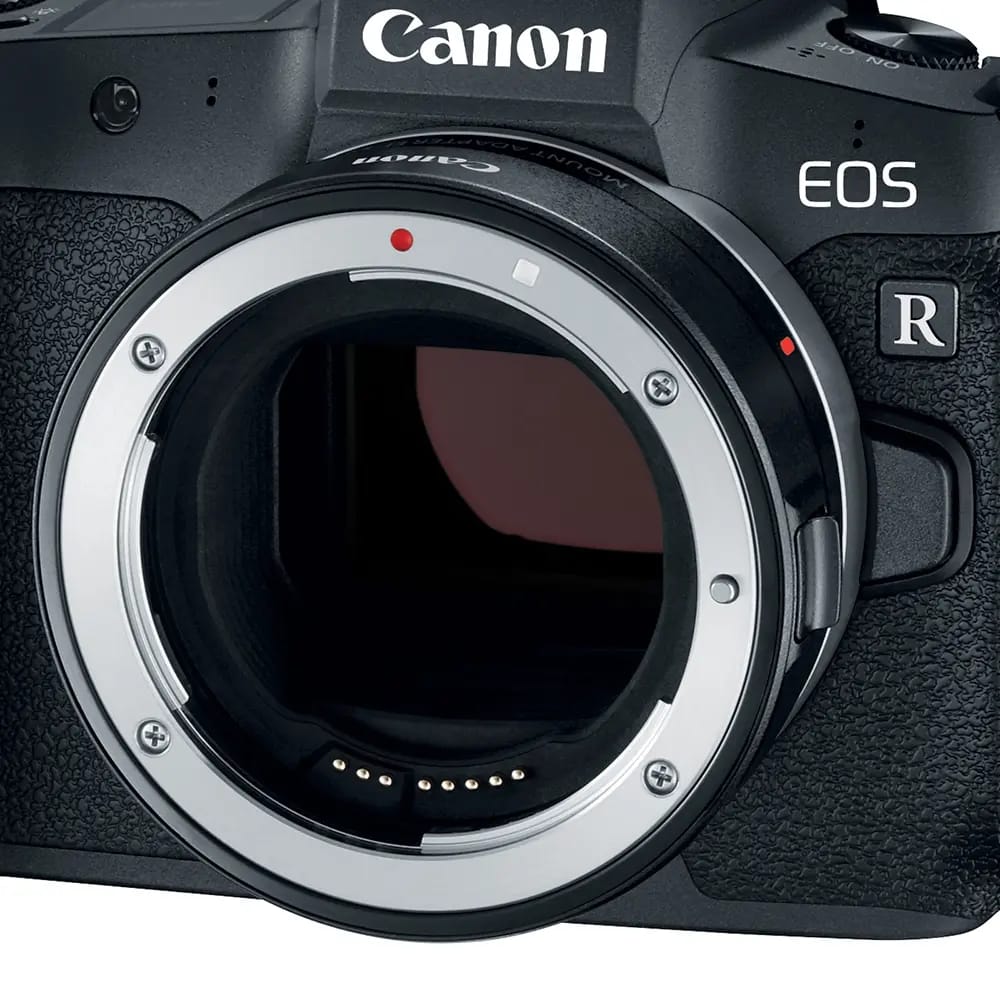
Not all lens adapters do the same thing, but the most important buying decision is simple: Do you need the adapter to communicate with your lens?
Choose a passive adapter when your lens has mechanical focus and aperture controls, and you’re comfortable focusing manually.
Passive adapters are essentially metal tubes with the appropriate mounts on either end. They contain no electronics, so the camera generally won’t communicate with the lens. That means you may lose autofocus, automatic aperture control, lens information in your image files, and electronic stabilization.
For fully manual lenses, however, that’s often all you need. Passive adapters are affordable, durable, and straightforward, and mirrorless features such as focus peaking and magnification make manual focusing easier.
Choose an electronic adapter when your lens depends on communication with the camera for functions you want to retain, such as aperture control, autofocus, stabilization, or lens information.
Electronic adapters contain contacts and circuitry that allow the lens and camera to communicate. Depending on the specific combination, an adapter may let you adjust aperture from the camera, transfer EXIF lens data, use stabilization, or retain autofocus.
Compatibility can vary significantly, so don’t assume that every electronic adapter will preserve every function. Performance depends on the specific lens, camera body, adapter, and firmware combination.
Focal reducers, sometimes called speed boosters, are a different category. They use optical elements to concentrate a lens’s image circle, giving the lens a wider effective field of view and allowing more light to reach the sensor. They’re particularly popular when adapting full-frame or APS-C DSLR lenses to smaller-sensor systems such as Micro Four Thirds.
Other specialty adapters can add functions such as tilt, shift, close-focus helicoids, or built-in filters. These are more specialized tools rather than the default choice for adapting a lens, but they can be useful for macro, landscape, architectural, video, or studio work.
The takeaway: Start by deciding whether you need electronic communication. If your lens is fully manual, a passive adapter may be all you need. If you want to retain electronic lens functions, look for an electronic adapter specifically compatible with your lens and camera.
Even a good adapter can introduce small annoyances. Most are manageable once you know what to expect.
| Problem | Likely Cause | Practical Fix |
| Lens will not focus to infinity | Adapter thickness is inaccurate | Try a better-quality adapter |
| Aperture will not change | Lens needs electronic control | Use an electronic adapter or a lens with an aperture ring |
| Camera will not take a photo | Body requires a no-lens release setting | Enable “release without lens” or similar setting |
| Autofocus hunts | Adapter communication is limited | Use manual focus or a native lens for demanding subjects |
| Dark corners appear | Lens image circle is too small | Use crop mode or choose a full-frame-compatible lens |
| Stabilization seems inaccurate | Camera does not know focal length | Enter focal length manually if the body allows it |
Fit and tolerances also matter. A very cheap adapter may wobble, bind, shed internal reflections, or place the lens slightly off-axis. You do not always need the most expensive option, but precision is important because the adapter becomes part of the optical path.
Every mirrorless system has its own mount, so the right adapter is specific to both the lens and the camera. A Canon EF lens to Sony E adapter is not the same as a Nikon F to Nikon Z adapter, even if both are designed for DSLR lenses on mirrorless bodies.
Common adapter categories include:
When shopping, search by both ends of the setup: the lens mount first, then the camera mount. For example, “Canon EF to Sony E,” “Nikon F to Fujifilm X,” or “M42 to Micro Four Thirds” is clearer than simply searching for lens adapters.
If you want a practical starting point, these are some of the most common DSLR-to-mirrorless combinations photographers use (and what to shop for on KEH):
And if you’re adapting because you already have great DSLR glass, here are a few examples of KEH-friendly workhorse lenses that can still shine on mirrorless:
Before adapting DSLR lenses, confirm the exact lens mount, the camera mount, aperture control method, autofocus expectations, and sensor coverage. Many problems come from buying an adapter that physically fits one version of a mount but does not support the functions your lens requires. A few minutes of checking can prevent frustration, loose fits, or missing controls.
Use this checklist before buying a DSLR to mirrorless adapter:
This is where DSLR lens compatibility becomes more than a yes-or-no question. The lens may mount successfully, but the experience can range from fully automated to completely manual.
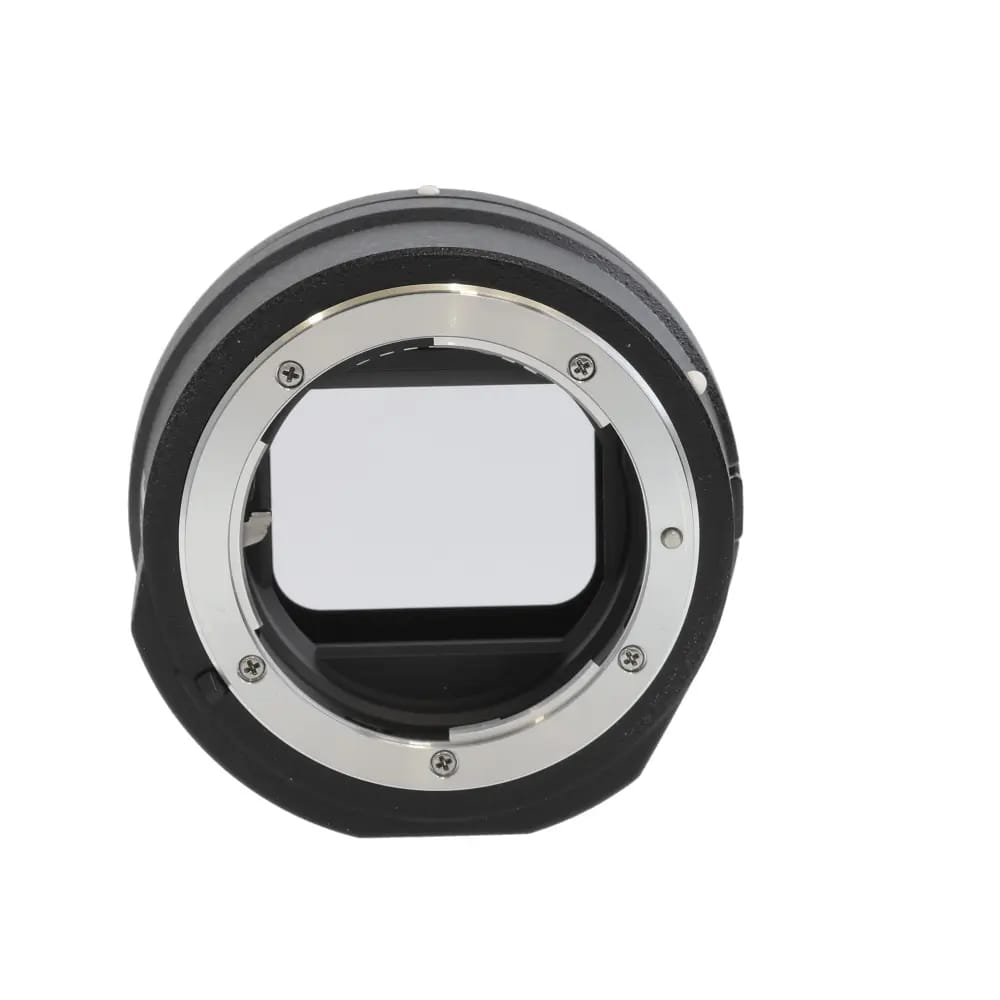
Every mirrorless system has its own mount, so the right adapter depends on both the lens and the camera body. A Canon EF lens to Sony E adapter, for example, is different from a Nikon F to Nikon Z adapter. When shopping, search by both ends of the setup: lens mount → camera mount. Searches like “Canon EF to Sony E” or “Nikon F to Nikon Z” will get you much closer to the right adapter than simply searching for “lens adapters.”
Here are some of the most common DSLR-to-mirrorless combinations:
If you’re adapting existing DSLR glass, you don’t necessarily need to replace your lenses when you move to mirrorless. Workhorse lenses such as the Canon EF 24-70mm f/2.8L II USM, Canon EF 70-200mm f/2.8L IS II USM, or Nikon AF-S NIKKOR 50mm f/1.8G can still be useful on a compatible mirrorless body. Just make sure you check the adapter’s compatibility with the specific lens and camera, particularly if you want autofocus, aperture control, or other electronic features.
Autofocus with adapted lenses can be excellent, acceptable, slow, inconsistent, or unavailable. Performance depends on how well the adapter translates lens communication and how the camera handles focusing with non-native lenses. Newer mirrorless bodies may offer better adapted-lens performance than older models, but never assume an adapted setup will perform identically to a native lens. Performance depends on the specific camera body, lens, adapter, and firmware combination.
Canon EF lenses on mirrorless bodies are a common example of strong adapter support, especially when used with Canon RF bodies via purpose-built adapters. EF lenses can also be adapted to some Sony E bodies with compatible electronic adapters, though performance varies by lens and adapter. Nikon F lenses on mirrorless Nikon Z cameras can work well with the appropriate Nikon Z adapter, but autofocus support may depend on the type of F-mount lens motor.
Exposure is usually easier than autofocus. If the camera can control the aperture electronically, you can often shoot in familiar exposure modes. If not, you may use stop-down metering, where the lens physically closes to the selected aperture and the camera meters the darker image.
Manual focus adapted lenses are not just a budget workaround. Many photographers enjoy them because they slow the process down and encourage more deliberate composition. Older lenses may also render contrast, flare, bokeh, and color in ways that feel different from modern clinical optics.
Using old lenses on mirrorless cameras is especially pleasant because electronic viewfinders show the actual exposure preview. Focus peaking can highlight sharp edges, while a magnified view lets you check critical focus on an eye, product label, flower, or distant horizon. These tools make manual focus more precise than guessing through an optical finder.
Manual lenses are especially useful for:
The main limitation is speed. If your subject moves unpredictably, a native autofocus lens will usually be easier.
Adapting DSLR lenses does not automatically change the focal length printed on the lens, but the camera’s sensor size affects the field of view. A 50mm lens remains a 50mm lens, yet it looks tighter on APS-C or Micro Four Thirds than it does on full frame.
This matters when you use DSLR lenses on mirrorless cameras with smaller sensors. A wide-angle DSLR lens may become a normal-looking lens on Micro Four Thirds, while a portrait lens may feel like a short telephoto. That can be an advantage for wildlife or detail work, but it can be limiting for interiors, architecture, and wide landscapes.
Image coverage matters too. Full-frame DSLR lenses usually cover full-frame, APS-C, and Micro Four Thirds sensors. APS-C DSLR lenses may not cover full-frame sensors fully, which can cause dark corners or force a crop mode. Always match the lens image circle to the sensor size you plan to use.
Adapted lenses are a smart choice when you already own DSLR glass, want a specific look, or need a specialty lens only occasionally. They are also helpful during a gradual system transition. Instead of selling everything at once, you can keep working while you decide which native mirrorless lenses are truly worth buying.
They make less sense when speed, weather sealing, compactness, or top-tier autofocus are essential. A native mirrorless lens is often smaller, better integrated, and more predictable for action, events, and professional work where missed focus is costly. The adapter adds length, another connection point, and sometimes another layer of settings to manage.
A balanced kit might include native lenses for everyday work and adapted lenses for special looks or occasional focal lengths. That approach gives you the convenience of a modern system without giving up the value and personality of older lenses.
Once you have the correct adapter, setup is usually quick:
If you use multiple adapted lenses, save custom camera settings where possible. A dedicated manual-focus profile with peaking, magnification, and stabilization shortcuts can make the process feel much smoother.
You can use DSLR lenses on mirrorless cameras successfully when the adapter matches the lens, the camera, and the features you expect. The most important ideas are simple: understand flange distance, verify lens mount compatibility, choose the right adapter type, and be realistic about autofocus and aperture control.
For many photographers, DSLR lenses on mirrorless setups offer a practical bridge between old and new gear. Whether you are adapting Canon EF, Nikon F, vintage manual glass, or another system entirely, the right adapter can turn unused lenses into useful creative tools again.
In most cases, no. A standard adapter is just a spacer and mount bridge, so it shouldn’t change optical quality. Issues usually come from poor adapter tolerances (wobble or misalignment) or from using an optical adapter (like a focal reducer) that adds glass.
Sometimes. Autofocus depends on the specific lens, the camera body, and whether you’re using an electronic “smart” adapter. Even when AF works, it may be slower or less consistent than a native mirrorless lens—especially for fast action.
A standard adapter does not. Your 50mm stays a 50mm, and your maximum aperture stays the same. Your field of view can change because of sensor size (crop factor), and focal reducers are a special case that can alter the effective field of view and brightness.
Sometimes, but expect trade-offs. Many APS-C DSLR lenses don’t cover a full-frame sensor, which can cause heavy vignetting. Some full-frame mirrorless cameras can switch to a crop mode automatically or manually to avoid dark corners.
Many mirrorless cameras need a setting enabled to fire the shutter when they don’t detect an electronic lens. Look for a menu option like “Release Without Lens” (wording varies by brand), then try again.
Often, yes—especially if you’re comfortable with manual focus. Adapted lenses can be great for controlled scenes, interviews, and short films, but if you rely on continuous autofocus, a native lens is usually more predictable.