You
have no items in your shopping cart.
Under Exposed: Unique Lenses for Stunning Shots
April 14, 2026
1 min read

What You’ll Learn:
Every photographer reaches a point where the standard kit lens just doesn’t cut it anymore. The images feel predictable. The look is clean, sure… but it’s familiar. It’s been done.
That’s the moment when the search begins. Not just for a better lens, but for a different one. One with character, quirks, and a way of rendering the world that’s entirely its own.
In this Under Exposed, we’re sharing the lenses most photographers walk right past—specialty glass, vintage optics, and oddball focal lengths that don’t make the mainstream lists but absolutely should. At KEH, we believe the best lens isn’t always the most popular one. It’s the one that changes how you see.
Most lenses are engineered to disappear. Their job is to deliver sharp, neutral, consistent images with as little optical personality as possible. That’s great for certain work. But for photographers chasing something more expressive, “optically correct” can feel like a creative ceiling.
Unique lenses break the mold in different ways:
What unites all of them is this: they make their presence felt. You know when you’re shooting with one of these lenses because no other lens produces that image.
There’s a quiet revolution happening in the photography world. Photographers—especially those in portrait, street, fine art, and film-inspired communities—are turning away from the newest releases and toward something older, stranger, and often far more interesting.
The pre-owned lens market has become a treasure trove. Soviet-era optics originally manufactured for film cameras are finding new life on mirrorless bodies. Tilt-shifts, once the exclusive domain of architectural photographers, are now used for dreamy portraiture. Fisheyes that distort reality in beautiful, disorienting ways are appearing in travel photography and editorial work.
Part of this is economic. A pre-owned lens often costs a fraction of its original retail price. But it’s also creative. These lenses carry history, personality, and a look that no algorithm has optimized away.
5 Essential Lenses Everyone Should Own
False. Many vintage lenses were built to a standard of optical and mechanical quality that’s rare in today’s mass-market glass. Lenses from the 1970s and 80s were often crafted with metal barrels, precision aperture blades, and glass formulations still admired by optical engineers. The Helios 44-2, for example, was produced by Soviet optical engineers working from Carl Zeiss designs—its swirly bokeh has become one of the most sought-after effects in contemporary portrait photography.
Also false. With the right adapter, a lens from almost any era and mount system can be paired with a modern mirrorless camera body. Many photographers specifically seek out vintage glass for use on Sony, Fuji, Canon, and Nikon mirrorless systems because the combination of old glass and modern sensors produces a look that’s difficult to replicate any other way.
At KEH, every lens is carefully inspected and graded by our team of experts before it goes on sale. Our grading system is transparent, thorough, and backed by our KEH Certified™ guarantee. You know exactly what you’re getting—no guesswork, no surprises.
These seven lenses represent the outer edges of what camera optics can do. Each one offers something genuinely different: a way of capturing light and subject that no standard lens can replicate.
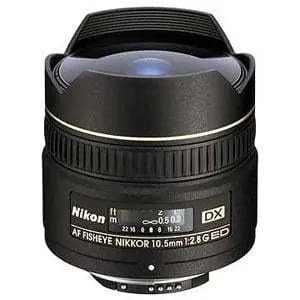
Nikon AF DX Nikkor 10.5mm f/2.8 G ED Fisheye
The 10.5mm Nikkor fisheye is one of the sharpest and most capable ultra-wide lenses ever made for APS-C Nikon bodies. Its circular perspective warps straight lines into dramatic curves, wrapping the entire scene into a single, disorienting frame. Ideal for architecture, environmental portraiture, and any situation where you want the viewer to feel like they’re standing inside the image rather than looking at it. The autofocus capability makes it far more versatile than most fisheyes, letting you work quickly in fast-moving situations.
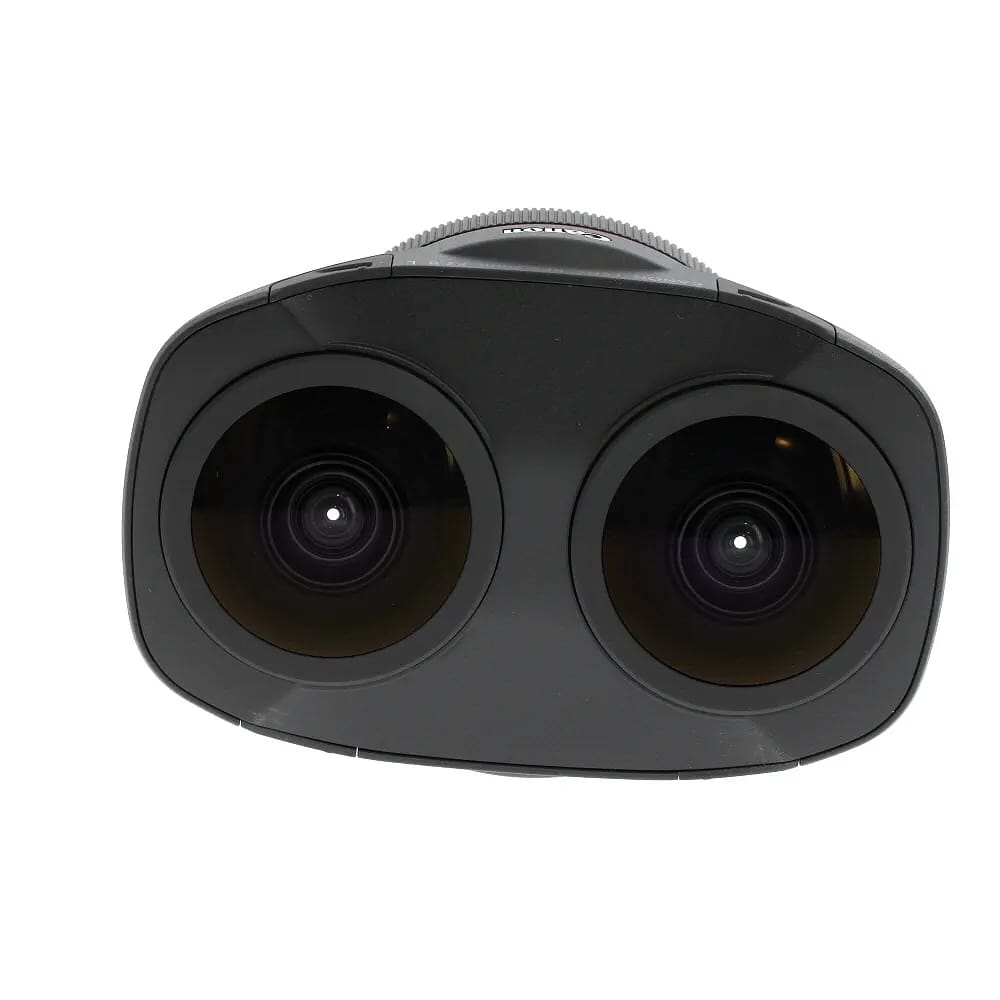
Canon RF 5.2mm f/2.8 L Dual Fisheye VR
This is one of the most unusual lenses ever produced by a major manufacturer. The RF 5.2mm Dual Fisheye features two forward-facing fisheye elements mounted side by side, each capturing a 190-degree field of view to produce stereoscopic 3D VR footage compatible with Meta Quest and Apple Vision Pro. For photographers and filmmakers interested in immersive content creation, this lens is in a category entirely by itself. There is nothing else quite like it—a piece of optical history that happens to be available right now.
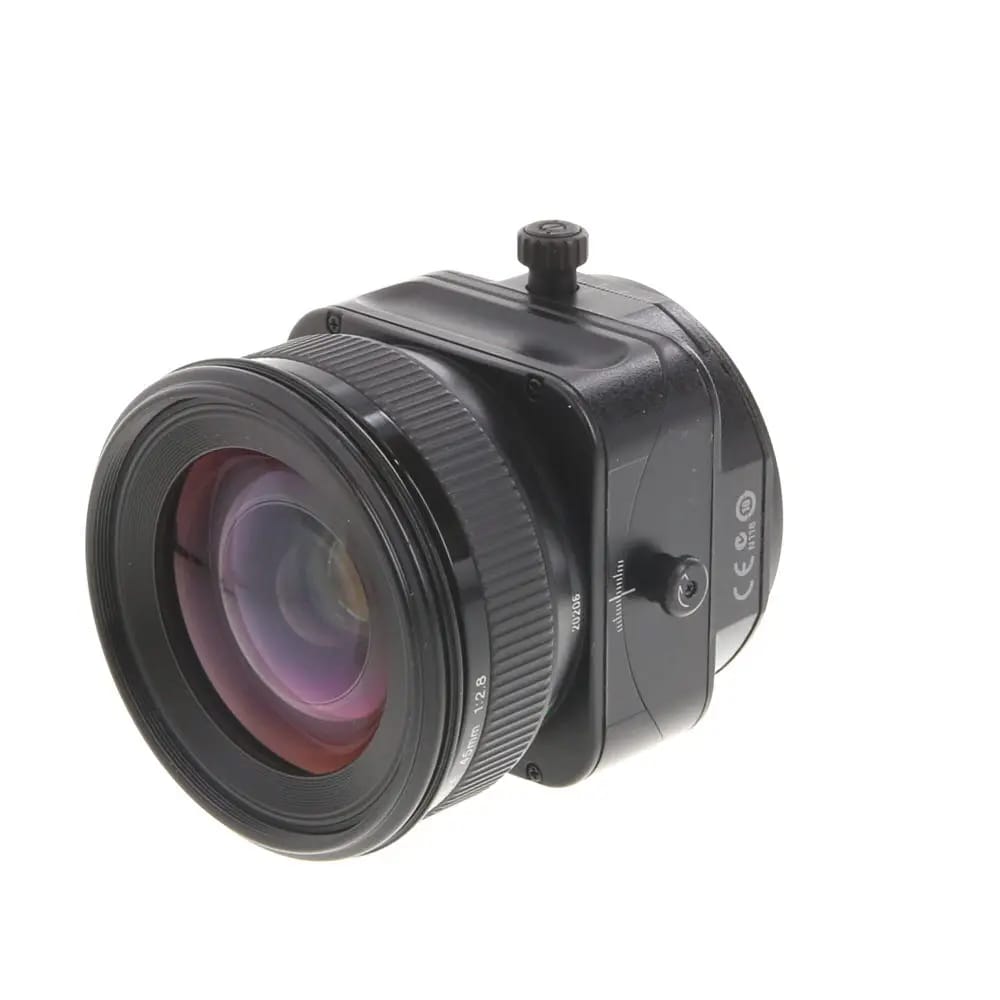
Canon 45mm f/2.8 TS-E Tilt-Shift
Tilt-shift lenses give photographers something no other optic can: complete control over the plane of focus. By tilting the lens element, you can make a massive landscape appear sharp from foreground to background, or isolate a single object in a crowd with a razor-thin focus plane that no standard lens can produce. The 45mm focal length is particularly useful for environmental portraiture and editorial work where you want architectural precision or the miniaturization effect that makes real scenes look like scale models.
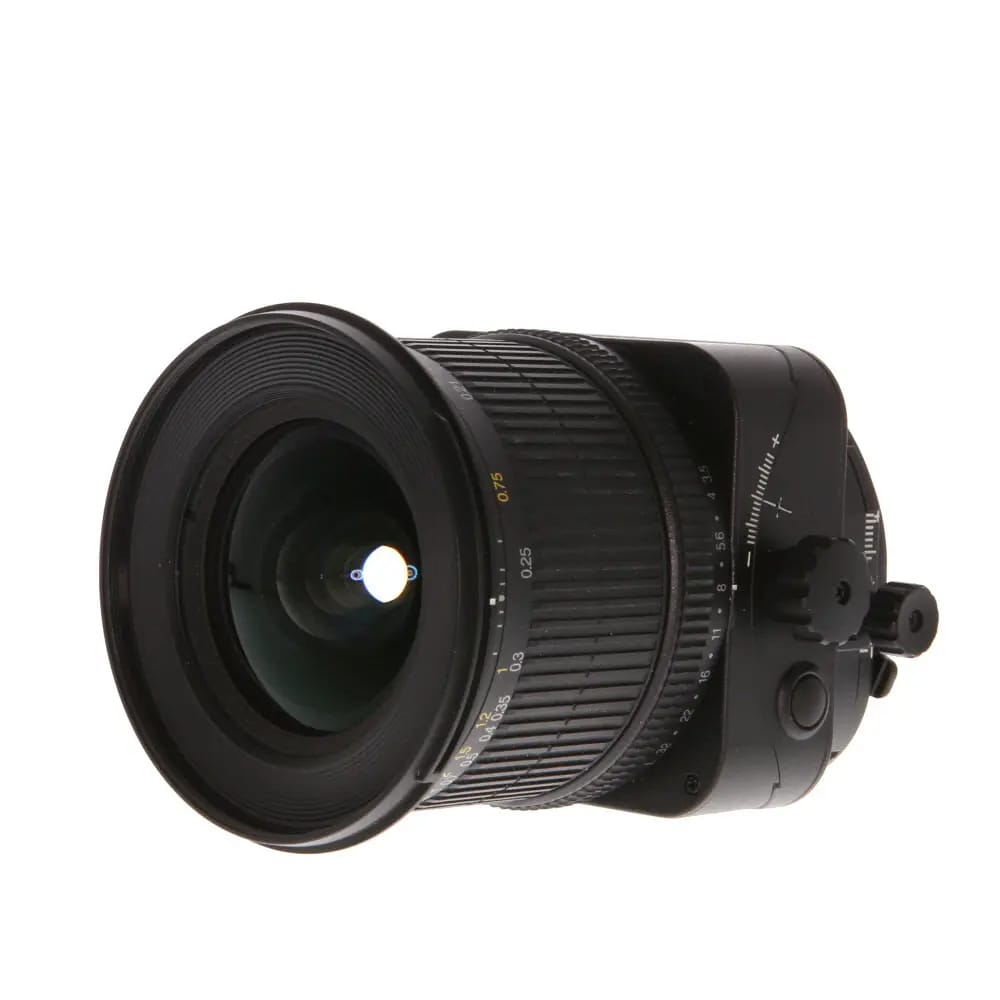
Nikon PC-E Nikkor 24mm f/3.5 D ED Tilt-Shift
The 24mm PC-E is the gold standard for architectural and real estate photography. Its perspective control capability allows photographers to correct converging vertical lines—the classic problem that makes tall buildings appear to lean inward—without any post-processing. But beyond its practical applications, this lens is a creative tool. Tilt the front element and watch how the focus plane bends. Depth becomes something you sculpt rather than something that simply happens to you.
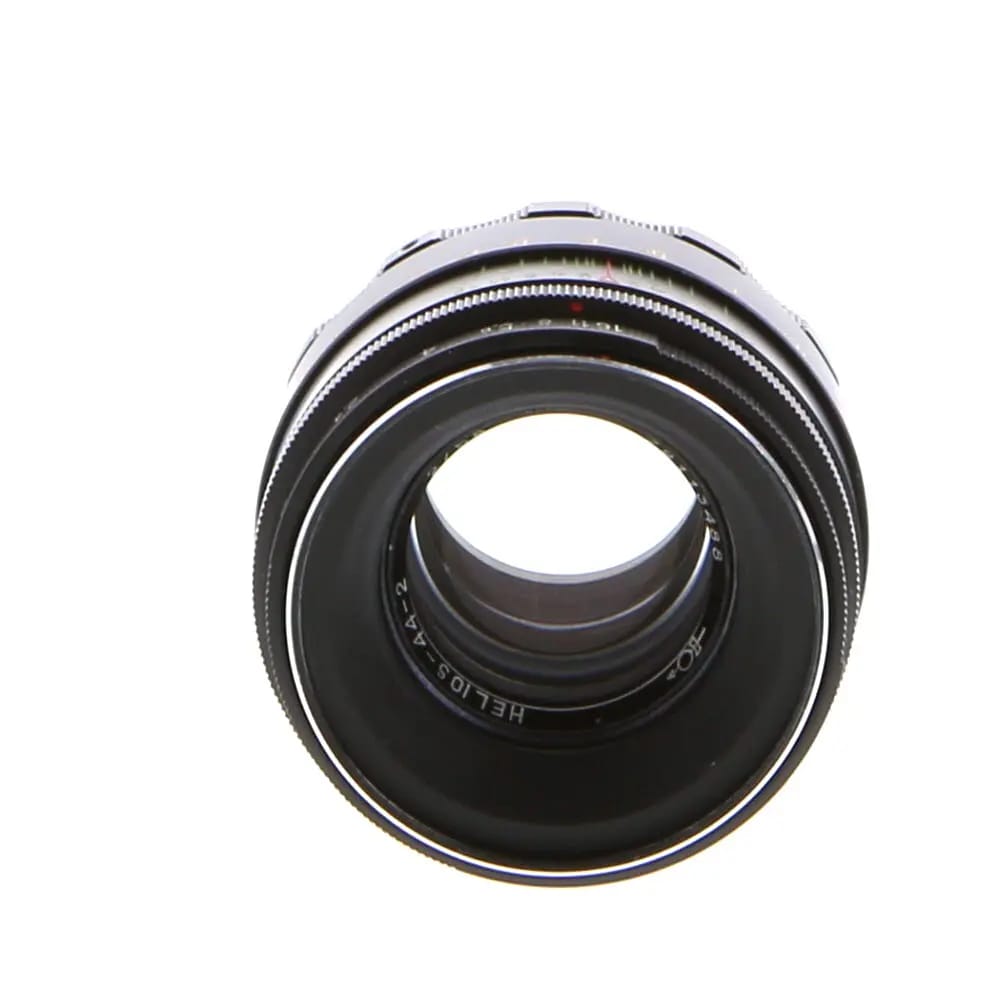
Few lenses have achieved cult status the way the Helios 44-2 has. Originally manufactured in the Soviet Union and based on a Zeiss optical design, this 58mm lens produces a distinctive swirling bokeh pattern that wraps around the subject like a vortex. In the right light, it transforms an ordinary portrait into something visually arresting. It’s a manual focus lens with an M42 screw mount, meaning an adapter is required for most modern cameras—but the results are worth every second of the setup. Used prices make it one of the best-value specialty lenses available.
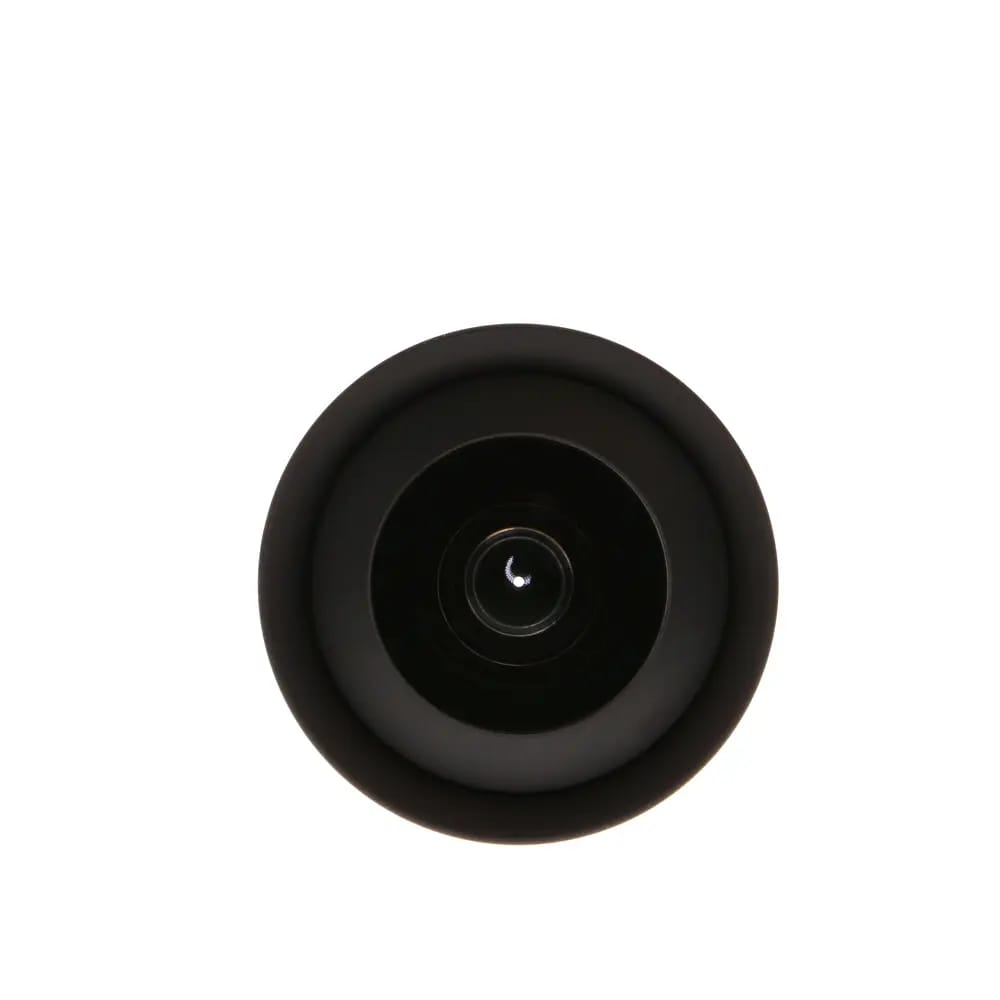
Lensbaby 5.8mm f/3.5 Circular Fisheye (Fujifilm X-Mount)
Lensbaby has built its entire brand around lenses that embrace optical imperfection, and the 5.8mm Circular Fisheye is one of its most distinctive offerings. Designed for Fujifilm X-Mount cameras, this lens produces an extreme fisheye effect with pronounced vignetting that darkens the edges of the frame—a quality that other lenses try desperately to correct, but that here becomes the point. The result is an image with a natural spotlight quality, dramatic distortion, and an analog feeling increasingly sought after in an era of over-processed digital images.
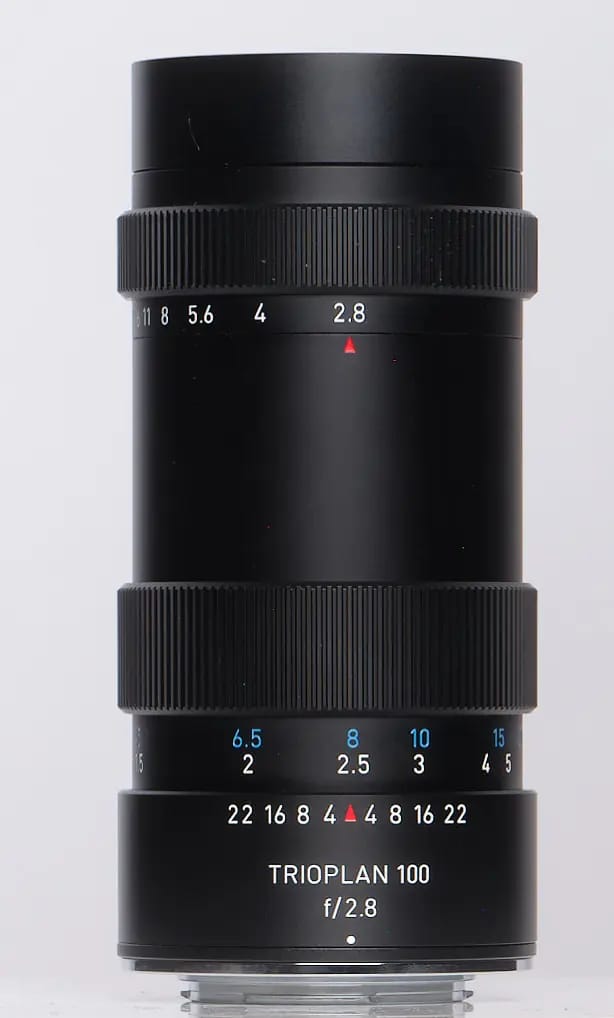
Meyer-Optik Görlitz 100mm f/2.8 Trioplan (Micro Four Thirds)
The Trioplan is perhaps the most discussed specialty bokeh lens in existence. Its unusual triplet optical formula produces out-of-focus highlights that render as perfect, overlapping soap bubbles—a creamy, circular bokeh effect with no modern equivalent. Originally produced in East Germany, the Meyer-Optik Görlitz name was revived to bring this lens back for a new generation of photographers. The 100mm focal length (equivalent to 200mm on full frame) makes it a natural for detailed portraiture where bokeh is as important as the subject itself.
One of the most exciting developments in contemporary photography is the ease with which older lenses can be used on modern camera systems. Thanks to the short flange distance of mirrorless cameras, adapters can bridge virtually any gap between vintage glass and current bodies.
A Helios 44-2 with an M42-to-Sony E adapter. A mid-century Leica lens on a Fujifilm X body. A 1960s Nikkor on a Canon R system. These combinations were once impossible. Now they’re common.
The tradeoff is usually autofocus; most adapters don’t support electronic communication between the lens and body, meaning you’ll be focusing manually. For many photographers, this is a feature, not a limitation. Manual focus slows you down in a productive way. It makes you deliberate and changes your relationship with the image before you’ve even pressed the shutter.
The visual results—lower contrast, unique flare, unpredictable rendering in high-contrast situations—pair beautifully with the high-resolution sensors in modern mirrorless cameras. The sharpness is there when you want it. The character is always present.
Buying a used lens doesn’t require expertise, but a few guidelines help you get the most out of your investment.
Before purchasing a vintage or specialty lens, confirm that a native adapter exists for your camera system or that the lens is already available in your mount.
Shop Under Exposed, KEH Certified™ Camera Gear
Sometimes the best gear isn’t the newest…it’s the one that fits your style, your workflow, and your budget. Shopping pre-owned lets you access proven lenses with character, capability, and creative flexibility, all while keeping quality glass in circulation.
At KEH, every lens is carefully inspected and graded, so you can buy with confidence and focus on what matters most: making images you love. Because great photography isn’t about chasing the spotlight. It’s about rediscovering tools that still have stories left to tell.
Want to see more Under Exposed camera gear? Check out this blog.