You
have no items in your shopping cart.
Fujifilm X100V vs X100VI: 2026 Upgrade Guide
July 27, 2026
1 min read

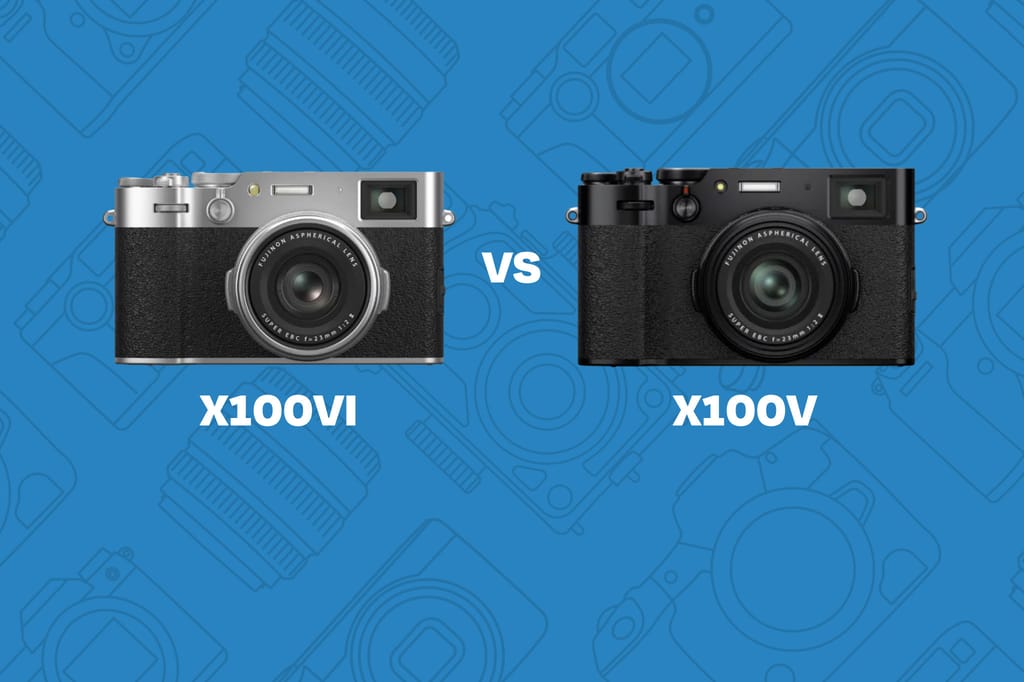
The Fujifilm X100V became the camera everyone seemed to want in their jacket pocket, and the Fujifilm X100VI pushed that hype even further. Viral street photos, TikTok travel kits, out-of-stock drama, and waitlist fatigue have turned a simple question into a real 2026 buying dilemma: if you already own the modern-classic X100V, should you upgrade to X100VI, or is a KEH Certified pre-owned camera the smarter move? Fujifilm itself acknowledged the X100 Series’ “viral popularity” when announcing the X100VI, so this is not just spec-sheet curiosity; it is a real-world decision for photographers who actually carry their cameras every day. This Fujifilm X100V vs X100VI comparison and upgrade guide for street and travel photographers in 2026, with practical real-world usability focus and KEH Certified pre-owned buying guidance, centers on how these cameras perform when carried daily.
For deeper hands-on context, you can also read our Fujifilm X100VI review and our Fujifilm X100V review.
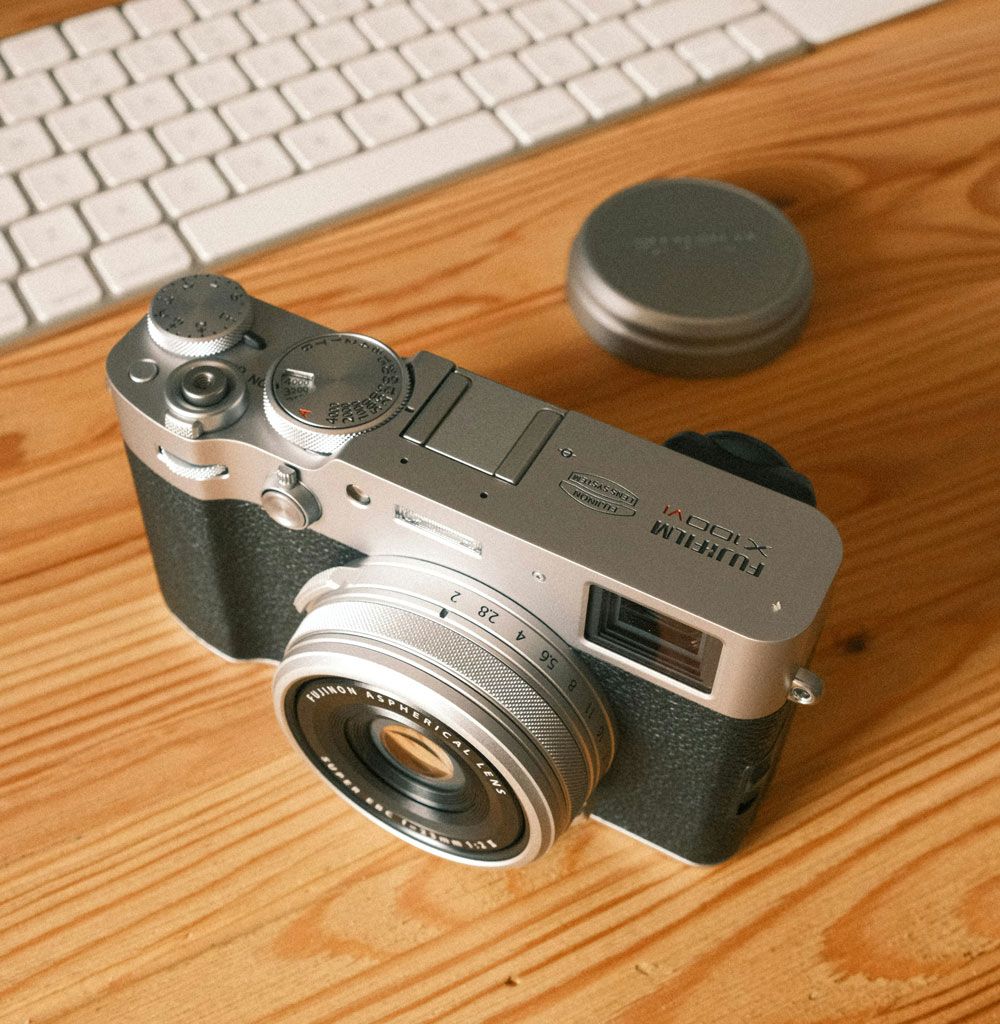
For roughly 90% of photographers, the X100V is still the sweet spot. It has the classic X100 experience, the 35mm-equivalent field of view, a sharp 23mm f/2 lens, a hybrid viewfinder, a tilting screen, strong JPEG color, and enough resolution for everyday work, prints, social media, family documentation, and travel. Fujifilm’s official X100V documentation lists a 26.1MP APS-C sensor, UHS-I SD card slot, 23mm f/2 fixed lens, tilting touchscreen, and a 478g shooting weight, which remains a highly portable package in 2026.
The X100VI is the better camera on paper and in several important real-world situations. It adds a 40.2MP X-Trans CMOS 5 HR sensor, in-body image stabilization, subject-detection autofocus, 20 Film Simulation modes including Reala Ace, and more modern video features. It is also slightly thicker and heavier at approximately 521g with battery and memory card, compared with the X100V’s 478g shooting weight.
The short answer: upgrade to X100VI if you need IBIS, crop heavily, shoot often in low light, or want the newest Fuji film simulations. Keep or buy the X100V if you want the best premium compact camera experience without paying for features you may not use.
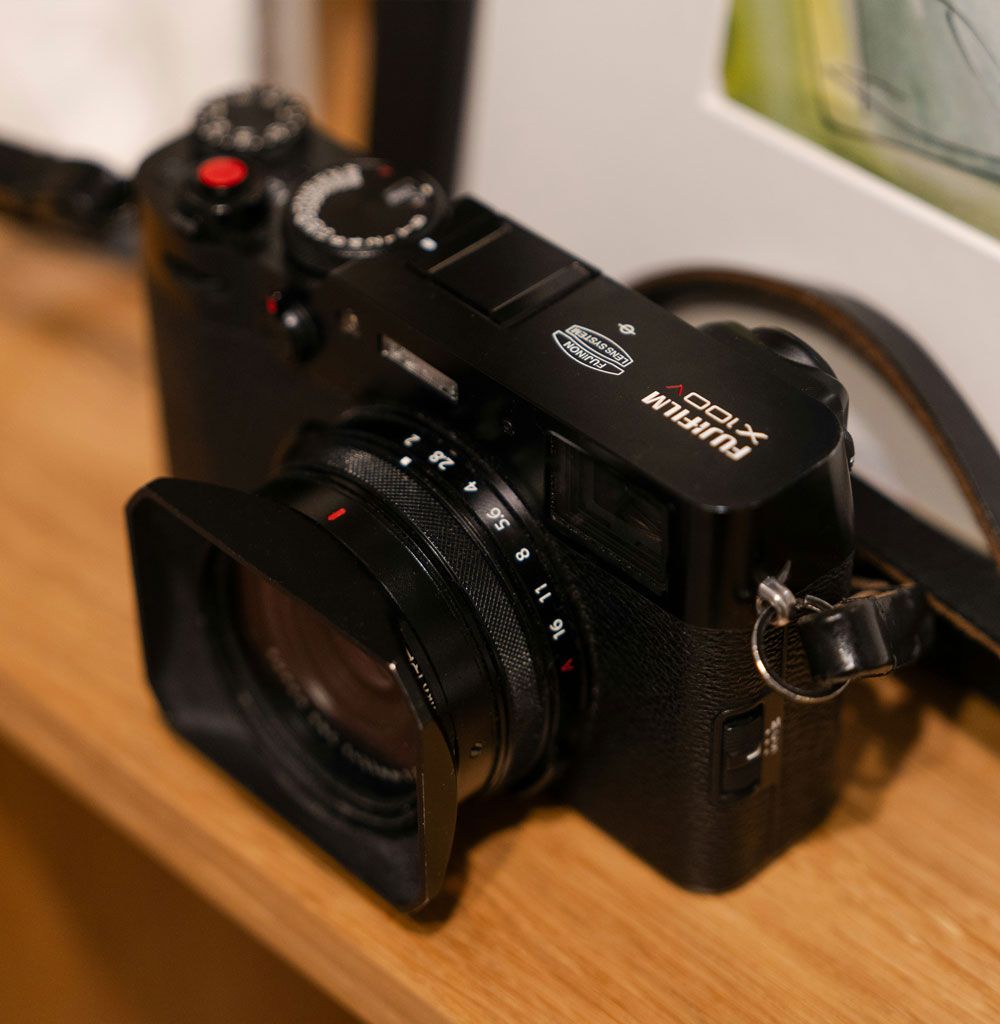
The X100VI’s 40.2MP sensor is the headline upgrade. For street photographers, that extra resolution changes how forgiving the fixed 35mm-equivalent lens can be. If you often shoot quickly from the hip, frame loose in a crowd, or crop verticals out of horizontal frames, 40MP gives you more room to refine composition later.
The X100V’s 26.1MP sensor is not outdated. It is still more than enough for everyday prints, documentary projects, web portfolios, client selects, and travel albums. Its files are easier to move, easier to back up, and less demanding on older laptops. For photographers who shoot hundreds of frames during a day of wandering, that matters.
The X100VI makes the fixed-lens concept feel more flexible. A 35mm-equivalent lens can become a looser street lens, a travel documentary lens, or, through cropping, something closer to a tighter portrait or detail lens. Fujifilm also lists digital teleconverter options for the X100VI, including 50mm and 70mm equivalent views, which pair naturally with the higher-resolution sensor.
If you print large, crop aggressively, or deliver multiple aspect ratios from the same frame, the upgrade becomes easier to justify. If your final images mostly live on Instagram, personal galleries, small prints, or travel journals, the X100V’s 26MP files already give you plenty of room.
The jump from 26.1MP to 40.2MP is about 54% more pixels. That does not mean every file will be exactly 54% larger, because compression, ISO, scene detail, JPEG settings, RAW compression, and HEIF choices all matter. But it does mean your workflow can get heavier over time.
For casual shooters, this may be barely noticeable. For travel shooters importing 1,000 images after a weekend trip, it can affect:
If you are a JPEG-first shooter using Fuji film simulations, the X100VI’s file burden may be manageable. If you shoot RAW plus JPEG all day, the X100V can feel more efficient and less fussy.
The most practical reason to upgrade to X100VI is not megapixels. It is IBIS.
The X100VI is the first X100 Series model with 5-axis in-body image stabilization, rated up to 6.0 stops. That matters for street nights, interiors, museums, restaurants, markets, blue hour travel scenes, and one-handed shooting while walking.
IBIS does not freeze moving people. If your subject is walking fast through a subway platform, you still need an appropriate shutter speed. But IBIS helps reduce camera shake when the subject is still or slow-moving. It can let you shoot at lower ISO, use slower shutter speeds intentionally, and keep the camera smaller by avoiding a tripod or stabilized interchangeable-lens setup.
For EDC enthusiasts, this is huge. The whole appeal of the X100 line is that the camera is always with you. IBIS makes the X100VI more capable in the exact situations where an everyday carry camera tends to be used: low light, imperfect posture, quick framing, and handheld moments.
Choose X100VI if you regularly shoot:
Choose X100V if you mostly shoot daylight, use higher shutter speeds for people, or already know how to brace your camera well.
Fujifilm simulations are a major reason the X100 line became so loved. The appeal is not just color science; it is friction reduction. You can shoot, transfer, and share without feeling like every image needs a full editing session.
The X100V offers 17 Film Simulation modes, including staples like Classic Chrome, Classic Neg., ACROS, Eterna, Velvia, Astia, and Provia. Fujifilm’s X100V product page describes its 17 Film Simulations as part of the company’s legacy in color science.
The X100VI expands the lineup to 20 Film Simulation modes and adds Reala Ace. Fujifilm describes Reala Ace as a mode with faithful color reproduction and harder tonality that is suitable for many subjects and situations.
For most people, no. Reala Ace is beautiful, flexible, and useful, especially if you like natural color with a polished contrast curve. But one film simulation alone should not drive an upgrade unless your entire shooting style is built around straight-out-of-camera JPEGs and you want the latest look in-camera.
For JPEG-first street shooters, the X100VI’s extra simulations and recipe flexibility are a creative bonus. For RAW shooters, the difference matters less because you can edit color later.
Autofocus is another area where the X100VI moves ahead. Fujifilm says the X100VI uses X-Processor 5 subject-detection autofocus to track animals, birds, vehicles, aircraft, trains, insects, and drones, and it also includes an updated AF prediction algorithm for moving subjects.
Street photographers should keep expectations realistic. The X100VI is not suddenly a sports camera, and the fixed 23mm f/2 lens still encourages anticipation, timing, and zone-style shooting. But the newer AF system helps with:
The X100V’s autofocus is still reliable for everyday use. Fujifilm describes its X-Trans CMOS 4 and X-Processor 4 combination as supporting enhanced face and eye detection and low-light AF down to -5EV.
If you shoot slowly and deliberately, the X100V remains excellent. If you chase motion, family moments, pets, or fast travel candids, the X100VI gives you more support.
The X100VI keeps the soul of the X100V. You still get analog-style dials, a hybrid viewfinder, a compact fixed-lens body, a leaf shutter, a built-in ND filter, and the same general shooting philosophy. Fujifilm notes that the X100VI uses aluminum top and bottom surfaces like the prior model and retains a tilt LCD design leveraged from the X100V.
The physical difference is small but not imaginary. The X100V is listed at 128.0mm wide, 74.8mm high, 53.3mm deep, and 478g shooting weight. The X100VI is listed at 128.0mm wide, 74.8mm high, 55.3mm deep, and 521g shooting weight.
That extra weight is not a dealbreaker. For most users, it disappears once a strap is attached. But EDC enthusiasts are sensitive to small differences. If you want the lightest modern X100 body, the X100V still has an edge. If you want stabilization and 40MP in nearly the same footprint, the X100VI earns its added weight.
The best premium compact camera is not always the one with the newest sensor. It is the one you bring, trust, and enjoy using.
In daily shooting, the X100V and X100VI feel more similar than different. Both are built around the same core promise: a premium compact camera with a fixed 35mm-equivalent lens, tactile controls, excellent JPEGs, and a viewfinder experience that encourages intentional photography.
The X100VI is objectively more capable. The X100V is arguably more rational. That is the heart of the Fujifilm X100V vs X100VI debate in 2026.
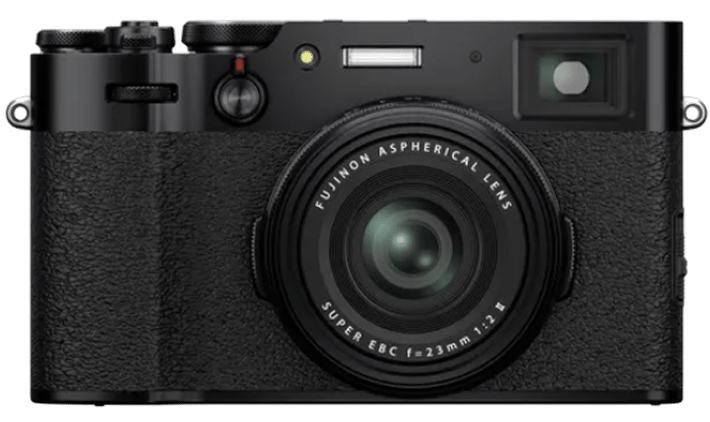
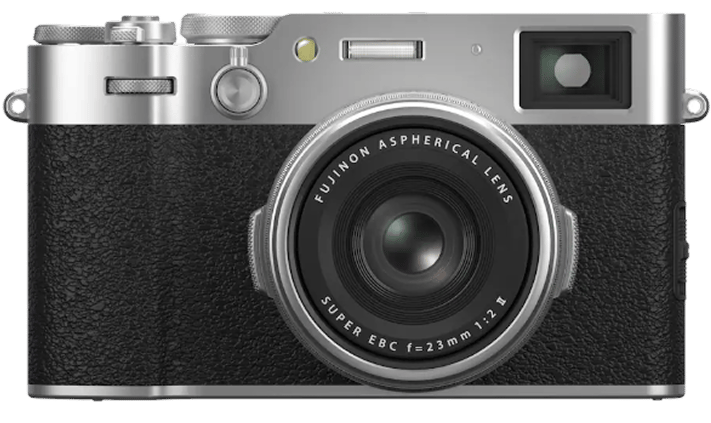
Because X100-series demand can still be intense, buying pre-owned can be the smartest path, especially if you want to skip new-camera waitlist uncertainty. The key is reducing risk.
That is where KEH Certified matters. KEH says each individual piece of equipment receives a quality rating after a thorough 10-step inspection process, and grades are based on cosmetic condition while functional equipment is guaranteed to work as intended unless otherwise noted.
Grades such as Like New, Like New Minus, Excellent Plus, Excellent, and Bargain are backed by a 180-day warranty, excluding Ugly and As-Is grades.
For an X100V or X100VI, grading matters because these cameras are often carried daily. Cosmetic wear may be normal, but you want confidence in the lens, sensor, buttons, dials, screen, card slot, viewfinder, and autofocus behavior.
Use this simple grading mindset:
Peer-to-peer marketplaces like eBay can work, but they shift more inspection responsibility to you. You are relying on seller photos, descriptions, return policies, and your ability to spot problems. KEH Certified gear adds a professional inspection, a clear grade, and warranty support, which is especially valuable on a high-demand compact camera. When shopping, look for keh certified listings and confirm the grade fits your needs.
Upgrade to X100VI if the X100V is limiting your images, not just your curiosity. If you regularly wish you could crop more, stabilize slower handheld shots, track subjects better, or access Reala Ace in-camera, the upgrade makes sense.
Do not upgrade just because the internet moved on. The X100V is still a modern classic, and for most photographers it remains the more balanced choice. It delivers the same core X100 magic with less storage pressure, slightly less weight, and a proven shooting experience.
If you are buying your first X100-series camera in 2026, start with your shooting style:
For many buyers, the best move is not “newest at any cost.” It is finding the right KEH Certified body, in the right grade, at the right time.
In the 2026 Fujifilm X100V vs X100VI debate, the X100VI wins the spec sheet. The X100V wins the value argument for most real-world shooters.
If you already own an X100V, keep it unless IBIS or 40MP cropping would clearly improve your photography. If you are buying pre-owned, the X100V remains one of the smartest premium compact choices available. If you want the most capable X100 ever made and can justify the cost, upgrade to X100VI with confidence.
Either way, buying KEH Certified helps you avoid some of the uncertainty that comes with high-demand gear. You get inspected, graded equipment backed by a 180-day warranty, and you can focus less on marketplace risk and more on carrying the camera every day.
Question: If I already own the X100V, what are the clearest signs I should upgrade to the X100VI?
Short answer: Upgrade if the X100V is limiting your images, not just your curiosity. Clear signals are: you often shoot in low light and want the X100VI’s 5-axis IBIS (rated up to 6.0 stops); you crop aggressively and would benefit from the 40.2MP sensor; you want better subject-detection autofocus for candid people, pets, or family motion; or you rely on straight-out-of-camera JPEGs and want Reala Ace plus the latest Film Simulation options. If those aren’t must-haves for you, the X100V remains the more balanced, value-forward choice.
Question: How much does the 40MP sensor really help, and what’s the storage/workflow trade-off?
Short answer: The 40.2MP sensor meaningfully improves flexibility for cropping-great for reframing loose street shots, pulling verticals from horizontals, or using the camera’s digital teleconverters (50mm and 70mm equivalents) with more detail left over. The trade-off is heavier files and a busier workflow: about 54% more pixels than 26.1MP can translate to faster-filling cards, longer imports, bigger backups, and slower edits on older laptops. Casual or JPEG-first shooters may barely notice; RAW+JPEG all-day shooters will feel the difference more.
Question: Will IBIS fix my blurry night street photos?
Short answer: IBIS reduces camera shake, not subject motion. On the X100VI, stabilization helps you handhold at slower shutter speeds for static or slow-moving scenes-think interiors, blue hour architecture, signs, museums, and one-handed travel shots-often at lower ISO. If your subjects are moving quickly (busy sidewalks, subways), you still need a shutter speed fast enough to freeze them. In short: IBIS boosts keeper rates in low light for steady subjects, but it won’t stop motion blur from fast movers.
Question: How noticeable are the autofocus improvements for candid shooting?
Short answer: The X100VI’s subject-detection AF and updated prediction make a practical difference for people walking toward you, kids and pets, quick grab shots in changing light, and short video clips. It’s not a sports camera, but it’s more supportive for motion than the already solid X100V. If you shoot deliberately, the X100V remains excellent; if you chase fleeting moments, the X100VI’s AF gives you a bit more headroom.
Question: Which KEH Certified grade should I choose for an everyday-carry X100?
Short answer: Match the grade to your tolerance for cosmetic wear. Like New/Like New Minus suits buyers who want the cleanest body. Excellent Plus/Excellent is often the sweet spot: fully functional with minor exterior marks. Bargain can be smart for true EDC users who expect wear, provided the description fits your comfort level. Ugly/As-Is trades away the 180-day warranty and isn’t ideal if you want maximum confidence. All KEH Certified gear is inspected and functionally guaranteed unless noted, which helps reduce risk on high-demand cameras.