You
have no items in your shopping cart.
Canon G7X Mark II Alternatives: Best Pre-Owned Cameras
July 27, 2026
1 min read

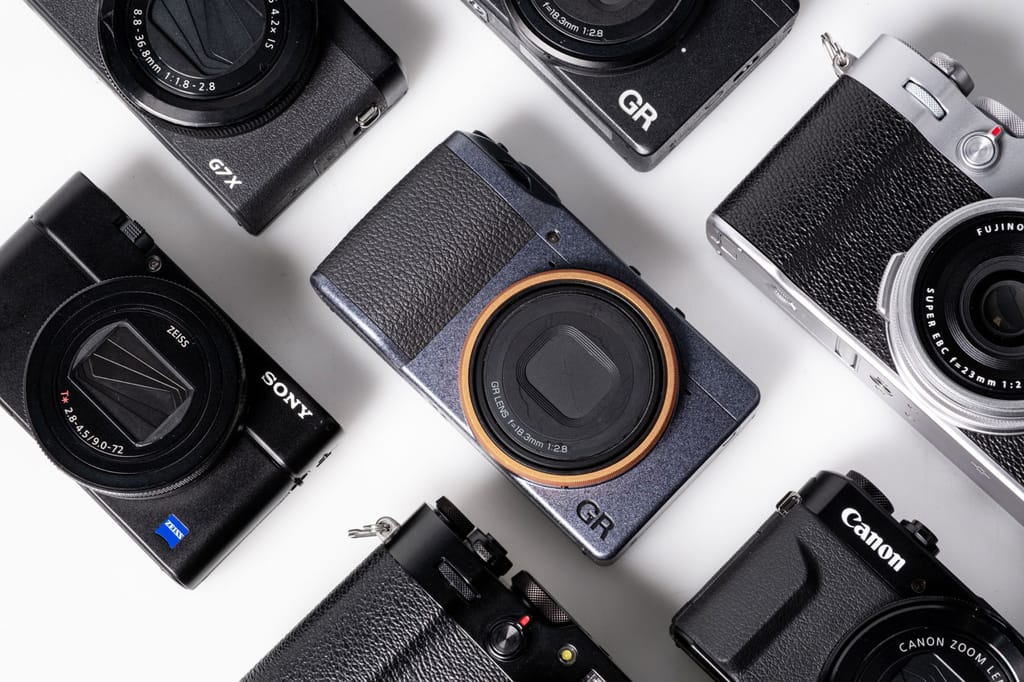
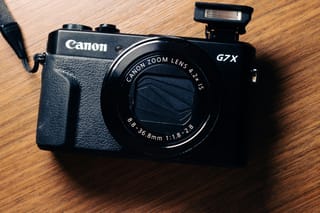
Can’t find the viral Canon G7X Mark II in stock? We round up Canon G7X Mark II alternatives and the best pocket vlogging cameras creators can buy pre-owned (KEH Certified) on KEH.com today.
You’re not imagining it: the Canon G7X Mark II has gone from dependable compact camera to social media status symbol. For vloggers, travel creators, TikTok storytellers, and influencers, that little flip-screen Canon helped define the compact “creator look”: flattering background blur, easy one-handed shooting, and a camera small enough to bring everywhere.
The catch? Hype changes the market. Clean copies get snapped up fast, resale prices can feel inflated, and the camera itself is not the newest tool in the bag. The G7X Mark II still has a lot going for it, but its video recording tops out at Full HD 1080p, while several realistic Canon G7X Mark II alternatives bring stronger autofocus, 4K recording, external mic options, or a more photography-focused shooting experience.
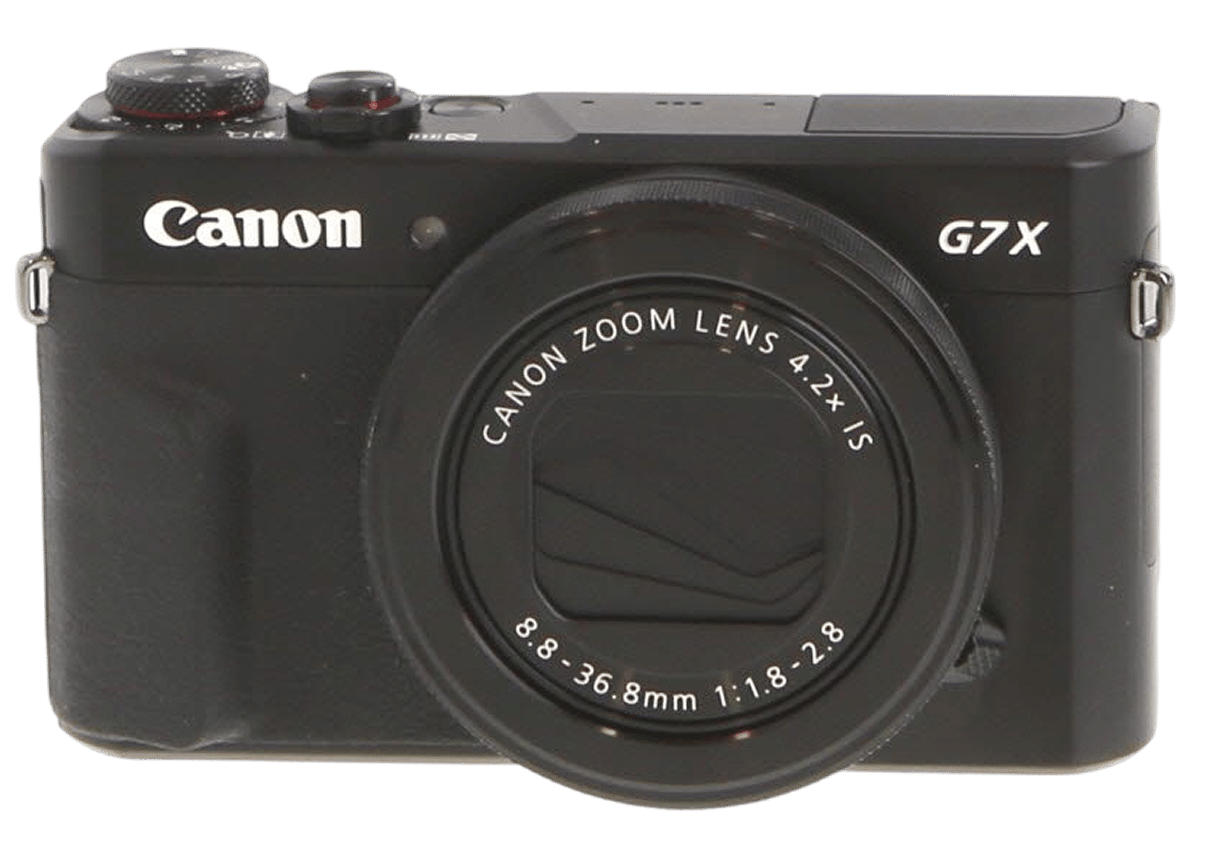
If the G7X Mark II is out of stock or priced like a collector’s item, buying a different pre-owned camera can be the smarter creator move. You are not just “settling.” In many cases, you are upgrading the parts of the experience that matter most for modern content: focus tracking, 4K capture, usable audio, and flexibility.
KEH Certified pre-owned gear is designed to make that choice less risky. KEH says each item is thoroughly inspected, renewed, graded, and backed by a 180-day warranty, and its warranty information explains that covered defective equipment may be repaired, replaced with the same model and grade, or refunded if repair or replacement is not possible.
That matters with compact cameras because the whole camera is the kit. You cannot simply swap out a sticky zoom lens, unreliable rear dial, scratched screen, dusty sensor area, or failing pop-up mechanism the way you might swap a lens on a larger system. A clear grade and warranty-backed purchase make the pre-owned route much more creator-friendly.
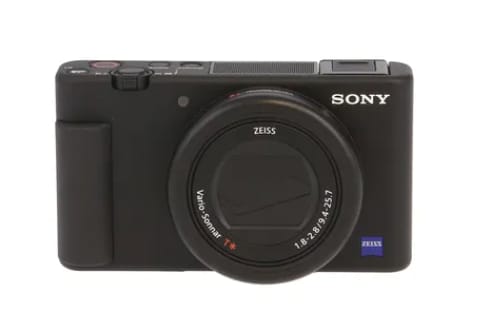
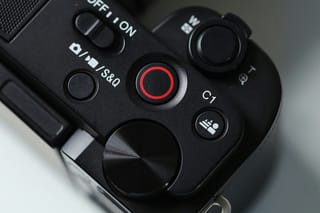
If your main goal is talking to camera, filming product demos, recording GRWM clips, or capturing quick travel recaps, the Sony ZV-1 is one of the most direct Canon G7X Mark II alternatives. It keeps the fixed-lens, pocketable creator format but adds features that feel built for video from the start.
The biggest win is autofocus. Sony’s compact creator camera is known for face and eye tracking that feels more dependable when you are walking, turning, holding up a product, or moving in and out of frame. It also gives you 4K recording and a 3.5mm microphone input, two major creator upgrades over the G7X Mark II’s older Full HD-only workflow. Sony’s ZV-1 specifications list XAVC S 4K recording and a 3.5mm stereo mini microphone jack.
The side-flip screen is another practical win. A top-flip screen can be blocked by accessories, but the ZV-1’s side articulation works better with a small mic, grip, or tabletop tripod. For beauty, review, and unboxing creators, Product Showcase-style focus behavior is especially helpful because the camera is designed to shift attention from your face to an item held in front of the lens.
The ZV-1 is video-first, not viewfinder-first. There is no built-in EVF, so bright midday travel shooting means relying on the rear screen. The 24–70mm equivalent zoom range is useful for everyday creator work, but it will not give you the long reach of a travel zoom. Stabilization is good for casual handheld clips, but very bouncy walk-and-talk footage may still benefit from a grip, mini tripod, or careful technique.
Choose this if you want the best pocket vlogging camera alternative for YouTube Shorts, TikTok, Reels, product reviews, talking-head videos, and casual travel diaries. If your content is mostly video and you care about autofocus more than a traditional camera feel, start here.
Jacket pocket, small purse, sling bag, or creator pouch: yes. Tight jeans pocket: not ideal. It still delivers the grab-and-go feel that made the G7X famous.
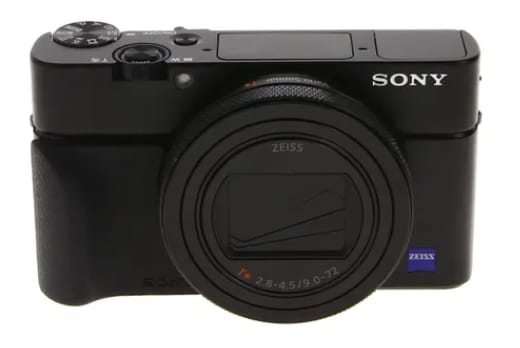
The Sony Cyber-shot RX100 VII is the premium pocket hybrid in this round-up. If the ZV-1 is the video-first creator camera, the RX100 VII is the compact travel camera that can vlog, photograph, zoom, and disappear into a small bag.
The Sony Cyber-shot RX100 VII is the premium pocket hybrid in this round-up. If the ZV-1 is the video-first creator camera, the RX100 VII is the compact travel camera that can vlog, photograph, zoom, and disappear into a small bag.
The RX100 VII brings advanced autofocus, 4K video, a 3.5mm microphone jack, and a much longer 24–200mm equivalent zoom range. Sony’s product information highlights the 24–200mm lens, fast autofocus, Real-time Tracking, Real-time Eye AF, stabilization, and external microphone jack, while the specifications list XAVC S 4K recording.
For travel creators, that zoom range is a huge deal. You can film yourself at the wide end, then capture food details, street scenes, architecture, performers, and landscape compression without changing lenses. The pop-up electronic viewfinder also makes it feel more like a “real camera” than many creator compacts, especially when shooting stills in harsh light.
The RX100 VII can cost more than many other pre-owned compact options, especially in cleaner grades. Its lens is slower than the G7X-style f/1.8–2.8 range once you zoom in, so background blur is not always as dramatic. The screen tilts instead of fully flipping out to the side, and there is no hot shoe, so adding a mic may require a cage or bracket.
Pick this if you want one pocket camera for travel vlogs, street photography, concerts, family trips, city guides, and creator B-roll. It is especially strong for people who care about still photos as much as video.
This is the closest thing here to a true premium pocket camera. It is small enough for a jacket pocket and easy to carry all day, which is why it remains one of the strongest Canon G7X Mark II alternatives for travel.
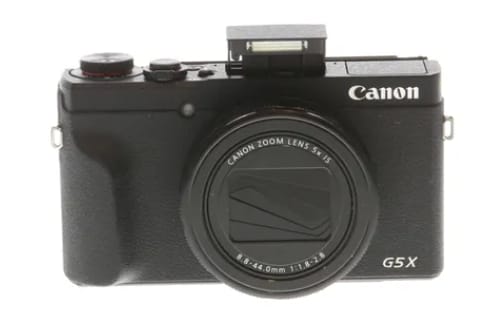
The Canon PowerShot G5 X Mark II is the natural “stay in the Canon lane” alternative. It keeps the compact PowerShot feel but adds a more enthusiast-friendly design, a pop-up electronic viewfinder, and 4K video capability.
The G5 X Mark II gives you a 24–120mm equivalent lens range, a fast f/1.8–2.8 maximum aperture range, RAW capture, 4K video up to 29.97 fps, and a built-in EVF that the G7X Mark II does not have. Canon’s specifications for the G5 X Mark II list 4K 3840 x 2160 recording at 29.97 fps.
That built-in viewfinder changes the experience for travel photography. If you love the Canon look but want to compose more confidently in bright sun, the G5 X Mark II feels more versatile than a screen-only compact. It also reaches farther than the G7X Mark II, which is useful for details, portraits, food, and scenic shots.
This is not the top video-first choice. Autofocus is not as sticky as Sony’s latest compact tracking, and audio flexibility is limited compared with cameras that include a 3.5mm mic input. If your content depends on crisp wireless lav audio recorded directly into camera, the ZV-1 or RX100 VII may be a cleaner fit.
Choose this if you want a compact creator camera that still feels like a photographer’s tool. It is great for travel stills, lifestyle photography, casual vlogs, hotel-room clips, food content, and creators who like Canon handling.
Jacket pocket or small crossbody bag: yes. It is a little more substantial than the smallest pocket cameras, but it remains much easier to carry than an interchangeable-lens kit.
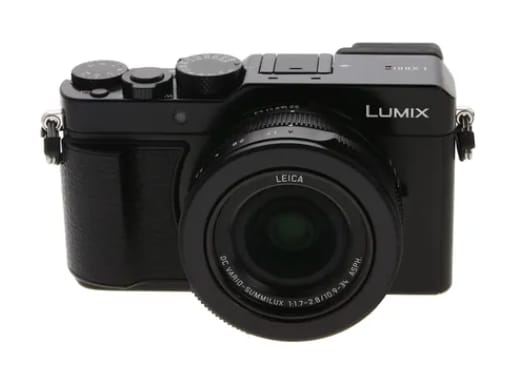
The Panasonic Lumix LX100 II is the alternative for creators who want their compact camera to feel more tactile and intentional. Instead of chasing the simplest selfie workflow, it leans into a larger sensor, Leica-branded lens, physical controls, and a traditional viewfinder experience.
The LX100 II uses a Four Thirds-type sensor design and a 24–75mm equivalent f/1.7–2.8 lens, giving it a distinctive look for food, street, interiors, and low-light travel scenes. Panasonic’s specifications list 4K 30p recording, a 0.38-inch live viewfinder, a 3-inch static touch monitor, and stereo microphone recording.
It is a great B-roll camera. The manual aperture ring and classic control layout make it satisfying to shoot slowly and deliberately. If you want your travel content to look less like quick selfie clips and more like a mini documentary, the LX100 II deserves attention.
This is not the best pure vlogging camera. The rear screen is fixed, so self-framing is harder. There is no creator-style side flip screen, and it is not the camera to buy if you need constant face tracking while walking toward the lens. Audio flexibility is also limited compared with options that include a dedicated external mic jack.
Choose this if your content is heavy on cinematic B-roll, food, coffee shops, street photography, interiors, travel mood shots, and stills-first storytelling. It is also a strong pre-owned camera choice for creators who like hands-on exposure control.
Coat pocket, sling, or small camera pouch: yes. Pants pocket: usually no. It is compact, but it has a chunkier lens and grip area than the RX100 series.
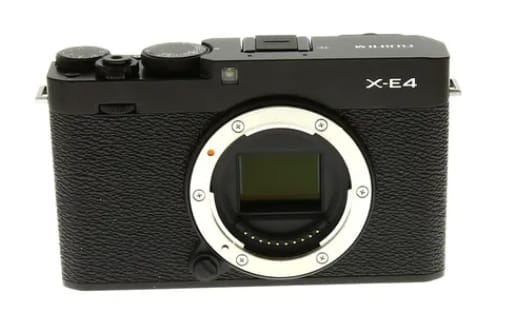
The Fujifilm X-E4 is the wildcard. It is not a fixed-lens pocket compact like the G7X Mark II, but it gives creators a slim, stylish body, Fujifilm color, interchangeable lenses, an EVF, and a bigger APS-C sensor look.
Image quality and lens flexibility are the main reasons to look here. Pair the X-E4 with a slim pancake-style lens and you get a compact street, travel, and lifestyle setup with more creative headroom than a typical 1-inch compact. Fujifilm’s specifications list a 3.5mm mini-stereo microphone connector and an electronic viewfinder, making it more expandable for hybrid creator work than many pocket cameras.
It is also a strong choice for creators who want a recognizable aesthetic straight out of camera. Fujifilm film simulations, compact prime lenses, and a rangefinder-style body make it appealing for outfit photos, travel diaries, lifestyle stills, and polished social content.
The X-E4 is only pocketable in a very specific sense. The body is slim, but once you add a lens, it becomes more of a small bag camera than a true jeans-pocket camera. It also asks more from the user: lens choice, settings, and handling matter more than with an all-in-one compact. If you just want a simple flip-screen vlog camera, Sony’s ZV line is easier.
Choose this if your brand depends on still-photo quality, color, lenses, and a stylish camera presence. It works especially well for creators who mix Reels, portraits, travel stills, flat lays, café content, and short cinematic clips.
Body only: very slim. With a small lens: jacket pocket or small sling. With a zoom: not pocketable. Think “compact creator kit,” not “true pocket vlogging camera.”
If you are overwhelmed, narrow the choice by how you actually create:
The honest answer is that there is no single perfect replacement. The G7X Mark II became popular because it was simple, flattering, and small. But if you are buying now, the smarter move may be to pick the camera that solves your actual content bottleneck: autofocus, audio, 4K, zoom range, or photography feel.
Before you click add to cart, look at the condition grade and included accessories. For compact cameras, pay extra attention to:
Inventory changes quickly, especially for viral compacts and premium pocket cameras. If your preferred grade is not available, check back often, compare similar models, or use KEH.com alerts when available.
Question: I mostly film myself talking, doing quick demos, or GRWM clips. Which alternative feels simplest for that?
Short answer: Go with the Sony ZV-1. It keeps the pocketable, fixed‑lens vibe but adds creator‑focused upgrades: dependable face/eye AF, 4K recording, a 3.5mm mic input, and a side‑flip screen that won’t clash with small mics, grips, or tabletop tripods. If your priority is easy, reliable video with strong autofocus, it’s the most direct upgrade from a G7X‑style workflow.
Question: I want an eye‑level viewfinder for bright travel days. Which models include an EVF?
Short answer: Choose one of the EVF‑equipped options: Sony RX100 VII, Canon PowerShot G5 X Mark II, Panasonic Lumix LX100 II, or Fujifilm X‑E4. The ZV‑1 does not have a built‑in viewfinder. If you’re a stills‑heavy traveler or shoot in harsh sun, those EVF models make framing and exposure checks much easier than relying only on the rear screen.
Question: Which of these cameras let me plug in an external microphone?
Short answer: Three in this roundup include a 3.5mm mic input: Sony ZV‑1, Sony RX100 VII, and Fujifilm X‑E4. The Canon G5 X Mark II and Panasonic LX100 II are more limited for direct‑to‑camera audio. Note that the RX100 VII lacks a hot shoe, so mounting a mic may require a small cage or bracket, while the ZV‑1’s side‑flip screen plays nicely with compact on‑camera mics.
Question: What’s best for low light and background blur in a compact setup?
Short answer: For a “richer” look, the Panasonic LX100 II stands out with its larger Four Thirds‑type sensor and fast 24–75mm f/1.7–2.8 lens—great for food, interiors, and travel mood shots. The Fujifilm X‑E4 goes further with an APS‑C sensor and interchangeable lenses; pair it with a fast prime for shallow depth of field and premium stills. The Canon G5 X Mark II stays bright at the wide end (f/1.8), while the RX100 VII’s longer zoom trades some background blur for reach, especially as you zoom.
Question: What should I check before buying a pre‑owned compact on KEH?
Short answer: Focus on the parts you can’t swap: make sure the zoom extends smoothly, buttons/dials aren’t sticky, the screen and hinges are solid, and the lens/sensor area is clean. Confirm included accessories (battery/charger vary by listing), review the condition grade, and note the KEH Certified 180‑day warranty. KEH’s process—inspection, renewal, grading, and warranty with repair/replacement/refund paths—helps reduce the usual compact‑camera risks like sticky controls or dusty optics.