You
have no items in your shopping cart.
Budget Nikon D3500 Lens Upgrades: Pre-Owned F-Mount DX lenses
July 27, 2026
1 min read

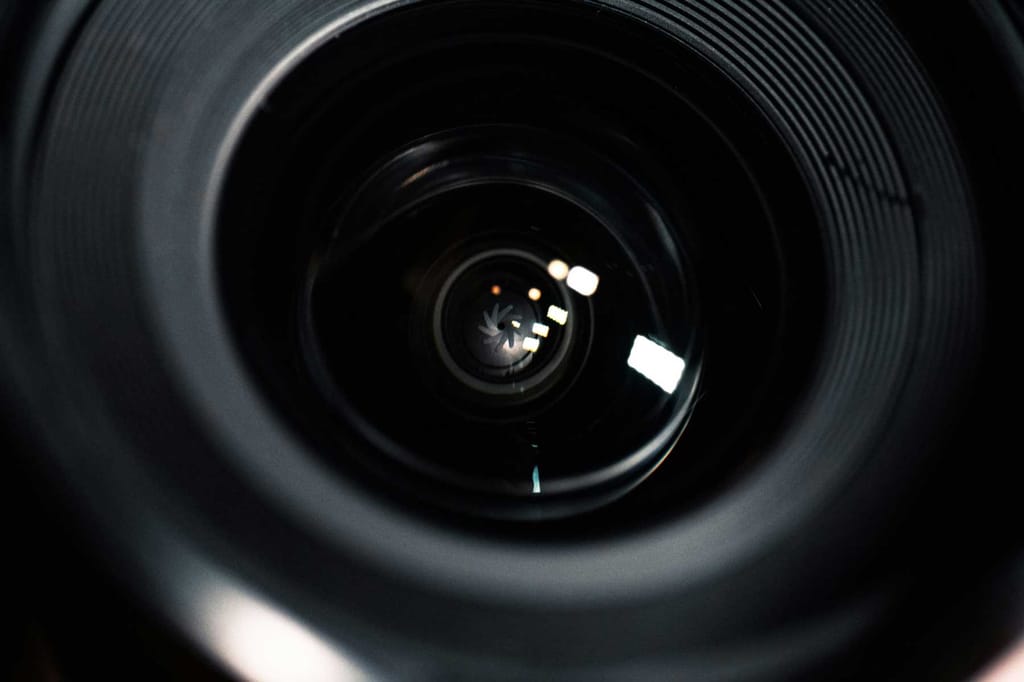
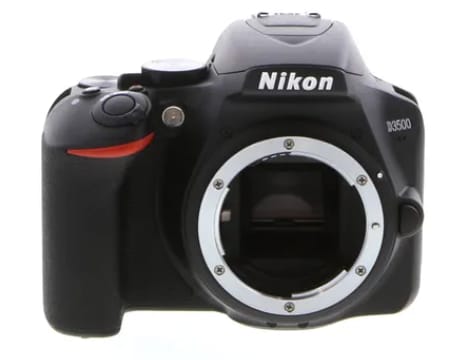
The Nikon D3500 is widely celebrated as one of the best entry-level DSLRs ever produced. It packs a remarkable 24.2-megapixel sensor, fantastic battery life, and an incredibly user-friendly interface into a compact body. However, if you are still shooting exclusively with the 18-55mm kit lens that came in the box, you are only scratching the surface of what this camera can truly do. Upgrading your glass is the single most effective way to elevate your photography, but you don’t need to empty your savings account to do it. This guide focuses on Budget Nikon D3500 lens upgrades (pre-owned F-mount DX lenses) that maximize value without compromising image quality.
Finding the best budget nikon d3500 lenses will allow you to achieve professional-looking background blur, capture sweeping landscapes, and zoom in on distant wildlife. Whether you want to shoot stunning portraits or sharp street photography, there is a world of affordable optics waiting for you. Let’s dive into the ultimate guide to upgrading your gear, exploring the finest nikon d3500 lenses that deliver high-end optical performance without the premium price tag.
Before you start shopping, it is crucial to understand the anatomy of your camera. One of the most common questions from beginners is: what lenses fit a Nikon D3500?
The D3500 utilizes the Nikon F-mount, specifically designed for DX-format (APS-C) sensors. While you can physically attach almost any F-mount lens created since 1959, they won’t all function the same way. To make the right purchasing decision, you need a firm grasp of two critical concepts. These notes apply whether you’re buying new or pre-owned F-mount DX lenses.
Unlike higher-end professional Nikon DSLRs, the D3500 does not feature a built-in autofocus motor in the camera body. Therefore, it relies entirely on the autofocus motor housed inside the lens itself. Understanding Nikon AF-P vs AF-S motor compatibility is essential to ensure your new lens will focus automatically.
To understand how a lens will perform on your camera, you need the crop factor explained for Nikon DX sensors. The D3500 features an APS-C sensor, which is smaller than a standard 35mm full-frame sensor. Nikon’s DX crop factor is 1.5x.
This means that to find the “true” field of view of a lens on your D3500, you must multiply the focal length by 1.5. For example, a 50mm lens mounted on your D3500 will provide the same field of view as a 75mm lens on a full-frame camera. Keeping this in mind is crucial when deciding how wide or how “zoomed in” you want your new lens to be.
Figuring out how to choose your first Nikon lens comes down to identifying the limitations of your current setup. Ask yourself what frustrates you about your kit lens:
By identifying the specific gap in your gear, you can select a targeted upgrade that will immediately improve your portfolio.
Prime lenses have a fixed focal length, meaning they do not zoom. What they lack in zoom versatility, they make up for in incredible image quality and wide maximum apertures. These are widely considered the sharpest budget lenses for Nikon F mount cameras.
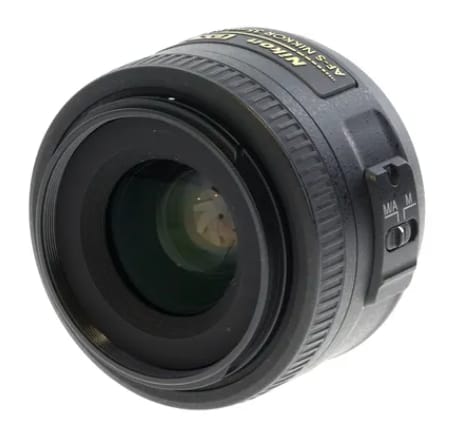
If there is one lens every D3500 owner should buy, it is the Nikon AF-S DX NIKKOR 35mm f/1.8G. Due to the 1.5x crop factor, this lens provides a roughly 52mm equivalent field of view, closely mimicking the perspective of the human eye.
Why it’s a great buy:
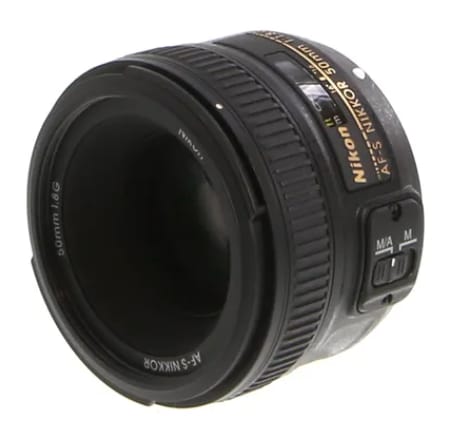
Often referred to as the “Nifty Fifty,” the Nikon AF-S NIKKOR 50mm f/1.8G is a full-frame (FX) lens that works flawlessly on your DX-format D3500. Because of the crop factor, it acts like a 75mm lens, making it one of the absolute best affordable prime lenses for portraits.
Why it’s a great buy:
Many beginners struggle to choose between these two iconic primes. In a direct Nikon 35mm f1.8 vs 50mm f1.8 comparison, the deciding factor is your shooting environment.
If you want an everyday lens for street photography, travel, and shooting indoors where space is tight, the 35mm is your best bet. If you are specifically interested in headshots, portraiture, and outdoor photography where you have plenty of room to physically back up from your subject, the 50mm will serve you better.
When you are shooting landscapes, architecture, real estate, or vlogging, your standard 18mm kit lens might not be wide enough to capture the entire scene. You need an ultra-wide-angle lens to push the boundaries of your frame.
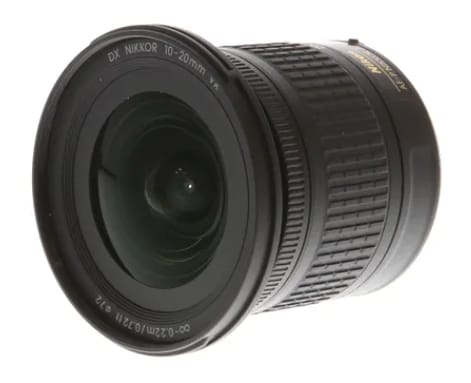
Ultra-wide-angle lenses used to be prohibitively expensive, but Nikon changed the game with this release. The Nikon AF-P DX NIKKOR 10-20mm f/4.5-5.6G VR is unequivocally the best cheap wide angle lens for Nikon DX cameras.
Why it’s a great buy:
If you want to photograph distant subjects without disturbing them, you need a telephoto lens. Telephotos are essential for sports, aviation, and nature photography.
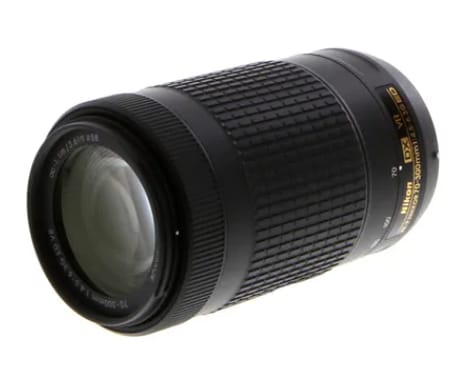
For those looking for a budget-friendly telephoto zoom for wildlife, look no further. The Nikon AF-P DX NIKKOR 70-300mm f/4.5-6.3G ED VR gives you tremendous reach, pulling distant subjects right up into the front of your frame.
Why it’s a great buy:
Perhaps you don’t want to carry around multiple prime and telephoto lenses. If you simply want a better version of your 18-55mm standard zoom, you have some fantastic Nikon kit lens replacement options.
Upgrading your standard zoom usually means looking for something with a wider constant aperture or a longer zoom range. This is also where exploring third party lenses for Nikon D3500 cameras becomes incredibly beneficial. Brands like Sigma and Tamron offer professional-grade features for a fraction of the cost of first-party Nikon equivalents.
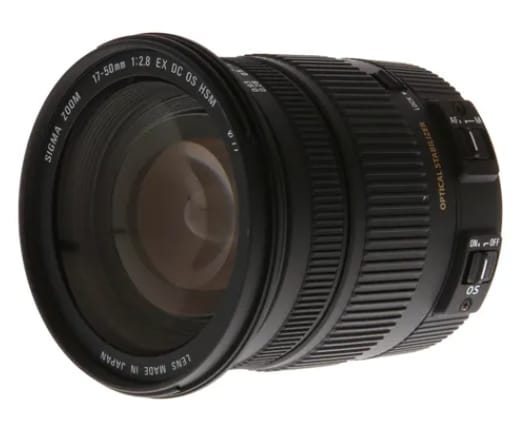
When discussing Sigma and Tamron lens alternatives, the Sigma 17-50mm f/2.8 EX DC OS HSM is legendary in the Nikon DX community. This is arguably the best direct upgrade to your kit lens.
Why it’s a great buy:
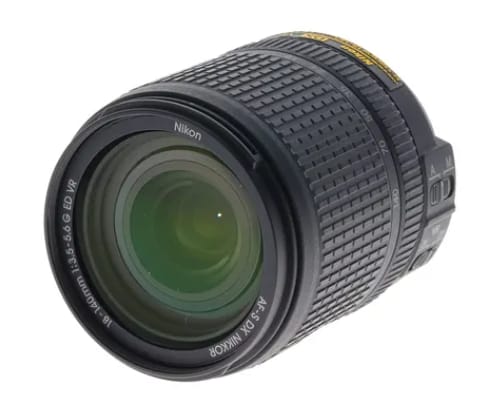
If you prioritize zoom range over low-light performance, the Nikon AF-S DX NIKKOR 18-140mm f/3.5-5.6G ED VR is a phenomenal all-in-one solution. This is one of the premier lightweight travel lenses for D3500 photographers who want a single lens glued to their camera for an entire vacation.
Why it’s a great buy:
Building a versatile camera bag shouldn’t require you to take on debt. If you want to acquire the sharpest budget lenses for Nikon F mount setups, you need to shop smart. Here are some actionable tips for stretching your photography budget:
One of the best-kept secrets in photography is the viability of the secondhand market. Buying used Nikon lenses for beginners is the fastest way to build a professional kit on an amateur budget.
Lenses are precision optical instruments built to last for decades if cared for properly. Unlike camera bodies, which become technologically obsolete as sensor technology advances, a great lens from ten years ago is still a great lens today.
Where to Buy Used Gear: Avoid buying from unpredictable online marketplaces where sellers offer no guarantees. Instead, rely on established, reputable used camera retailers such as:
When you buy used budget nikon lenses from these platforms, you can often save 30% to 40% off the retail price, freeing up cash for memory cards, a good tripod, or even a second lens.
Once you invest in new glass, take basic steps to protect it. Always use a lens hood. Not only do lens hoods prevent lens flare from ruining your images on sunny days, but they also act as a physical bumper, protecting the front element of your lens from accidental bumps and drops.
Additionally, learning how to clean your lenses properly with a microfiber cloth and a rocket blower will ensure your optics remain crystal clear for years to come.
Your camera is only as good as the glass you attach to the front of it. The D3500 has an incredibly capable sensor that is just waiting to be unleashed. By moving beyond the kit lens and investing in a few carefully chosen upgrades, you will see an immediate and dramatic improvement in the sharpness, clarity, and artistic quality of your photographs.
Whether you opt for the brilliant low-light capabilities of the 35mm f/1.8 prime , the expansive view of the 10-20mm wide-angle , or the incredible reach of the 70-300mm telephoto, finding the perfect gear is easier than ever. Don’t be afraid to explore third-party Sigma and Tamron options, and always consider reputable used retailers for pre-owned F-mount DX lenses to stretch your dollar further.
Upgrading your gear doesn’t have to be intimidating or overly expensive. By choosing the right budget-friendly lenses tailored to your specific creative needs, you will reinvigorate your love for photography and capture images you never thought possible with your Nikon D3500.
Question: What lenses will autofocus on the Nikon D3500, and do FX lenses work?
Short answer: The D3500 uses the Nikon F-mount and requires lenses with built-in focus motors for autofocus. AF-S and AF-P lenses autofocus fully, while older AF/AF-D lenses will mount but only focus manually. Both DX (designed for APS-C) and FX (full-frame) F-mount lenses work; just remember the 1.5x crop factor changes the field of view (e.g., 50mm behaves like 75mm on the D3500).
Question: Should I buy the Nikon 35mm f/1.8G DX or the Nikon 50mm f/1.8G for my first prime?
Short answer: Pick based on your shooting space and subjects. The 35mm f/1.8G DX (about 52mm equivalent) is the better everyday, low-light, and indoor choice-great for travel and street when space is tight. The 50mm f/1.8G (about 75mm equivalent) excels for portraits, offering flattering compression and stronger background blur when you have room to step back.
Question: What’s the best budget ultra-wide option for landscapes and architecture?
Short answer: The Nikon AF-P DX 10-20mm f/4.5-5.6G VR is the standout budget ultra-wide. It delivers dramatic 10mm perspectives, includes Vibration Reduction for steadier handheld shots, and uses a fast, silent AF-P motor-ideal for landscapes, real estate, and vlogging without breaking the bank.
Question: I want to shoot wildlife or sports-what affordable telephoto should I get?
Short answer: Go for the Nikon AF-P DX 70-300mm f/4.5-6.3G ED VR. On the D3500, 300mm gives a 450mm-equivalent field of view for serious reach. It’s impressively sharp for the price and uses ED glass to reduce color fringing. Important: buy the VR version-stabilization is crucial at long focal lengths to avoid blurry handheld shots.
Question: What’s the best upgrade from the 18-55mm kit lens: more light or more range?
Short answer: Choose based on your priority. For better low-light and event work, the Sigma 17-50mm f/2.8 EX DC OS HSM is ideal with its constant f/2.8 aperture and stabilization. For one-lens travel convenience, the Nikon AF-S DX 18-140mm f/3.5-5.6G ED VR covers wide to telephoto, stays sharp (especially around f/8), and minimizes lens changes on the go.