You
have no items in your shopping cart.
Compact Power: Navigating the Sony RX100 Series for Everyday Carry
February 20, 2026
1 min read

We’ve all been there. You’re at a concert or your kid’s school play, and you try to zoom in with your phone. The result? A blurry, pixelated mess. Your smartphone is amazing, but even the best ones hit a wall when zooming in on distant subjects or taking clear photos in dimly lit rooms.
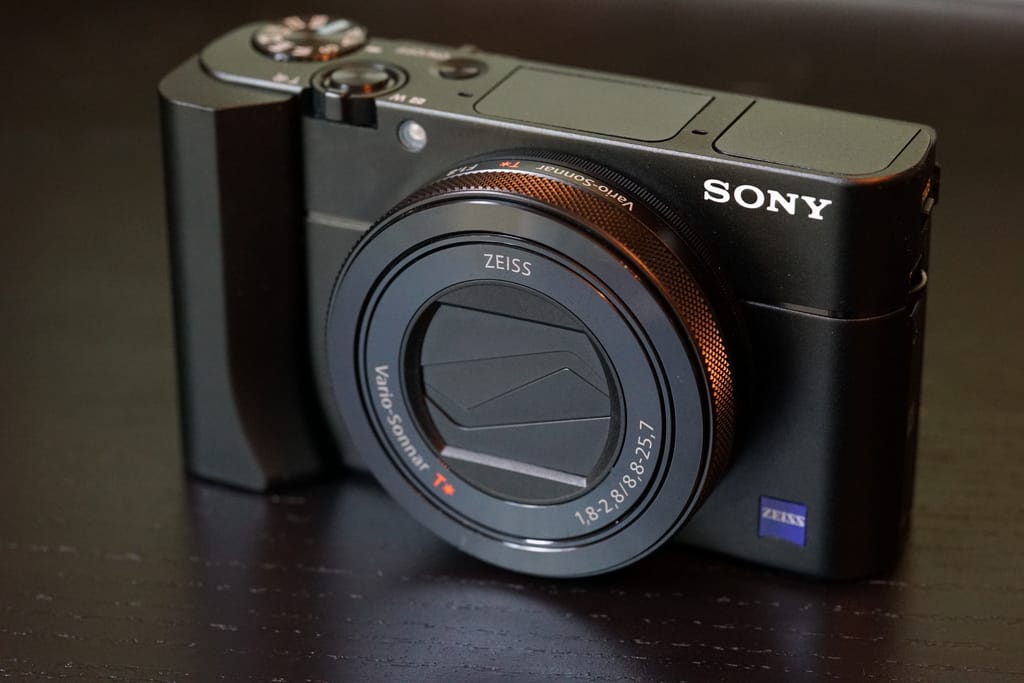
What if you could get the crisp zoom of a professional camera from something that still slides into your jacket pocket? This is the promise of the Sony RX100 series. Frequently praised as one of the best compact cameras, the Sony RX100 series is a smart everyday-carry camera for people who want better zoom and low-light performance. For over a decade, these compact powerhouses have been the gold standard for an everyday carry camera, using real optical zoom — like a pair of binoculars, not just a digital crop — to capture sharp photos phones just can’t.
The only problem is that navigating the seven-plus models can feel like a research project. This guide skips the confusing jargon and breaks down the lineup into simple choices based on what you actually want to do, helping you find the perfect match for your needs and budget. In this Compact Power: Navigating the Sony RX100 Series for Everyday Carry guide, we keep it straightforward and practical.
This guide explains how the pocketable Sony RX100 series leverages a larger 1-inch sensor and true optical zoom to outperform smartphones, especially in low light. It simplifies the lineup into two paths: bright-lens, short-zoom models (RX100 III—V/VA) for low-light portraits and big-zoom models (RX100 VI—VII) for travel reach. You’ll find value picks, a vlogging alternative (ZV-1), three quick setup tips (Aperture Priority, control ring, Auto ISO), and three essential accessories. A final checklist helps you choose based on whether you prioritize zoom reach, low-light performance, or budget. For many shooters, these are among the best compact cameras for everyday use.
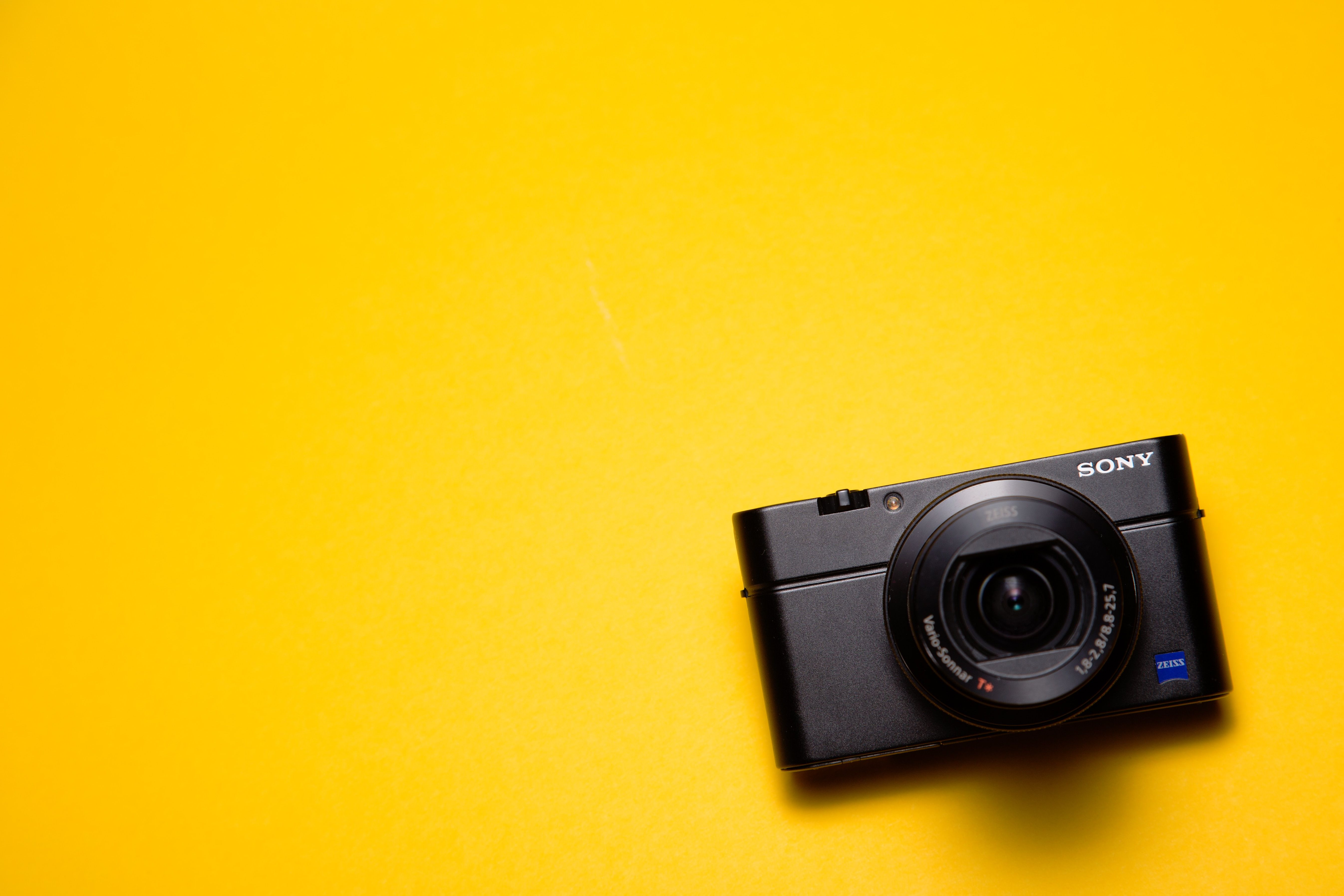
A common myth is that more megapixels mean better photos. The real secret to stunning image quality is the size of the camera’s sensor. The Sony RX100 series uses a large “1-inch sensor,” which is dramatically larger than the one in any smartphone. Think of it like a bigger window in a dark room — it lets in far more light. This is why the Sony RX100’s low-light performance is so impressive: it captures clean, vibrant photos in dimly lit restaurants and indoors.
Working with that sensor is the lens’s “aperture,” the opening that lets light through. You’ll see this measured by a number like f/1.8. It seems backward, but just remember: the lower the number, the wider the opening. This floods the sensor with light for fantastic evening shots without a harsh flash.
This powerful combination produces one of photography’s most desired effects: a beautifully blurred background that makes your subject pop. This effect, called bokeh, gives portraits a professional, dreamy look. While phones fake this with software, the RX100 creates it naturally through optics, giving you superior 1-inch sensor image quality that software can’t truly replicate.
Looking at the Sony RX100 lineup — Mark III, Mark V, Mark VII—can be overwhelming. The good news is you only need to understand one fundamental choice that splits the family into two groups: incredible low-light performance or a massive zoom range.
To make a camera this small, engineers had to make a trade-off. One group of RX100 models has an extremely “bright” lens (that low f/1.8 number), perfect for dim lighting and blurry backgrounds, but with a shorter zoom. The other group has a less bright lens but offers a gigantic zoom, making it ideal for travel and capturing distant subjects. You can’t have both in a pocket-sized camera.
So, which Sony RX100 model should I buy? It starts by asking what you shoot most. Are you taking photos of friends in restaurants and family in the living room? Or are you on vacation trying to capture architectural details, wildlife, or your kids on a distant sports field? Your answer will point you directly to the right half of the RX100 family.
If you want a detailed breakdown of Sony’s full lineup, read this blog.
If your camera roll is filled with pictures of friends at dinner, kids blowing out birthday candles, or city scenes after sunset, this is your side of the family. The models from the RX100 Mark III through the Mark V (including the III, IV, V, and VA) were all built around a lens that excels in these situations.
Their strength comes from the exceptionally “bright” f/1.8-2.8 lens discussed earlier. That wide-open aperture is the camera’s superpower for gathering as much light as possible. Where your smartphone might produce a dark, grainy image, these cameras deliver a clean, vibrant shot. This mastery of light is one of the biggest benefits of the f/1.8 lens.
This ability also unlocks that creative, professional look. The wide opening is what creates a beautifully blurred background, making your subject pop in portraits. While their zoom is more limited (topping out around 3x), these models are the perfect choice for capturing moments close by, no matter the lighting.
While the “bright lens” models are masters of intimacy, a different kind of magic happens when your priority is reach. If you’re a traveler who wants to capture both the sweep of a valley and a distant eagle, or a parent trying to get a clear shot from the bleachers, then the RX100 Mark VI and Mark VII were made for you. These models are defined by one spectacular feature: a massive zoom lens.
This is where understanding optical zoom becomes critical. When you pinch-to-zoom on your phone, you’re using digital zoom—simply cropping a picture and enlarging it, which results in a blurry mess. The RX100 uses optical zoom. Like adjusting binoculars, the glass elements inside the lens physically move to magnify the scene before the photo is taken, giving you a perfectly sharp image.


The 24-200mm lens in the Mark VI and VII is a game-changer. You can stand in one spot and capture a wide, all-encompassing view (24mm) and then instantly zoom in for a tight, detailed shot (200mm). This incredible flexibility makes them some of the best compact cameras for photography enthusiasts who value versatility above all.
With a new model appearing almost every year, it’s natural to assume the latest is the greatest. But in the world of cameras, “older” doesn’t mean “obsolete.” Sony continues to produce previous versions because they still offer incredible performance, saving you hundreds of dollars while still running circles around your smartphone.
The best choice often comes down to balancing features and cost. Experienced photographers often point to the middle of the pack to find the best value.
Value Sweet Spots:
Don’t be afraid to look at reputable used or refurbished options—it’s a savvy way to get a higher-end model for a fraction of its original cost.
While every RX100 model shoots beautiful video, creating content for an audience brings new challenges, like shaky footage and poor framing. The RX100 series features excellent image stabilization to smooth out your clips, and most models have a flip-up screen for selfies.
For dedicated video creators, Sony introduced a specialist: the ZV-1. Think of it as an RX100 that went all-in on video. Instead of a screen that just flips up, the ZV-1 has a fully articulating screen that swings out to the side, letting you see yourself without a microphone blocking the view. It also features a much larger, high-quality built-in microphone that captures your voice clearly.
The ZV-1 takes the fantastic sensor and lens from the RX100 series and wraps them in a body purpose-built for self-filming, with features like “Product Showcase” for instant refocusing. The choice is simple: if you are a photographer first, a later-model RX100 is your perfect all-around companion. If your primary goal is creating video content, the ZV-1 is the smarter tool.
Your new RX100 has arrived, and the dial on top is covered in mysterious letters. Instead of leaving it on the green “Auto” setting, a few quick changes can give you immediate creative control. The secret is Aperture Priority, marked with an “A” on the dial. You decide how much background blur you want, and the camera automatically adjusts the brightness.
With just three quick changes, you’ll be ready to go:
This simple setup turns your RX100 into a creative powerhouse, letting you adjust the blur with a simple twist of the lens ring—no menu diving required.
The magic of the Sony RX100 is that you don’t need a bulky camera bag. Because it’s an everyday carry camera, your accessories should be just as simple. You only need three things to protect your investment and stay ready.
This minimalist kit keeps your camera protected and ready to go, so you can focus on taking great pictures without being weighed down by gear.
Choosing the right RX100 comes down to the core trade-off: reaching far with zoom versus gathering more light for stunning indoor shots. This simple comparison will give you a final answer.
Choosing which Sony RX100 model to buy is now the easy part. The real adventure begins when that little powerhouse is in your pocket, ready to capture moments with a quality your phone simply can’t touch.
Whether you choose a Sony RX series camera, another Sony camera, or another compact powerhouse, one thing stays the same: buying pre-owned is a smarter way to upgrade. KEH Certified™ gear gives you access to high-quality cameras at a better value, all while keeping perfectly good equipment in use and out of landfills. Every item is expertly inspected, accurately graded, and backed by a warranty, so you can shop with confidence. If you’re ready to move beyond smartphone limitations without overspending—or overcomplicating—pre-owned gear from KEH is a win for your photography, your wallet, and the planet.