You
have no items in your shopping cart.
The Best Lenses for the Canon EOS R5 Mark II
May 14, 2026
1 min read


You’ve just invested in a photographic supercar. The lens you pair with it determines whether you are actually driving it at full performance or holding it back with budget tires.
Think of the Canon EOS R5 Mark II as a high-performance engine. The lens is what connects that power to the road. High-end Canon lenses directly determine image quality regardless of how powerful the body is, which means selecting the best lenses for the Canon EOS R5 Mark II is fundamentally a performance-first decision.
A 45-megapixel sensor does not forgive weak optics. It resolves enough detail to expose softness, distortion, and chromatic aberration instantly. That level of resolution effectively demands high-quality glass just to maintain baseline sharpness across the frame.
When you combine that sensor with Canon’s stacked readout system and 30 fps burst shooting, lens performance becomes even more critical. Autofocus motors must physically keep up with the subject-tracking speed. If they lag, even slightly, the camera outperforms the lens in ways that become visibly limiting.
This is why building a Canon R5 Mark II kit is not about collecting lenses. It is about building a system that matches speed, resolution, and optical precision.
Most professional Canon shooters start here because it simply works across nearly every assignment. The “Holy Trinity” zooms cover ultra-wide, standard, and telephoto ranges without constant lens swapping.

RF 15–35mm f/2.8
This ultra-wide zoom is built for sweeping landscapes, tight interiors, astrophotography, and dramatic perspective work. At 1.85 lbs, it balances portability with professional optical performance.
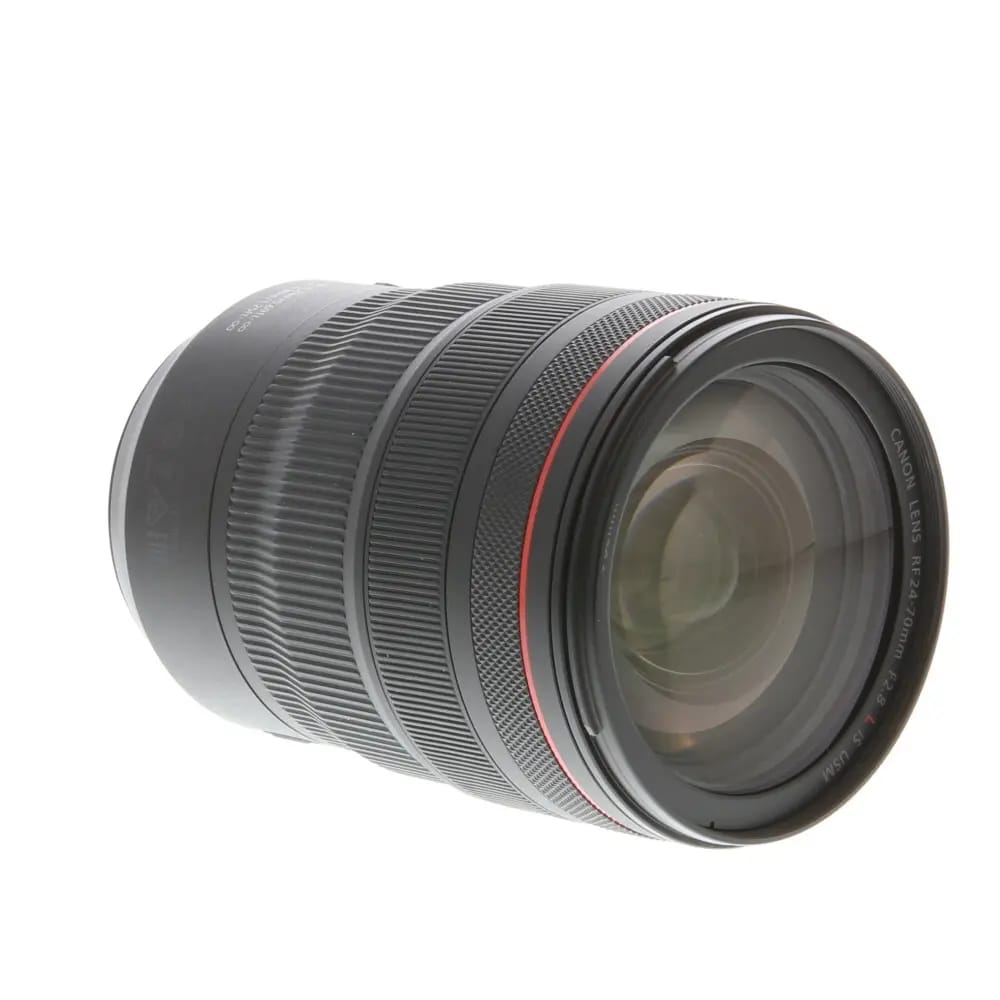
RF 24–70mm f/2.8
Often considered the most versatile lens in any kit, this is the everyday workhorse for weddings, documentary work, and environmental portraits. At 1.98 lbs, it offers a strong balance of range and speed.
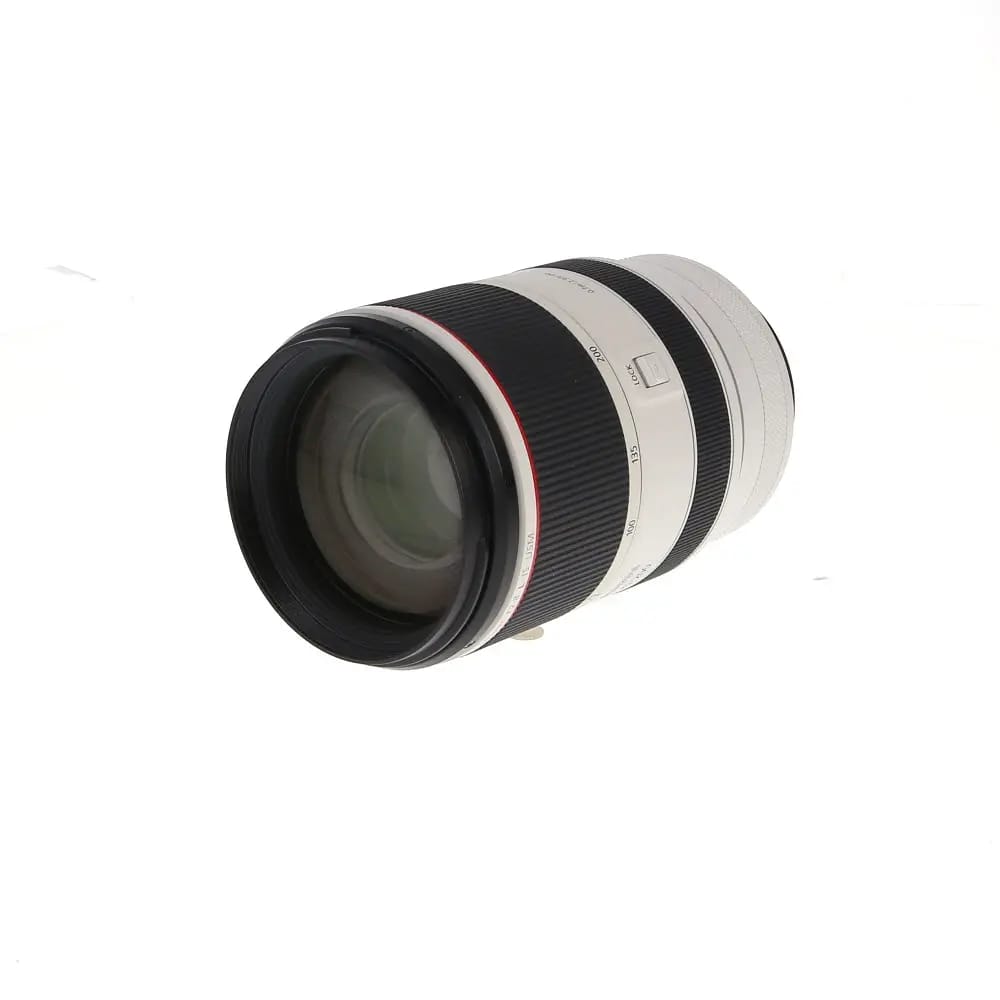
RF 70–200mm f/2.8
This telephoto zoom is essential for sports, portraits, and isolating subjects with strong background compression. At 2.36 lbs, it remains a staple for professionals who need reach without sacrificing image quality.
These lenses also rely on Canon’s Nano USM autofocus system, which is critical for keeping up with the R5 Mark II’s fast subject tracking and high burst rates. The nearly silent and highly responsive focus system ensures sharp results even during high-speed sequences.
This trio forms the backbone of most professional Canon RF kits.
Zoom lenses provide flexibility, but prime lenses are where the R5 Mark II sensor really shows its full potential.
Fixed focal length lenses eliminate compromises in optical design, resulting in higher sharpness, better contrast, and more consistent rendering across the frame. This is especially important when working with a 45MP sensor, where small imperfections become obvious.
Prime lenses also deliver stronger subject separation and what many photographers describe as “3D pop,” where tonal transitions between subject and background feel more natural and dimensional.
Key focal lengths include:
35mm
A natural wide perspective that works for street photography, environmental storytelling, and documentary work.
50mm
A standard field of view with minimal distortion, ideal for general-purpose shooting and portraits.
85mm f/1.2
A premium portrait focal length that compresses features and produces extremely shallow depth of field for subject isolation.
Modern RF primes also benefit from focus breathing correction, making them especially useful for hybrid stills and video workflows.
Upgrading to mirrorless does not require abandoning EF glass.
Canon’s RF mount system allows EF lenses to be used seamlessly with a simple adapter. This preserves full optical performance while maintaining autofocus and exposure functionality.
Standard EF to RF adapters act as a neutral extension, while Control Ring versions add customizable control for exposure settings directly on the adapter. This allows you to continue using trusted DSLR-era lenses while transitioning to mirrorless performance.
However, there is a tradeoff. Older EF autofocus motors may struggle to keep up with the speed of modern RF lenses, especially during continuous tracking or high-frame-rate video capture. They remain highly usable, but not always optimal for fast action.
This is also where maintenance becomes important. As lenses age, performance can drift slightly out of calibration. KEH Repair services help extend the life of both EF and RF lenses by addressing focus issues, wear, and optical alignment so gear continues performing at a professional level rather than being prematurely replaced.
The R5 Mark II’s 8K recording capability places extreme demands on lens performance. Every vibration, focus shift, and optical flaw becomes more visible.
For video workflows, stabilization becomes critical. Lenses with optical image stabilization work in combination with in-body stabilization to reduce micro-jitter and maintain smooth handheld footage. Autofocus noise also matters. Modern RF lenses use VCM and linear motors that operate silently and smoothly, preventing mechanical noise from contaminating audio recordings. Internal zoom designs further improve balance when using gimbals, keeping weight distribution consistent as focal length changes.
At this level, lens choice directly affects production quality.
There is no single correct way to build a kit. Instead, most photographers fall into one of three categories based on shooting style.
The Traveler
Light, flexible kits built around a standard zoom and a few carefully chosen primes. Prioritizes portability without sacrificing quality.
The Pro
A complete f/2.8 Holy Trinity setup designed for reliability, consistency, and full coverage across all shooting conditions.
The Specialist
A focused setup built around one flagship lens, often a telephoto or fast prime, supplemented by more affordable supporting lenses.
Many photographers also choose to build kits using used Canon RF or EF lenses to maximize value while maintaining professional quality. This is often the most efficient way to scale a system over time.
The Canon EOS R5 Mark II is not just a high-resolution camera. It is a system that exposes how well every component performs together. The lens you choose determines whether you are unlocking its full potential or limiting it from the start. Whether you are building your first RF kit or refining a professional system, the goal remains the same: match performance with performance.
And when gear needs care, calibration, or a second life, KEH services help extend its usability through repair and trade-in options so your system stays in rotation rather than sitting unused. Great images come from tools that are not just powerful, but properly maintained and correctly matched to the job at hand.