You
have no items in your shopping cart.
Top 5 Best Budget 35mm Film Cameras for Beginners
July 30, 2026
1 min read

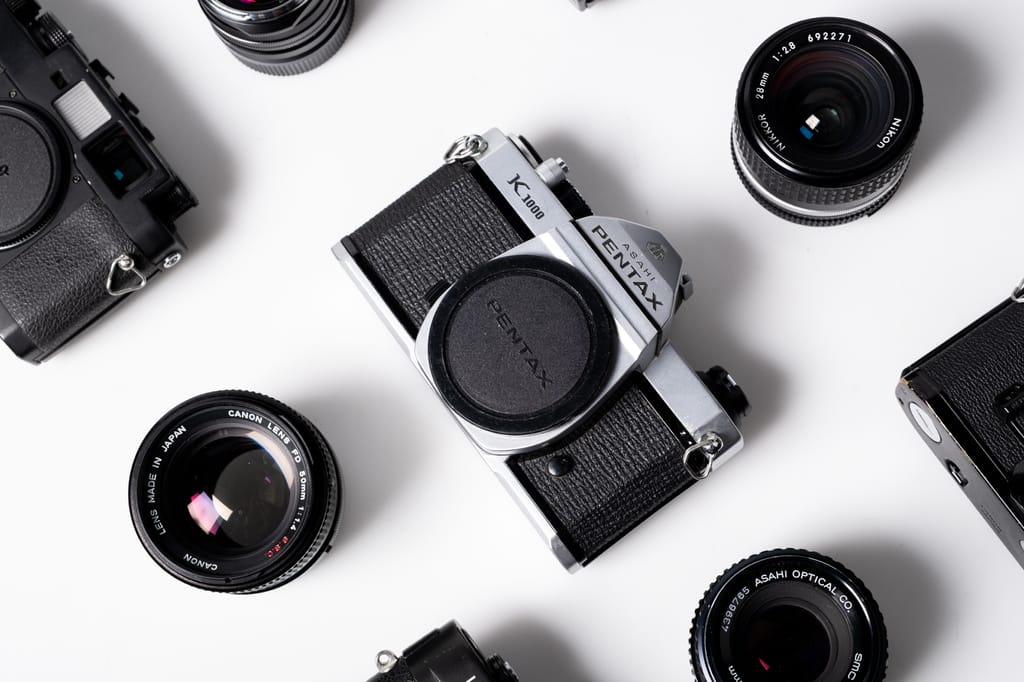
There’s a special little thrill that happens when you load a roll of film, advance the lever, hear the shutter fire, and realize you only have 24 or 36 frames to get it right. That’s the magic of 35mm film photography: it slows you down without making photography feel stiff or serious. Every frame feels intentional, tactile, and a little bit unpredictable in the best way.
The tricky part? Buying your first vintage camera can feel intimidating. You may see affordable film cameras listed all over peer-to-peer marketplaces, thrift store shelves, and social media, but it’s hard to know what actually works. A camera can look clean on the outside while hiding bad light seals, a sluggish shutter, a dead light meter, or battery corrosion.
This guide focuses on budget 35mm film cameras that are beginner-friendly, widely loved, and practical to build a kit around. These are not luxury collector pieces. They are approachable, dependable classics that help you learn exposure, focus, composition, and the joy of slowing down.
If you want the broader landscape before narrowing your shortlist, KEH’s complete buyer’s guide to 35mm film cameras is a helpful next read. For this list, though, we’re keeping the mission simple: the best budget 35mm film cameras for beginners who want to start shooting analog without spending a fortune.
If you’re here for a quick answer, start with these five beginner-friendly classics:
Prices and inventory can shift based on grade, condition, included accessories, and demand, so think of this list as a buying direction rather than a fixed price chart. For most beginners, the goal is not to find the cheapest camera possible. The goal is to find a reliable pre-owned camera that fits your learning style and leaves room in the budget for a lens, batteries, film, and developing.
Before we get into the individual picks, it helps to know what actually matters. Beginners often get distracted by hype: the camera their favorite photographer used, the one that looks coolest on a shelf, or the one that suddenly went viral online. Those things are fun, but they do not always lead to the best first shooting experience.
When choosing among the best film cameras for beginners, focus on four practical questions.
A fully manual camera makes you choose shutter speed, aperture, and focus yourself. That can feel slow at first, but it’s one of the best ways to truly understand the exposure triangle. If you’re a photography student or you love the idea of learning by doing, a manual body can be incredibly rewarding.
An aperture-priority or program-mode camera gives you more help. In aperture priority, you choose the aperture and the camera selects a shutter speed. In program mode, the camera can handle exposure even more automatically. That lets you focus on composition, timing, and the feel of shooting film while still learning what the settings do.
Neither path is “better.” It depends on your personality. If you want a hands-on classroom experience, go manual. If you want a smoother first month with fewer exposure headaches, choose a camera with auto-exposure help. KEH’s guide to beginner-friendly 35mm film camera picks goes deeper on why certain bodies make learning the basics easier.
A camera body is only half the kit. For your first 35mm setup, a simple 50mm lens is usually the sweet spot. It’s compact, versatile, and great for everyday scenes, portraits, street photography, campus life, travel, and learning how aperture affects depth of field.
Some systems have more affordable lenses than others. Pentax K, Canon FD, Minolta MD, Olympus OM, and Nikon F lenses are all strong systems, but pricing varies by focal length, maximum aperture, condition, and popularity. If you’re on a strict budget, do not spend everything on the body. A modest body with a clean, reliable lens is usually better than a famous body paired with questionable glass.
Mechanical cameras can often fire without batteries, although the built-in meter may need power. Electronic cameras usually require batteries for the shutter and meter to operate. This does not make electronic cameras bad. Many are excellent, reliable, and easier to shoot. It just means you should carry spare batteries and test the camera before important trips.
For beginners, battery dependence is only a problem if you don’t know about it. Once you do, it’s easy to plan around.
This is the big one. A vintage camera may be decades old, and age alone does not tell you whether it’s ready to shoot. Buying KEH Certified pre-owned gear helps remove the guesswork because cameras are inspected and graded by gear experts. For a beginner, that matters. Light meters, shutter speeds, film advance, viewfinders, and light seals can make or break your first experience.
Premium vintage gear can be amazing, but you do not need to jump straight into expensive collector territory. If you’re curious how higher-end classics compare with starter kits, browse KEH’s roundup of vintage film cameras under $1,000. For a first camera, though, these five picks keep things approachable.
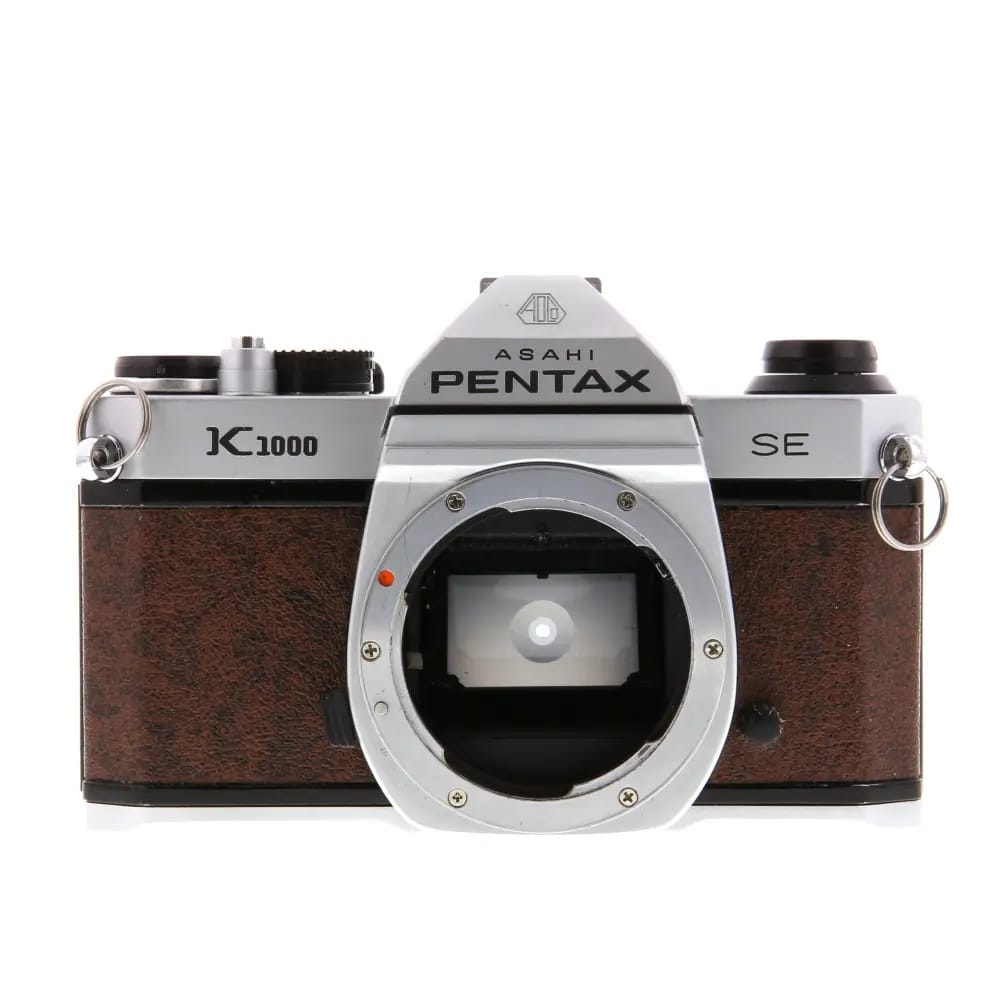
The Pentax K1000 is the classic “learn photography the honest way” camera. It is simple, sturdy, and famously straightforward. There are no trendy bells and whistles here. You set the shutter speed, choose the aperture on the lens, focus manually, and pay attention to the light meter.
That simplicity is exactly why so many photography classes have recommended it for years. The K1000 does not hide the process from you. It makes you participate.
The biggest strength of the K1000 is that it teaches cause and effect. If your photo is too dark, you learn to open the aperture, slow the shutter, or choose a faster film stock. If your background is too sharp, you learn to use a wider aperture. If motion blur sneaks in, you learn why shutter speed matters.
This type of learning sticks. The camera becomes less of a gadget and more of a tutor. For students, it is one of the best budget 35mm film cameras because it forces you to understand what is happening before you press the shutter.
Expect a slower start. Your first roll may have a few missed exposures or slightly soft frames, and that’s okay. The K1000 rewards patience. After a few rolls, you’ll start to recognize lighting situations faster and feel more confident adjusting settings without overthinking.
If you want instant convenience, this may not be your perfect match. If you want to build a strong foundation in 35mm film photography, it is hard to beat.
The Pentax K mount gives you access to a wide range of lenses, including compact 50mm primes and practical wide-angle or telephoto options. A 50mm lens is the best starting point for most beginners because it keeps the kit light and affordable while teaching you composition without zooming.
The K1000 has become more sought after, so it is not always the absolute cheapest starter body anymore. Still, it remains a smart budget choice because it is simple, repairable, and easy to understand. When shopping, pay attention to the grade, whether the meter is working, and whether a lens is included.
Use the K1000 for a simple exposure exercise: shoot the same scene at different apertures while adjusting shutter speed to keep the meter balanced. When you get the scans back, compare how depth of field changes. That one roll can teach you more than a dozen online tutorials.
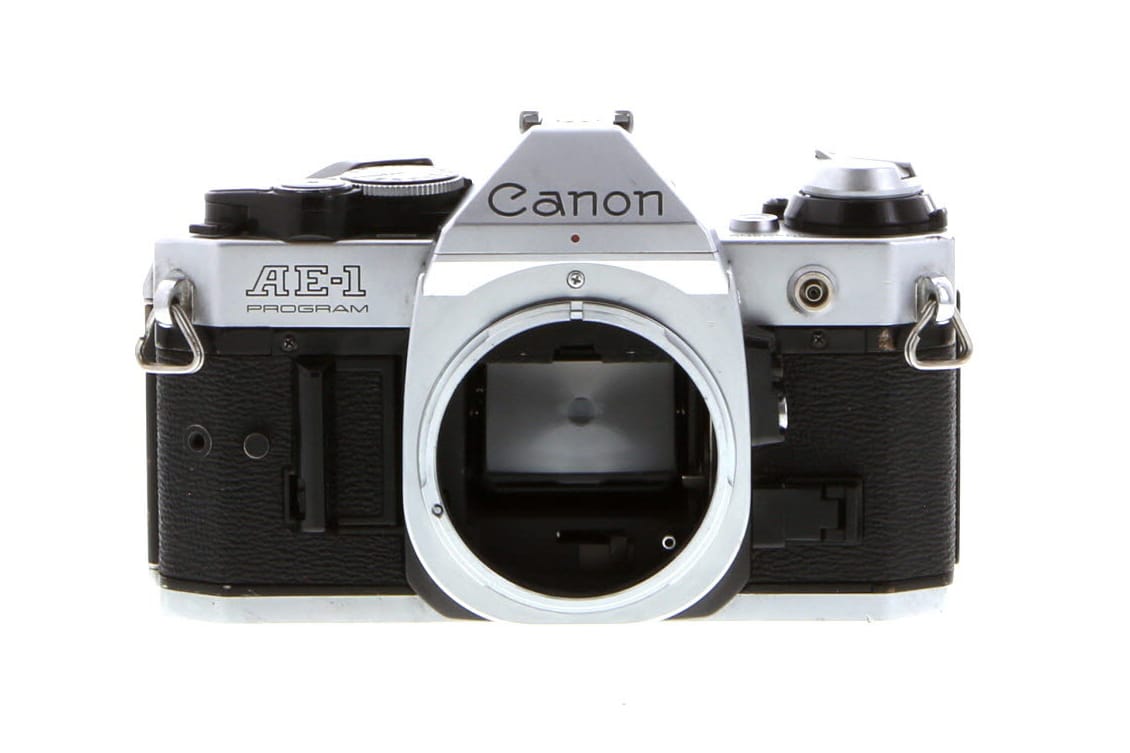
The Canon AE-1 Program is one of the most recognizable affordable film cameras ever made, and for good reason. It gives beginners a friendlier entry point than a fully manual-only body while still offering enough control to grow.
Its big advantage is flexibility. You can use program mode when you’re just trying to get comfortable, then move into more deliberate control as your confidence builds.
The AE-1 Program is approachable. If you’re nervous about ruining your first roll, program mode can help you get properly exposed photos while you learn framing, focusing, and timing. That makes the camera especially appealing for hobbyists who want to enjoy the analog process without feeling like they’re taking a final exam every time they shoot.
It is also a fun camera to use. The controls are intuitive, the viewfinder experience feels classic, and the design has that unmistakable vintage camera charm.
The learning curve is gentle. Start in program mode for your first roll if you want. Once the camera feels natural, begin paying attention to the settings it chooses. Then try taking more control. This makes the AE-1 Program a great bridge between automatic comfort and manual learning.
If you already shoot digital in aperture priority or program mode, the transition will feel especially natural.
Canon FD lenses are widely available and offer plenty of affordable options. A basic 50mm FD lens is a perfect match for portraits, everyday snapshots, travel, and learning low-light limits. There are also many interesting wide and telephoto lenses if you decide to expand later.
One important note: Canon FD lenses are not the same as modern Canon EF or RF lenses. If you already own modern Canon digital gear, those lenses will not simply move over to the AE-1 Program.
Because it is famous, the AE-1 Program can be a little more expensive than less-hyped alternatives. But it still earns a spot among the best budget 35mm film cameras because it combines availability, ease of use, and strong lens support. For many beginners, the extra convenience is worth it.
If you choose this camera, buy fresh batteries and keep a spare in your bag. The AE-1 Program relies on battery power, so a dead battery can stop your shoot faster than an empty roll of film.
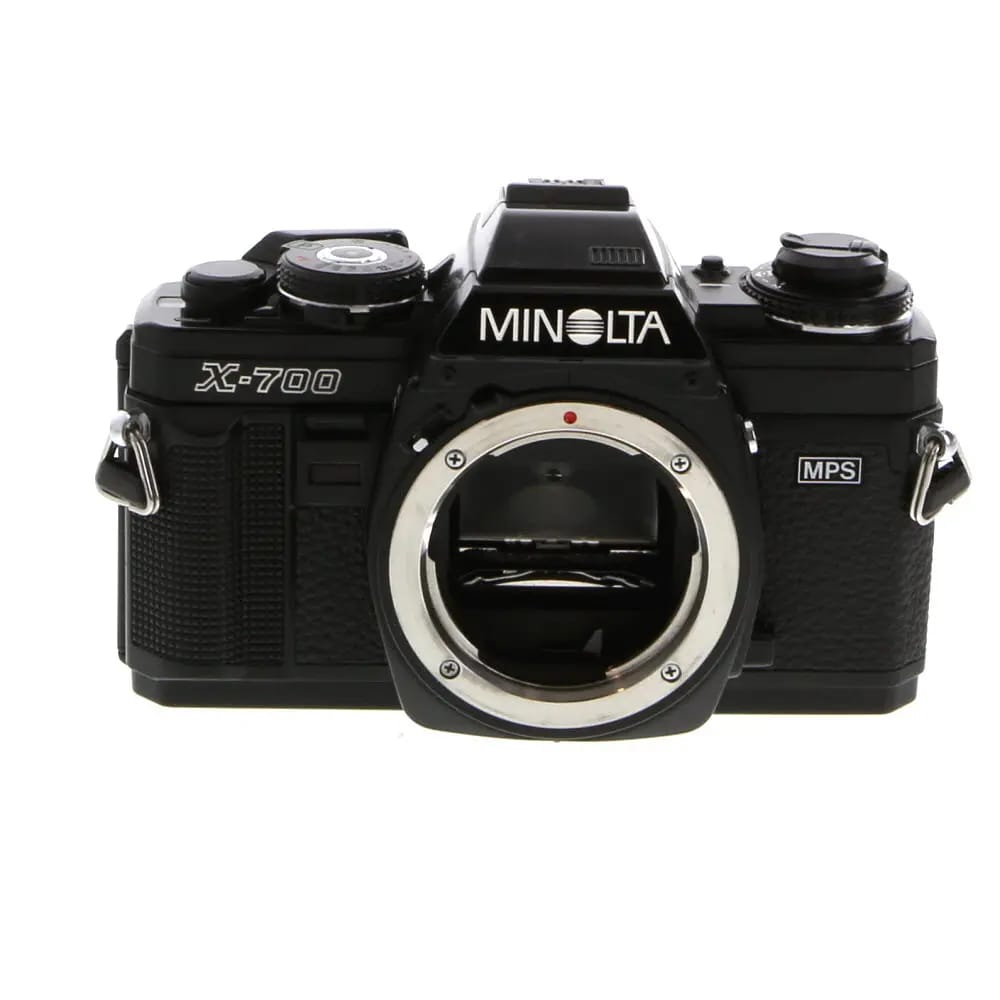
The Minolta X-700 is a fantastic middle path. It offers program mode, aperture priority, and manual control, which means it can meet you wherever you are in your learning process. That versatility makes it one of the best film cameras for beginners who want an easy start but do not want to outgrow their camera quickly.
It feels modern enough to be comfortable and classic enough to deliver the hands-on charm people want from 35mm film photography.
The X-700 is great because it gives you options. On a casual walk, use program mode and focus on the moment. When you want to practice exposure, switch to aperture priority or manual. If you’re taking a photography class, you can use it more deliberately. If you’re traveling, you can lean on automation when the light changes quickly.
That flexibility keeps frustration low. Beginners do not always know what shooting style they prefer yet, and the X-700 leaves room to experiment.
The learning curve is friendly. Program mode helps you get started, aperture priority teaches the relationship between aperture and shutter speed, and manual mode lets you take full control when you’re ready.
This makes the X-700 a great choice for someone who wants a camera for both learning and everyday life. It can be your “serious practice” camera and your “bring it to a weekend hangout” camera.
Minolta manual-focus lenses are one of the hidden strengths of this system. Many Minolta MD and MC lenses are sharp, compact, and often less hyped than comparable lenses from bigger-name systems. That can make building a small kit more budget-friendly.
A 50mm lens is the obvious starting point, but Minolta also has appealing wide-angle and short telephoto options if you later want to shoot street scenes, portraits, or travel details.
The X-700 often lands in a sweet spot: feature-rich without always carrying the same hype premium as some other classics. As with any pre-owned camera, price depends on condition, grade, and whether accessories or lenses are included.
For beginners who want maximum usability per dollar, it is one of the strongest affordable film cameras to consider.
Use aperture priority for your first few rolls. Choose a wider aperture for portraits and a smaller aperture for landscapes or street scenes, then let the camera choose the shutter speed. You’ll learn quickly without feeling overloaded.
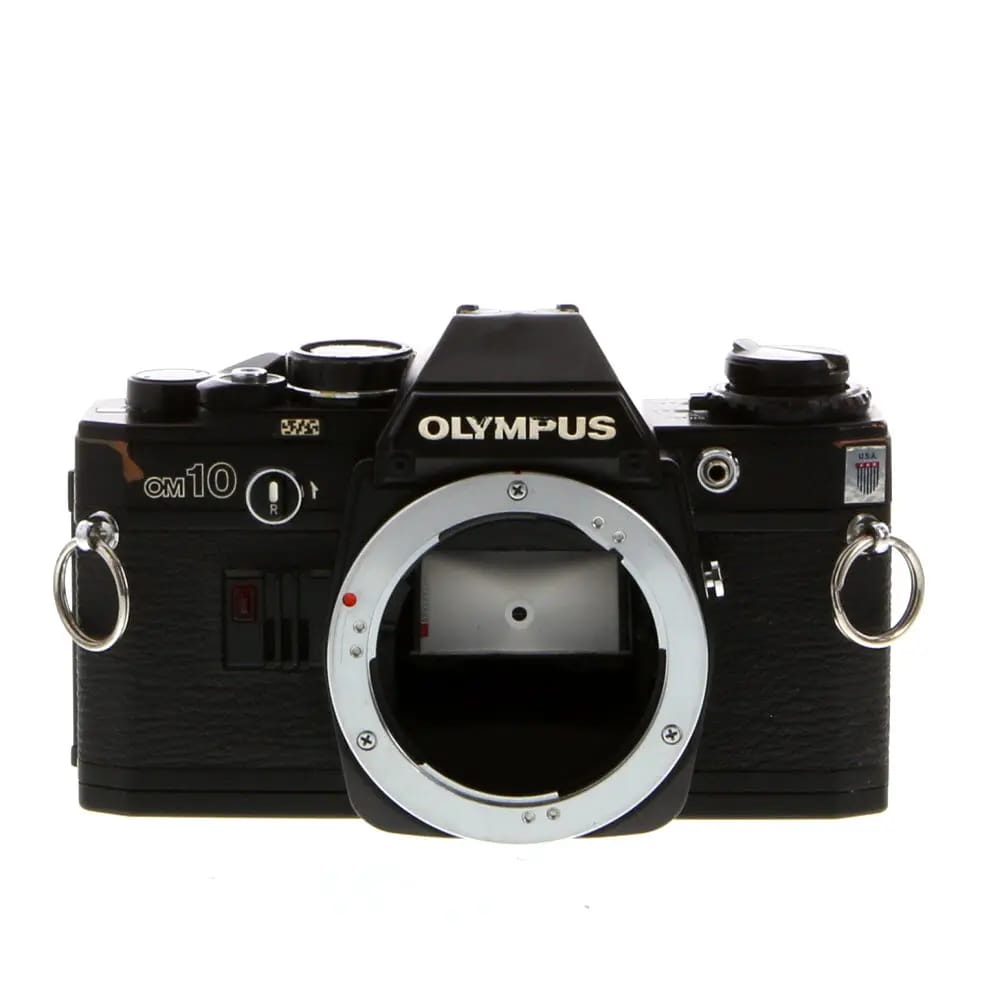
The Olympus OM-10 is compact, stylish, and easy to carry. If bigger SLRs feel a little intimidating, this camera’s smaller size can be a major advantage. A camera you actually bring with you will teach you more than a heavier camera that stays on a shelf.
For beginners who want a vintage camera for travel, campus life, street photography, family gatherings, or casual creative projects, the OM-10 is a very appealing choice.
The OM-10 was designed to be approachable. Its aperture-priority shooting style keeps the experience simple: you choose the aperture, focus, compose, and shoot. The camera handles shutter speed, which gives beginners one less thing to juggle.
That makes it a great pick if your main goal is to enjoy 35mm film photography rather than master every technical detail immediately.
The OM-10 has a smooth learning curve. Aperture priority lets you start with the most visually obvious control: depth of field. You can see how wider apertures create blurrier backgrounds and how smaller apertures keep more of the scene sharp.
Some versions or kits may include a manual adapter that allows more direct shutter-speed control. Without it, the OM-10 is mainly an aperture-priority experience, which is not a downside for many beginners. In fact, it may be exactly what helps you stick with film long enough to build confidence.
Olympus OM lenses are compact and well regarded. They pair beautifully with the small body, keeping the full kit light and easy to carry. A 50mm lens makes the most sense for a first setup, but the OM system also has attractive wide lenses for travel and street photography.
Because Olympus gear has a dedicated following, prices can vary. Still, the system remains a strong option for shooters who care about portability.
The OM-10 is often accessible compared with more famous fully mechanical bodies. Condition matters a lot, especially with electronic cameras, so buying a tested pre-owned camera is important. Check battery compartments, meter function, film advance, and light seals if you are evaluating any vintage body.
Pair the OM-10 with ISO 400 film and use it as an everyday carry camera. Shoot errands, friends, coffee shops, sidewalks, windows, and quiet details. The more ordinary the subject, the more film teaches you to notice light.
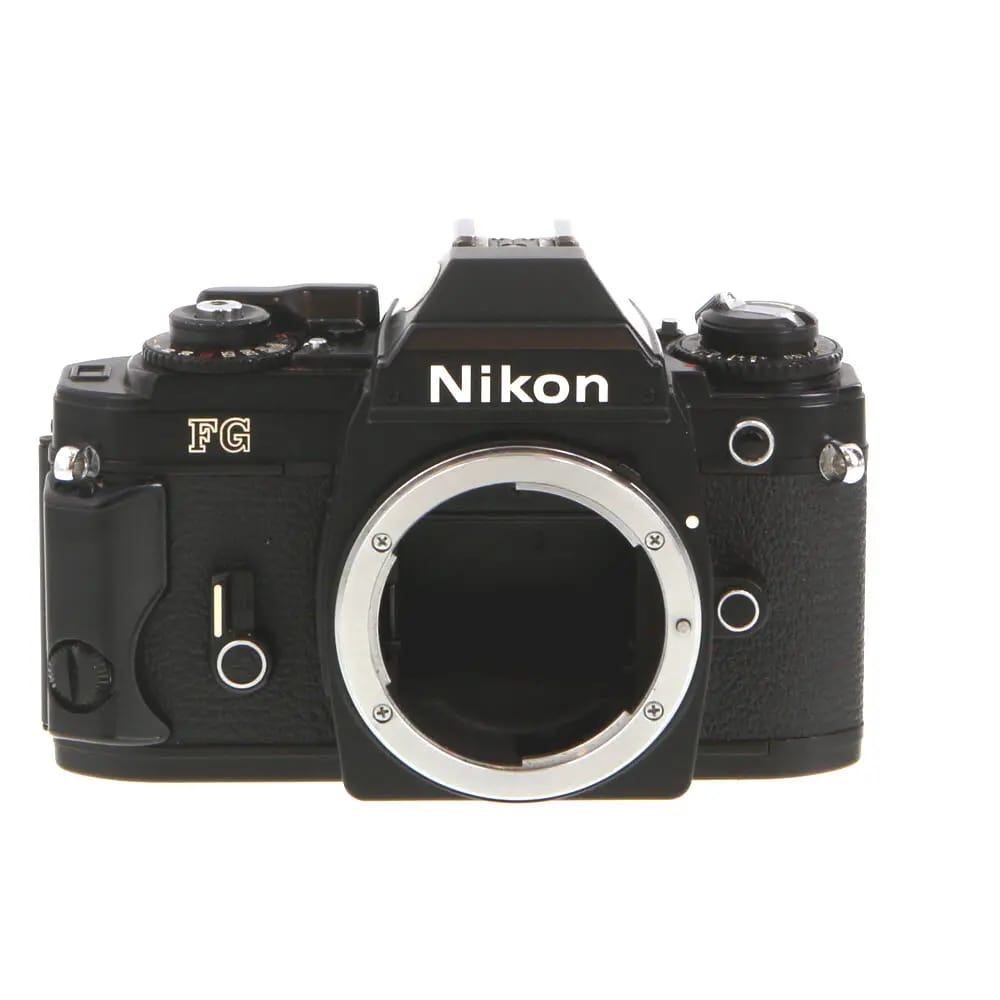
The Nikon FG is an underrated beginner option. It is smaller and less intimidating than many Nikon bodies, yet it gives you access to one of the most important lens systems in film photography. If you like the idea of starting with a compact camera but building toward a larger Nikon kit later, the FG makes a lot of sense.
It offers program, aperture-priority, and manual exposure options, giving beginners flexibility without making the camera feel overly complex.
The FG is practical. It gives you automated help when you want it and manual control when you’re ready. It is a nice fit for beginners who want something more capable than a point-and-shoot but less bulky than some classic mechanical SLRs.
It also has a big long-term advantage: Nikon F-mount lens compatibility. If you later move into other Nikon film bodies, you may be able to keep using many of the same lenses, depending on the lens type and body compatibility.
The FG’s learning curve is manageable. Start with program mode if you want a low-pressure first roll. Move to aperture priority once you want more creative control. Use manual mode when you’re ready to slow down and make every exposure decision yourself.
This step-by-step approach makes the FG one of the best budget 35mm film cameras for beginners who do not yet know whether they prefer automation or full manual shooting.
The Nikon F system is huge, which is both exciting and slightly confusing. Beginners should keep it simple: look for compatible AI or AI-S manual-focus lenses and start with a normal focal length. A 50mm lens is affordable, compact, and versatile.
Because the Nikon system is so deep, you’ll find everything from budget-friendly everyday lenses to premium collector glass. You do not need the fancy stuff to start.
The FG is often more accessible than some of Nikon’s more famous mechanical bodies, which can make it a smart entry point. Its value is strongest when you want Nikon lens access without paying for a heavier pro-level camera.
As always, condition and testing matter. Electronic bodies should be checked carefully, and buying through a KEH Certified process helps reduce the risk of hidden issues.
If you choose the FG, keep your first lens simple. A normal prime lens will help you learn composition better than buying multiple lenses immediately. Spend the savings on film and developing.
Here’s the simplest way to decide.
Choose a fully manual camera if you:
Choose aperture priority or program mode if you:
A manual camera teaches you the hard way. An aperture-priority camera teaches you with training wheels. Both routes are valid, and both can lead to beautiful images.
For your first few rolls, keep it simple. A consumer-friendly ISO 400 color negative film is usually the easiest starting point because it handles a wide range of lighting conditions and gives you some forgiveness if exposure is not perfect. ISO 200 can be great for bright daylight, while ISO 800 is helpful indoors or in dimmer scenes.
If you’re curious about matching film to portraits, landscapes, night scenes, or black-and-white work, KEH’s guide to choosing different film stocks for specific subjects is worth bookmarking.
For beginners, the best cheap film is usually the film you can afford to shoot, develop, and learn from consistently. Do not save your first roll for a once-in-a-lifetime trip. Shoot your neighborhood. Shoot your dorm room. Shoot your friends at lunch. Shoot boring things in good light. That is how you learn.
There is nothing wrong with loving a good bargain hunt. The problem is that vintage film cameras can fail in ways beginners do not notice until after they’ve paid for film and developing.
Common hidden issues include:
When you buy KEH Certified™ pre-owned gear, you’re choosing a safer path. Every piece of gear is inspected, graded, and described by camera experts so you know what you’re getting before you load your first roll. Eligible purchases are backed by KEH’s 180-day warranty, giving you added confidence when investing in decades-old equipment.
Some vintage cameras need more than a careful inspection to get them ready for their next chapter. That is where KEH’s repair expertise makes a difference. With manufacturer-approved repair capabilities and experienced technicians who understand the details of classic camera systems, KEH helps restore gear to reliable working condition.
From servicing mechanical components to addressing issues that come with decades of use, proper repair can help extend the life of cameras that might otherwise be left behind. That means more photographers can experience iconic film cameras, and more vintage gear stays in circulation.
That peace of mind matters. Instead of wondering whether your camera works, you can focus on learning how to see in film.
Before you check out, make sure your starter kit covers the basics:
If your budget is tight, prioritize reliability over cosmetics. A camera with a few scuffs but accurate shutter speeds and clean light seals is a much better beginner tool than a shiny untested body.
Your first film camera does not need to be rare, expensive, or perfect. It just needs to work reliably, fit your learning style, and make you want to go outside and shoot another roll.
Whether you choose a fully manual classic or an aperture-priority body with a little built-in help, KEH makes it easier to shop affordable film cameras with confidence. Explore KEH Certified pre-owned 35mm gear, pick a camera that feels right, load your first roll, and enjoy the slow, satisfying magic of analog photography.
Q: How do I quickly choose among the five recommended cameras?
A: Match the camera to your learning style and priorities. Pick the Pentax K1000 if you want a fully manual, classroom-style experience. Choose the Canon AE-1 Program for the easiest first roll with program mode and room to grow. Go with the Minolta X-700 if you want the best blend of program, aperture priority, and manual in one body. Choose the Olympus OM-10 if you value a lightweight, carry-everywhere setup with simple aperture-priority shooting. Select the Nikon FG if you want a compact body with access to the deep Nikon F-mount lens ecosystem.
Q: Which is better for beginners: Pentax K1000 or Canon AE-1 Program?
A: Choose the Pentax K1000 if you want a fully manual learning experience. It is ideal for students and anyone who wants to understand exposure from the ground up. Choose the Canon AE-1 Program if you want an easier first roll and the option to use automatic exposure while you build confidence. Both are classic beginner cameras, but they teach in different ways.
Q: Do I need a battery to shoot film (and do electronic cameras make things harder)?
A: It depends on the camera. Some mechanical cameras can still fire the shutter without a battery, but the built-in light meter may not work. Many aperture-priority or program-mode cameras require batteries for the shutter and meter. The simple fix is to install fresh batteries, carry a spare, and test the camera before important trips—electronic cameras can actually make learning easier thanks to their helpful auto-exposure modes.
Q: What should I budget for beyond the camera body?
A: Leave room for a simple 50mm lens, fresh batteries (if your camera needs them), a couple of rolls of beginner-friendly film, and developing/scanning. Add a strap, lens cap, and a basic plan to track your settings while you learn. Prioritize reliability over cosmetics—an accurately functioning body with clean light seals and a solid lens will teach you more than a prettier but untested camera.
Q: What lens should I buy first?
A: Start with a 50mm lens if possible. It is versatile, compact, and great for learning. Once you know what you like to shoot, you can add a wide-angle lens for landscapes or street photography, or a short telephoto for portraits.
Q: What is the best cheap film to start with, and how should I shoot my first rolls?
A: A flexible ISO 400 color negative film is usually the easiest place to start because it works in varied light and is forgiving if your exposure is slightly off. ISO 200 suits bright days; ISO 800 helps in dimmer scenes. If you want to save money, choose a consumer film stock rather than a premium professional one for your first few rolls, and shoot everyday subjects so you can practice consistently.
Q: Why shouldn’t I just buy a cheap camera at a thrift store (and how can I reduce risk when buying used)?
A: You can, but it is risky. A thrift store camera may have unknown light leaks, dead electronics, inaccurate shutter speeds, fungus in the lens, or a broken meter, and you might not discover the problem until after you shoot and develop a roll. Buying KEH Certified gear reduces guesswork with expert inspection, clear grading, and an eligible 180-day warranty.
Q: Are budget 35mm film cameras still worth it?
A: Yes, as long as you buy carefully. The best budget 35mm film cameras give you a hands-on creative experience that feels very different from digital photography and help you slow down, think about light, and make more intentional images. Just remember to budget for the full process, not only the camera body.
Q: What is the safest first choice overall?
A: If you want the purest learning tool, choose the Pentax K1000. If you want the easiest beginner experience, choose the Canon AE-1 Program. If you want the best all-around blend of features and value, choose the Minolta X-700. The good news is that all five cameras on this list can be excellent starter tools when bought in reliable condition.