You
have no items in your shopping cart.
Under Exposed: Folding Cameras You Should Know
October 02, 2026
1 min read


A camera that folds in half sounds like a gimmick. In practice, it was one of the smartest solutions photographers ever had for making serious cameras easier to carry.
Before today’s compact mirrorless bodies and pancake lenses, folding designs allowed manufacturers to build capable cameras that could collapse into surprisingly portable packages. The concept worked across nearly every major film format, from 35mm to medium format to 4×5, and even made instant photography more portable.
Folding wasn’t simply a stylistic choice. It solved a practical engineering problem: how do you make a capable camera smaller when you’re carrying it without limiting what it can do when you’re using it?
The result is a category of cameras far more diverse—and far more capable—than the vintage aesthetic might suggest.
At KEH, we’ve handled enough cameras to know that “folding camera” doesn’t automatically mean “old camera you put on a shelf.” Some are legitimate working tools. Some are ingenious examples of photographic engineering. And some are simply a great excuse to shoot film differently.
Here are seven folding cameras worth knowing.
The defining feature is simple: the camera physically collapses for storage and opens up when you’re ready to shoot.
Traditional folding cameras typically use a bellows that extends between the camera body and lens. When the camera is closed, the lens and bellows fold into the body, creating a much smaller package. When it’s time to take a photograph, the front standard extends into position, and the camera becomes ready to shoot.
That basic idea was especially useful before compact interchangeable-lens systems and modern mirrorless cameras existed. A photographer could carry a camera capable of producing a relatively large negative without having a rigid camera body taking up the same amount of space.
But “folding camera” doesn’t describe just one kind of photographic experience. The cameras below cover a lot of ground.
| Camera | Format | Why it matters |
| Polaroid SX-70 | Instant | Iconic folding instant-camera design |
| Kodak Retina IIA | 35mm | Serious photography in a genuinely compact package |
| Fuji GS645 Professional | 120 / 6×4.5 | Portable entry into medium format |
| Mamiya-6 V | 120 / 6×4.5 & 6×6 | Two medium-format compositions in one folding body |
| Fuji GF670 Professional | 120 / 6×6 & 6×7 | Modern refinement of the folding medium-format idea |
| Voigtländer Bessa II | 120 / 6×9 | Large negative in a folding rangefinder |
| Toyo Field 45CF | 4×5 sheet film | Makes large-format field photography transportable |
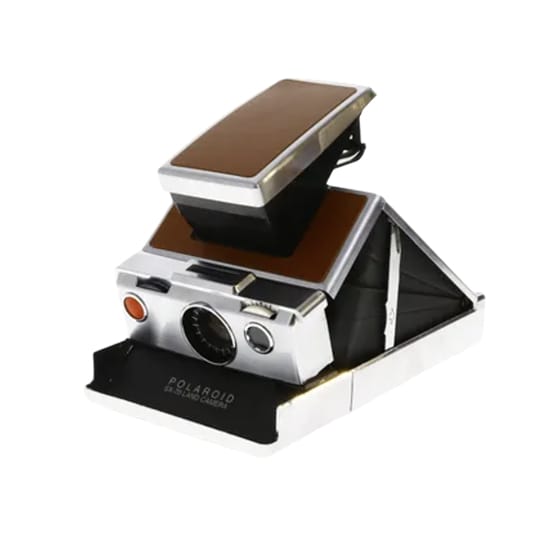
The Polaroid SX-70 is probably the easiest camera on this list to recognize, but its folding design still deserves more credit than it gets.
When closed, the SX-70 is remarkably flat. Open it up, and the lens, viewfinder, and bellows-like folding structure transform it into a fully functional instant camera. Its design is a perfect example of folding technology being used not simply because it looked good, but because it solved a practical problem: making an instant camera portable enough to take anywhere.
The SX-70 also has a distinctive shooting experience. Instead of waiting for film to be developed later, you get a physical photograph almost immediately. That makes it less about maximizing technical control and more about the experience of making an image and watching it appear.
For photographers interested in the history of instant photography, industrial design, or simply cameras that make photography feel tactile again, the SX-70 is an obvious place to start.
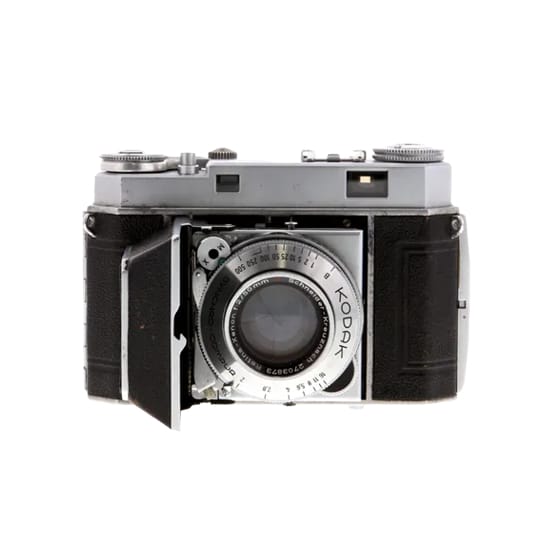
The Kodak Retina IIA represents another interpretation of the folding camera: a compact 35mm camera designed to travel.
The Retina line helped establish the idea that a 35mm camera could be both sophisticated and genuinely portable. The IIA uses a 50mm f/2 Xenon lens and Synchro-Compur shutter, giving it a serious photographic setup inside a body that can fold down considerably smaller than its shooting configuration suggests.
It’s also a good reminder that folding cameras weren’t exclusively about huge negatives or novelty. Sometimes the entire point was simply to make a capable camera easier to carry.
For photographers who like compact cameras but still want the character and hands-on experience of a mechanical 35mm system, the Retina IIA makes a strong case for going old-school.
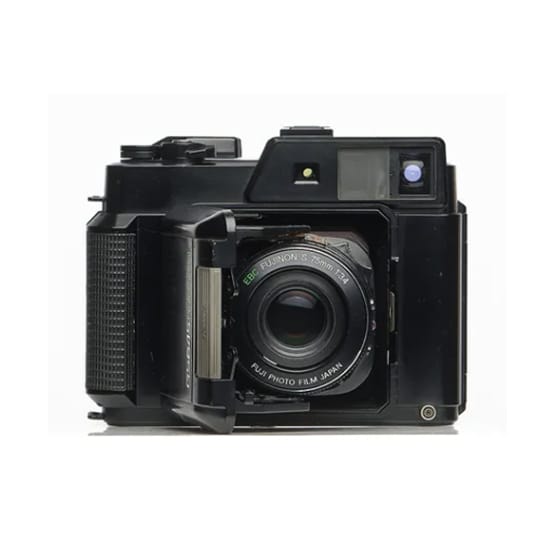
The Fuji GS645 Professional brings the folding medium-format concept into a more photographer-friendly, modern-feeling package.
Its 6×4.5 format and 75mm f/3.4 lens offer a useful balance for photographers who want more negative area than 35mm without jumping all the way to the larger 6×6 or 6×7 formats.
The GS645 is also a great example of why folding cameras shouldn’t automatically be categorized as “vintage curiosities.” There are practical reasons to want one. A camera that folds down can be easier to pack, easier to carry, and less cumbersome when you’re already traveling with other gear.
And unlike a novelty camera, the format is doing real photographic work. You’re getting a larger negative while keeping the overall system relatively compact.
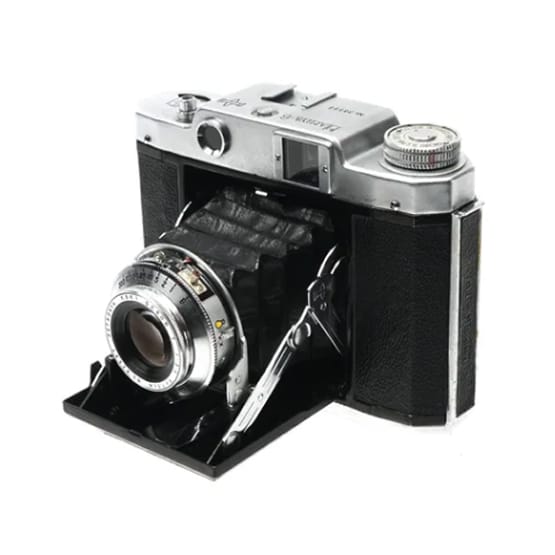
The Mamiya-6 V takes the folding concept into medium format, with something especially interesting for photographers who like options: dual-format capability.
This camera can shoot both 6×4.5 and 6×6, using a 7.5cm f/3.5 Setagaya Koki Sekor lens.
That makes it an especially intriguing camera for photographers who want to experiment with how format changes composition. The 6×6 square frame has a very different visual rhythm from the rectangular 6×4.5 frame, even before you consider the larger negative compared with 35mm.
It’s the kind of camera that rewards photographers who enjoy slowing down and making decisions before pressing the shutter. And because it folds, you aren’t necessarily paying for that larger format with an equally large camera bag.
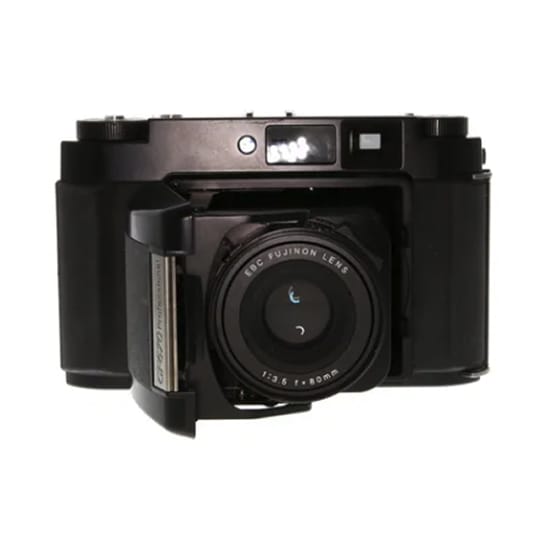
The Fuji GF670 is one of the more modern examples of the folding medium-format camera.
It combines a collapsible design with a 6×7 medium-format frame and an 80mm f/3.5 lens. That makes it a particularly compelling option for photographers who want the image quality and negative size of medium format without carrying a conventional medium-format system.
There’s something wonderfully contradictory about cameras like this. A 6×7 negative sounds like it should require a massive camera. The GF670’s folding design challenges that assumption.
For travel, documentary work, portraits, and everyday medium-format photography, that balance between negative size and portability is a big part of the appeal.
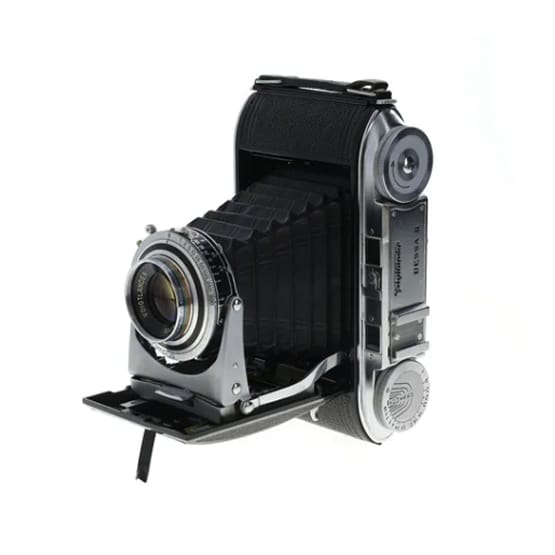
The Voigtländer Bessa II is another classic folding medium-format camera that deserves more attention than it typically gets.
Its design belongs to an era when a camera could be mechanically sophisticated without needing a battery, electronic display, or autofocus system. The photographer handles the process directly: focus, exposure, advance, and composition all become part of the experience.
That hands-on approach is part of what makes older folding cameras interesting today. You’re not simply using an older version of a modern camera. You’re interacting with a completely different approach to photography.
Note: Add the correct KEH Bessa II listing here once the product URL is confirmed.
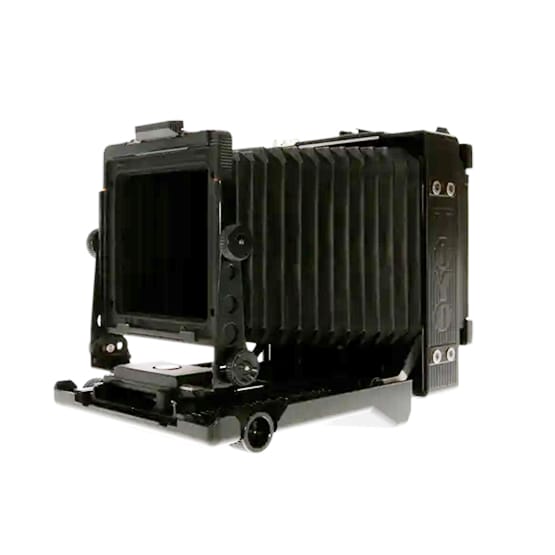
At the opposite end of the spectrum is the Toyo Field 45CF.
A 4×5 folding field camera takes the same basic concept and scales it up dramatically. Instead of a compact instant camera, you’re working with a large-format system designed around 4×5-inch sheet film.
The appeal is the combination of large-format image quality and a design intended for field use. Folded down, the camera is significantly more manageable than its open configuration might suggest. Set it up, and you’re working with a full large-format shooting experience.
This is where folding cameras become particularly interesting: “portable” doesn’t necessarily mean small. In large format, it can mean as portable as a serious 4×5 camera can reasonably be.
For landscape, architecture, and other deliberate forms of photography, a field camera can also encourage a completely different pace. You compose on the ground glass, make adjustments, and take fewer photographs with considerably more intention.
Folding cameras can still be legitimate photographic tools, but age and mechanical complexity make conditions especially important. If you’re considering one today, the folding mechanism itself introduces a few things worth paying attention to.
Bellows: Bellows are fundamental to many folding-camera designs. Their condition matters because cracks, pinholes, brittleness, or separation can potentially allow unwanted light into the camera. A bellows can look fine at first glance while still showing age, so its condition deserves more attention than the exterior appearance alone.
Folding Mechanism: The camera should open correctly, extend into its shooting position, and lock as designed. Hinges, supports, doors, and folding components should be evaluated for obvious damage or operational problems. A beautiful exterior doesn’t mean much if the camera can’t reliably reach and maintain its proper shooting position.
Lens and Shutter: As with any older film camera, optical and mechanical condition matter. Lens condition, aperture operation, focus movement, and shutter operation should all be considered.
Viewfinder or Rangefinder: Where applicable, check whether the viewfinder is usable and whether focusing mechanisms appear to operate properly.
Film Transport: Film advance, counters, pressure plates, backs, inserts, and other format-specific components can all matter depending on the camera.
This is where buying vintage equipment differs from simply choosing a model from a specification sheet. With an older folding camera, which camera you buy matters—but the condition of the specific camera in front of you can matter just as much.
That’s also where professional inspection and accurate condition grading become especially valuable.
A folding camera might be worth considering if you want:
It may be less appealing if your priorities are speed, autofocus, extensive automation, or minimum setup.
And that’s part of the point.
A folding camera isn’t necessarily a better version of a conventional camera. It’s a different solution to a different set of photographic priorities.
The appeal of folding cameras isn’t just nostalgia.
A folding camera can give photographers access to a larger film format without demanding the same physical footprint as a comparable rigid design.
That’s true whether you’re talking about a compact 35mm Retina, a medium-format Fuji, or a full 4×5 field camera.
Bellows, folding lens assemblies, mechanical shutters, hinges, standards, and collapsible bodies weren’t simply aesthetic details.
They were engineering solutions.
Different manufacturers used those solutions in dramatically different ways, but the objective remained remarkably consistent: make capable photographic equipment easier to transport.
If you’re looking to try something outside the usual 35mm SLR or modern mirrorless setup, folding cameras offer a surprisingly broad place to explore.
Go instant with the SX-70. Carry compact 35mm with the Retina IIA. Explore medium format with cameras like the GS645, Mamiya-6 V, GF670, or Bessa II. Or take the folding concept all the way to 4×5 with a field camera like the Toyo 45CF.
The folding camera was never just a gimmick. It was a solution: make the camera smaller when you’re carrying it without making the photograph smaller when you’re using it.
Camera makers applied that idea to everything from instant and 35mm photography to medium format and 4×5. The results don’t all shoot alike, look alike, or even fold alike.
That’s exactly what makes them worth unfolding again.