You
have no items in your shopping cart.
The Truth About Water-Damaged Camera Gear: Can It Be Saved?
August 13, 2026
1 min read


If you spend enough time taking photos out in the wild, the thought has probably crossed your mind: What happens if my camera takes a swim?
At KEH, we inspect, repair, buy, and sell thousands of pieces of photography equipment every single week. We’ve seen exactly what water can do to delicate equipment. So, when YouTuber and photographer Max Adams reached out to us with a nightmare scenario, we knew exactly what we were up against.
Max’s massive, professional-grade Canon EF 400mm f2.8 L IS prime lens had been completely submerged in saltwater during Hurricane Ian. He came down to visit the KEH repair shop to see if a miracle was possible, and he documented the entire journey for his channel.
If you watch Max’s video, you’ll get an exclusive, behind-the-scenes look at our expert decision-making process. But right up front, we had to be completely transparent with Max: KEH does not typically repair water-damaged gear.

We made an exception this time by using Max’s lens as a unique educational case study. True expertise isn’t just knowing how to fix gear; it’s about a commitment to continued learning and knowing exactly when a repair is no longer advisable. Here is an honest look at the realities of water damage, why most shops won’t touch it, and how you can avoid further destroying your equipment if the worst happens.
Gear that has been water-damaged is always a massive gamble. From the outside, it’s impossible to know exactly where the water went or what components it touched. We generally turn down water-damaged repairs for a few critical reasons:
Not all water damage is created equal. While any liquid exposure can be dangerous for camera gear, saltwater is particularly destructive.
The bottom line: If your gear gets submerged, treat it as an emergency, regardless of the water type. Saltwater generally presents a greater corrosion risk, but freshwater can still cause serious electrical and mechanical damage.
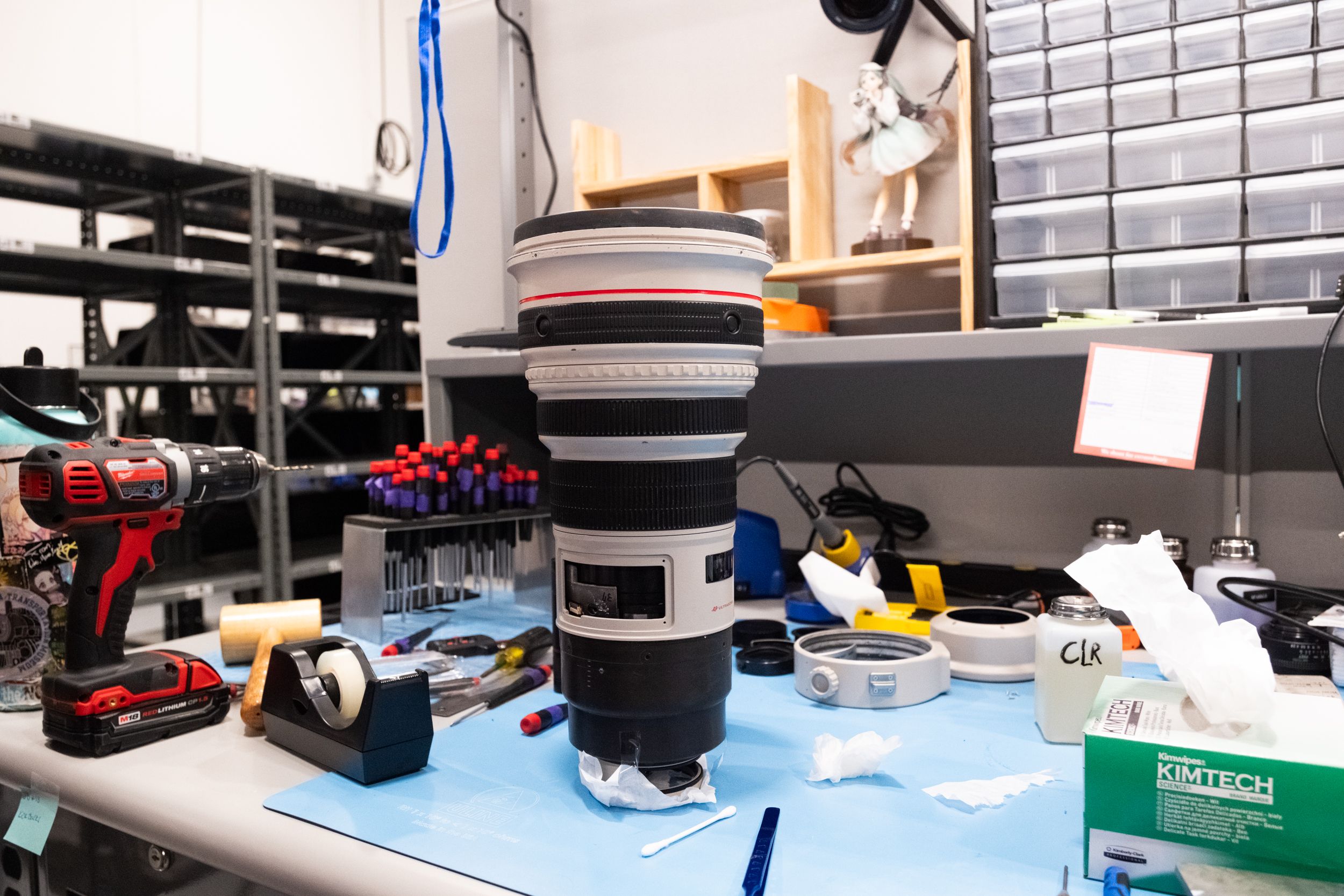
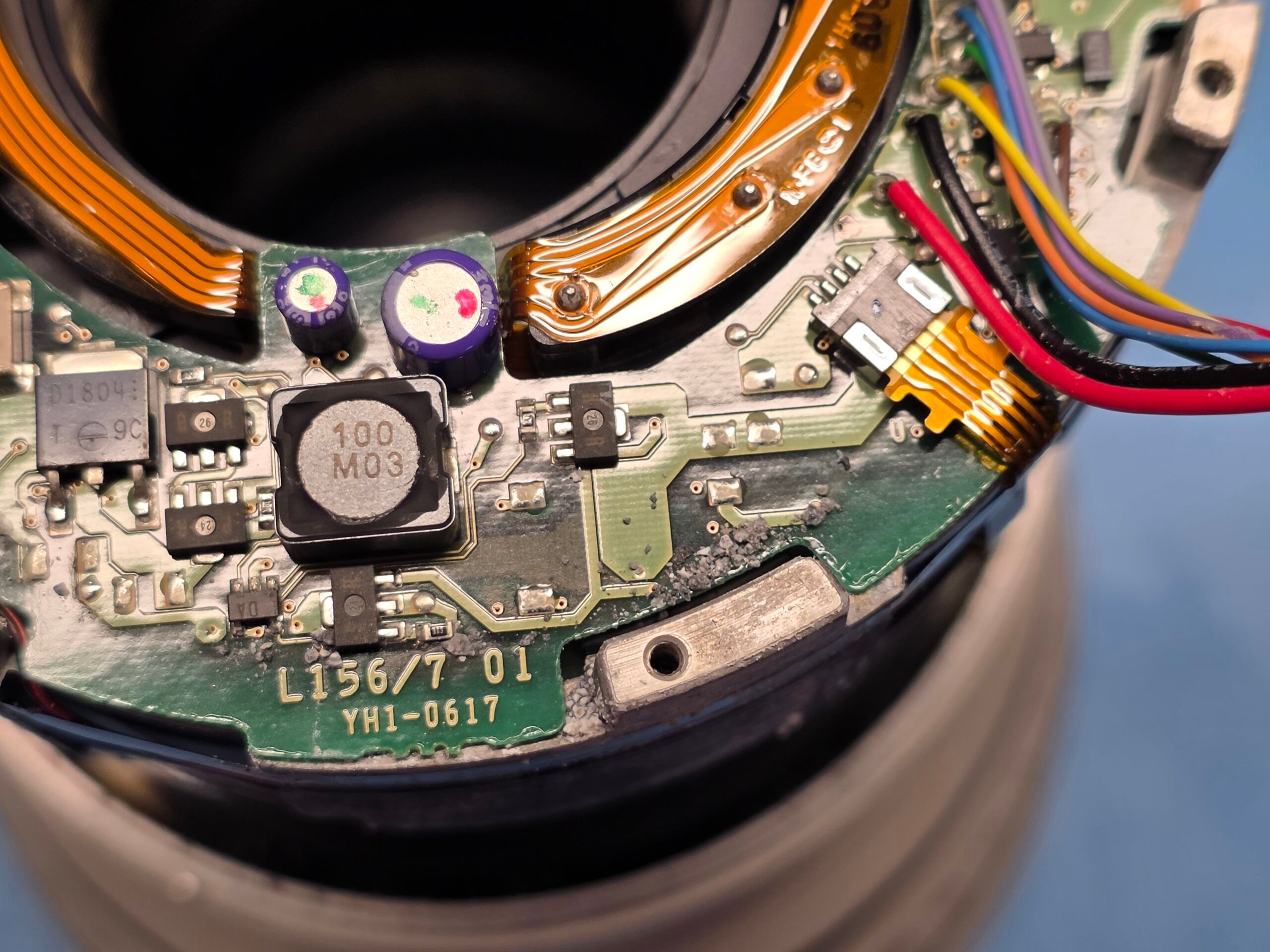
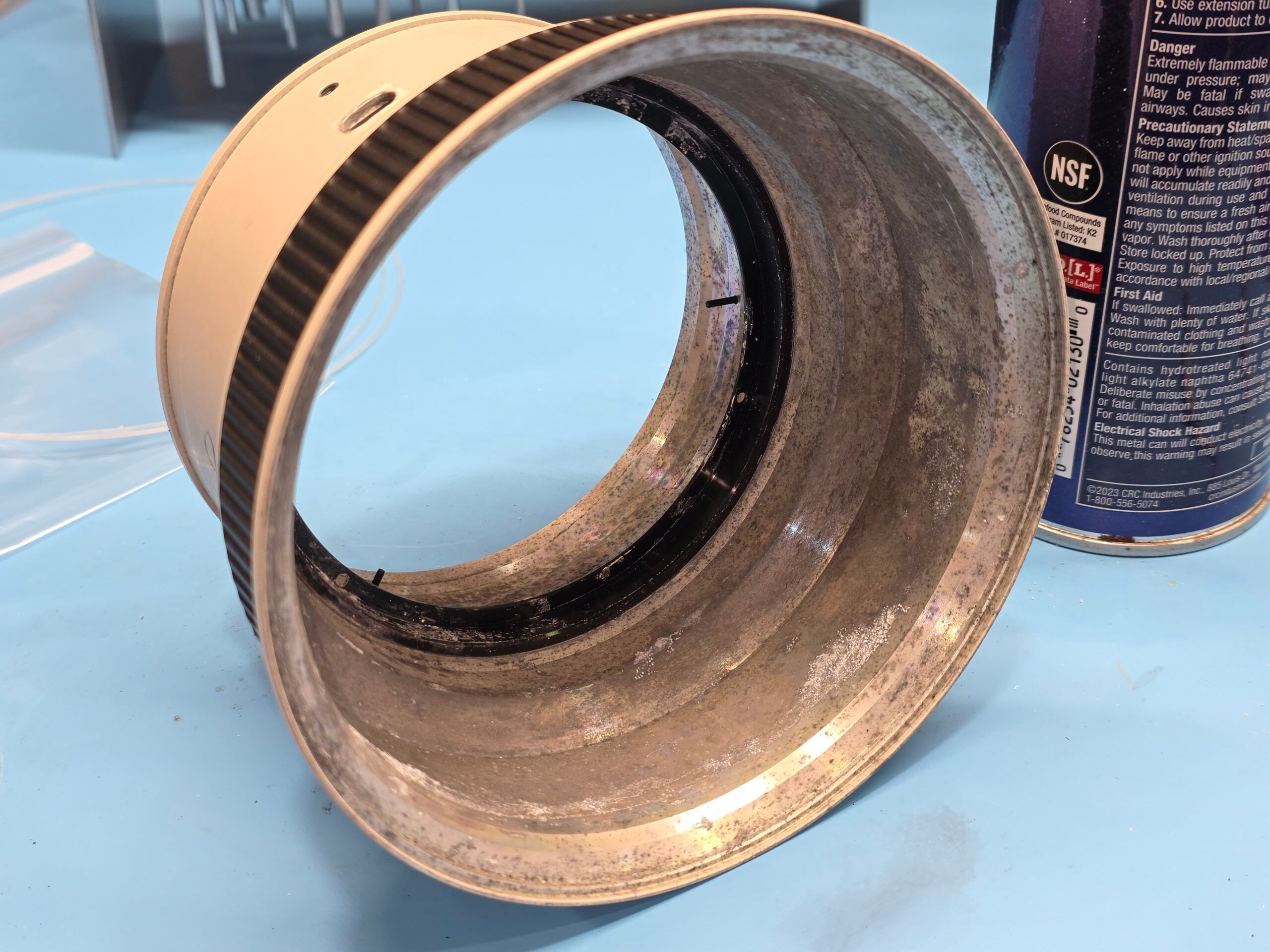
When Max brought his Canon EF 400mm lens into the shop, it was in a very sorry state. Water from the Gulf of Mexico had breached the weather seals, infiltrating the front element stack and the main case. Because the lens sat in a closed box for three years after the hurricane, the water eventually dried—but the harsh sea salt crystallized inside.
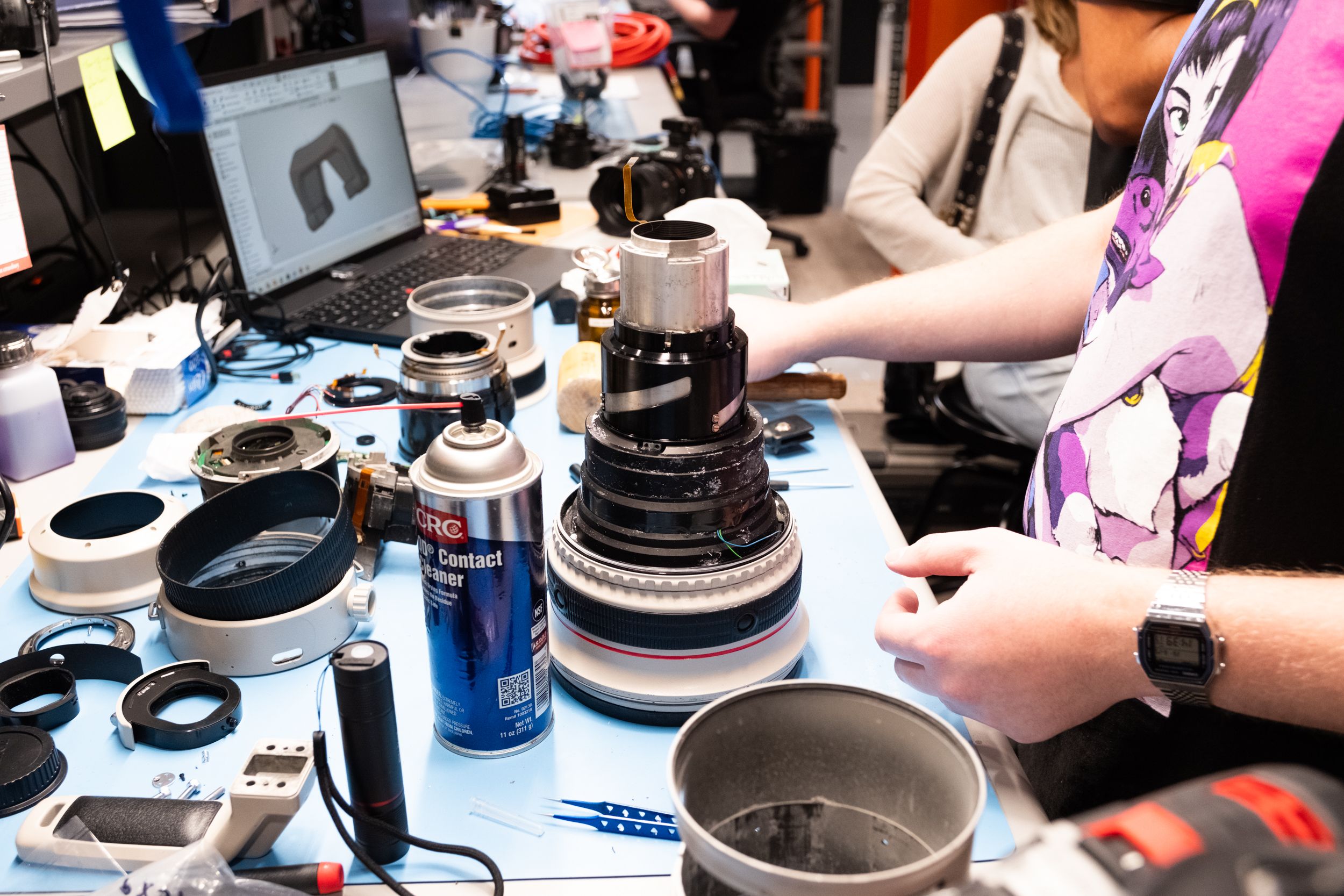
Our team boasts manufacturer-approved repair capabilities, which means they usually spend their days performing precise, factory-standard calibrations and replacing delicate components. This repair, however, was a monumental, forceful defusal.
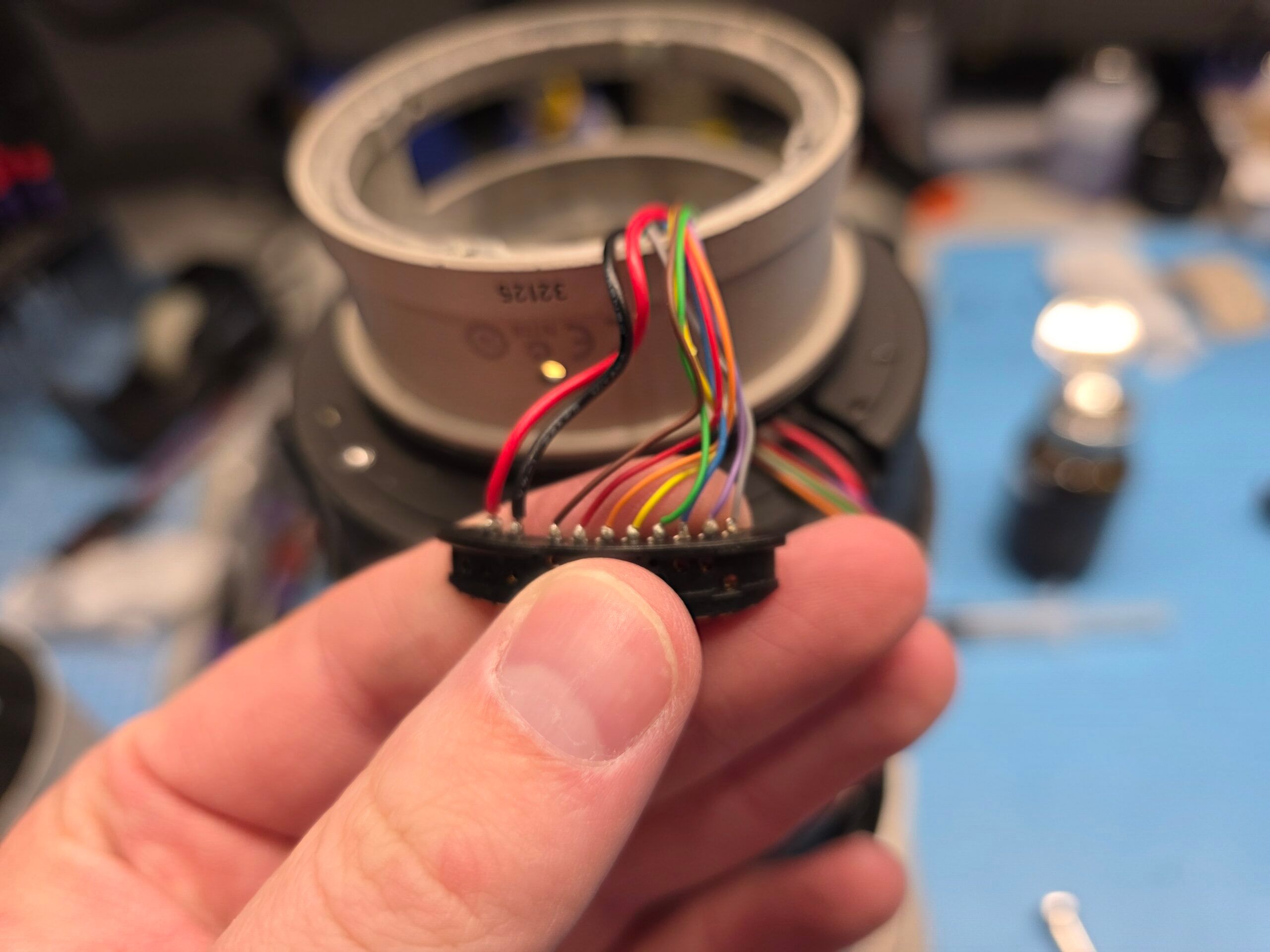
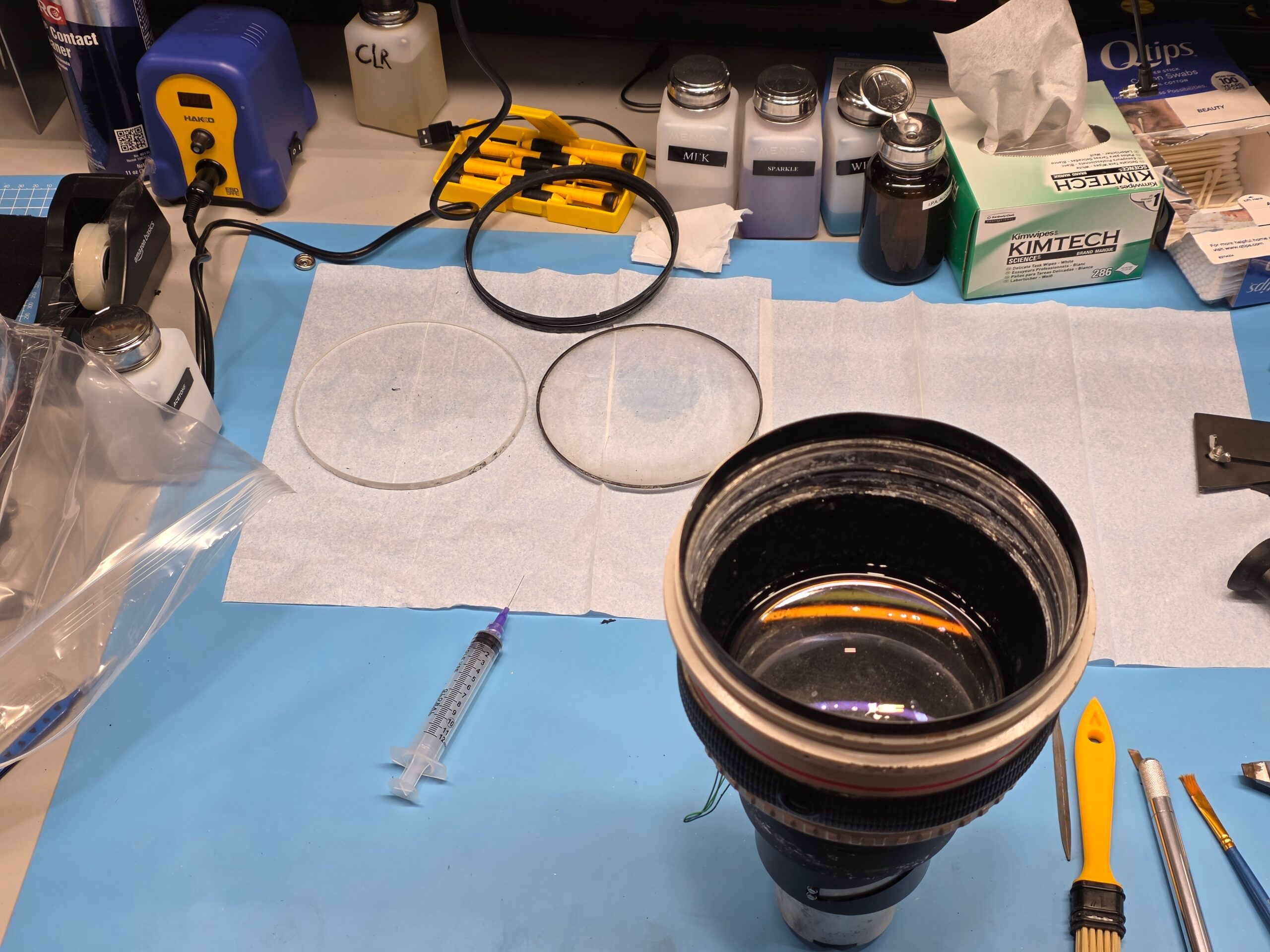
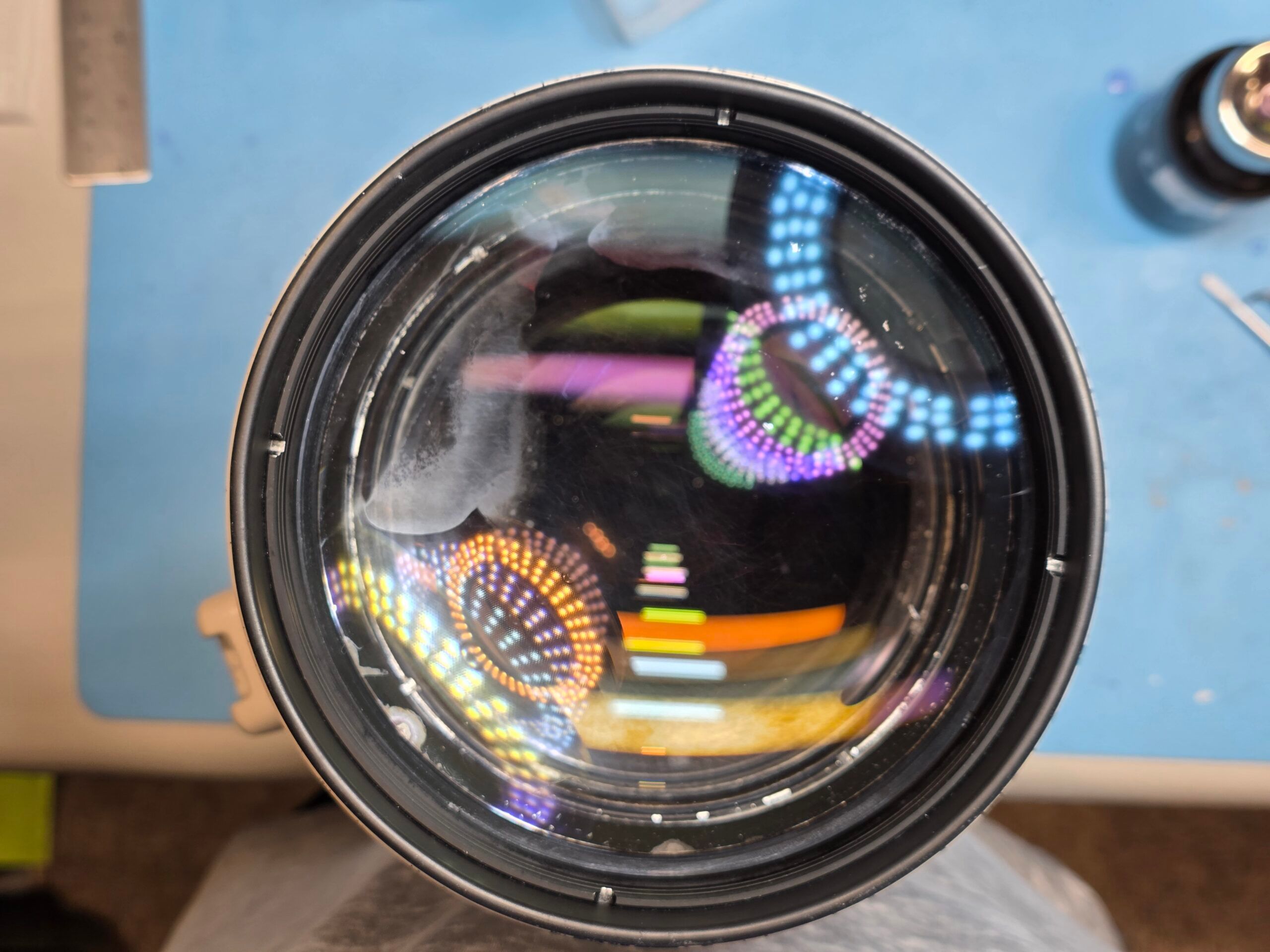
The saltwater had allowed microorganisms to grow, turning the internal glass into a hazy, opaque mess. Worse, the screws were essentially welded in place by rust and salt. It took two technicians using hammers, punches, heat guns, and aggressive chemical solvents like acetone over multiple weeks just to break down the crystallized salt and remove the main casing.
Even though the lens was eventually saved—miraculously, it had been stored front-element-down, which kept the saltwater away from the main motherboard—the exposure permanently destroyed some of the high-tech, chemically bonded coatings along the edges of the internal glass.
We got incredibly lucky with Max’s lens, but the grueling process perfectly illustrates why flooded lenses are usually considered beyond reasonable repair. Getting into delicate equipment requires a delicate touch; water damage turns that into a battle of combined physical strength.
If your gear takes a dive, acting quickly can be the difference between a salvageable piece of equipment and a paperweight. Follow these steps immediately:
The best way to deal with water damage is to prevent it in the first place. You don’t have to avoid shooting in unpredictable weather, but a little preparation can go a long way.
A little preparation can make the difference between getting the shot and getting your gear repaired. When you’re shooting around water, think ahead about where your equipment will go if the weather changes or your camera takes an unexpected splash.
While Max’s story had a happy ending, it serves as a powerful reminder of nature’s destructive power. If you find yourself dealing with water-damaged gear, skip the rice, pull the battery, and seek out a transparent, expert opinion right away.
Want to see more about Max’s repair journey with KEH? Watch the full video:
Want to learn more about camera repair? These blogs are for you:
Is Your Camera Gear Worth Repairing or Is It Time for an Upgrade?
The Modern Photographer’s Guide to Digital Camera Repair
Can a water-damaged camera be repaired?
Sometimes, but it depends on the type and extent of the damage. Water can affect electronic components, mechanical parts, optical elements, and coatings, and corrosion can continue even after the gear appears dry. Because the damage can be difficult to fully assess and reliably repair, severely water-damaged gear is often considered beyond reasonable repair.
Is saltwater worse for cameras than freshwater?
Generally, yes. Saltwater is particularly damaging because dissolved salts can increase conductivity and accelerate corrosion. Salt and other contaminants can also remain behind after the water evaporates. Freshwater can still cause serious electrical and mechanical damage, especially if it contains minerals, dirt, chemicals, or other contaminants.
What should I do if my camera gets wet?
Remove the battery and disconnect any other power source immediately. Remove the lens, memory card, and other accessible components, and open compartments to allow moisture to escape. Stop using the gear and have it professionally evaluated as soon as possible.
Should I put my wet camera in rice?
No. Rice is not a reliable way to remove moisture from the inside of camera equipment and can introduce dust and starch into delicate components. The better approach is to remove the power source, stop using the gear, and seek a professional evaluation.
Can a camera still work after getting wet?
It can, but that doesn’t necessarily mean it’s safe to keep using. Moisture and contaminants trapped inside the camera can cause short circuits, corrosion, or other problems that may develop over time. A professional evaluation can help determine the extent of the damage.
Does weather sealing make a camera waterproof?
No. Weather sealing can provide additional protection against dust and moisture, but it does not make a camera or lens waterproof or safe to submerge. Always check the manufacturer’s specifications for your specific equipment.
How can I protect my camera from rain and water?
A rain cover, weather-resistant camera bag, lens hood, and weather-resistant camera and lens combination can all provide additional protection. When shooting around water, keep your gear secure and avoid opening compartments or changing lenses in areas exposed to spray or splashing.
What happens if water gets inside a camera lens?
Water can reach internal glass elements, mechanical components, electrical contacts, and other sensitive parts. Depending on the type of water and how long it remains inside, it can lead to haze, contamination, corrosion, or damage to optical coatings and electronics.