You
have no items in your shopping cart.
Medium Format vs 35mm Film: Which Format Is Right for You?
October 13, 2026
1 min read

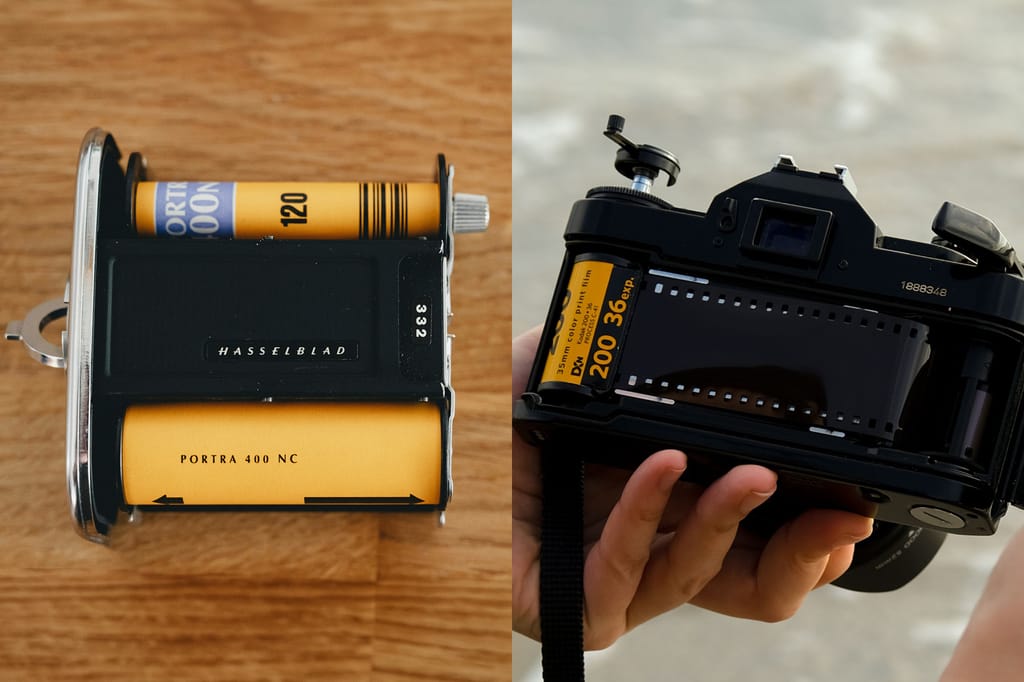
Medium format has a reputation for being “better,” but that depends on how you shoot and what you want from your images. A 35mm film camera can be faster, lighter, less expensive to feed, and easier to carry all day. Medium format gives you a larger negative and often encourages a slower, more deliberate approach.
The right choice isn’t about status. It’s about your image goals, budget, shooting style, and the gear you’re willing to bring along.
| 35mm film | Medium format film | |
|---|---|---|
| Film | 35mm (135) | Usually, 120 roll film |
| Frame size | 24 × 36mm | 6×4.5, 6×6, 6×7, 6×9 (nominal) |
| Exposures | Typically 24 or 36 | Roughly 8–16, depending on format |
| Image detail | Excellent for everyday use and many prints | Greater potential for large prints and detailed scans |
| Portability | Generally smaller, lighter | Generally larger, heavier |
| Shooting pace | Often faster | Often more deliberate |
| Cost per frame | Generally lower | Generally higher |
| Best suited for | Travel, street, documentary, and everyday shooting | Portraits, landscapes, studio, and intentional projects |
The main difference is the size of the film frame, not whether one camera is automatically more serious than another. Film format refers to the physical size of the image captured on film. Camera type refers to the body style that holds and exposes the film, such as an SLR, rangefinder, point-and-shoot, TLR, or folding camera.
A standard 35mm frame measures 24 × 36mm. Medium format commonly uses 120 roll film, with frame sizes referred to as 645, 6×6, 6×7, and 6×9. These are nominal format designations, not exact measurements of the exposed image area; actual dimensions vary by camera. In general, a medium-format negative is larger than a 35mm negative, which can give you more room for detail and enlargement.
The practical difference shows up in your bag and your shooting rhythm. A 35mm roll typically gives you 24 or 36 exposures. With 120 film, the number of frames depends on the camera and format: roughly 15 or 16 on 645, 12 on 6×6, 10 on 6×7, and 8 on 6×9. Fewer frames can encourage a more selective approach, but that doesn’t make one format inherently better.
Want to learn more about larger format film? This blog is for you.
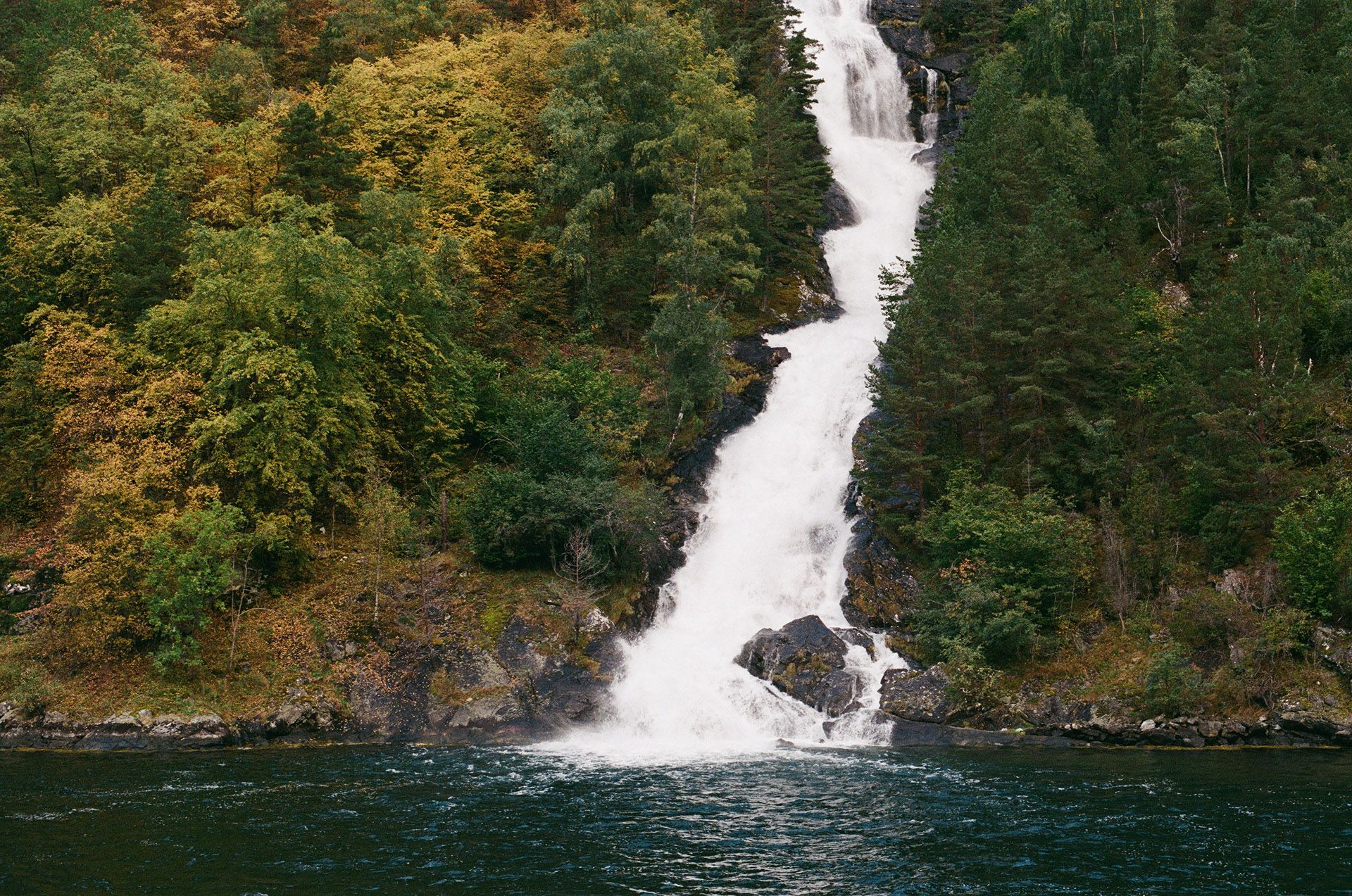

Medium format can offer more image detail because its negative is larger, and it generally requires less enlargement to produce the same-size print. That can be an advantage when you want a large print or a high-resolution scan. But a negative size is only one part of image quality.
Film stock, exposure, lens performance, processing, scanning, and final enlargement all affect the result. A carefully exposed, well-scanned 35mm negative can produce an excellent image, while a poorly exposed medium-format frame won’t become exceptional simply because it started larger. The film’s grain structure and contrast also matter, so larger negatives don’t guarantee smoother tonal transitions in every situation.
This is one reason medium format appeals to landscape photographers: the larger frame can preserve plenty of detail for prints of trees, skies, rocks, and architecture. It can also be useful for portraiture, still life, and studio work where fine detail or larger output matters. If most of your photos end up as small web images, the difference may be less noticeable than the effects of light quality, your technique, and the final edit.
Depth of field is another area where format comparisons can get oversimplified. The shallower depth-of-field look often associated with medium format depends on comparing images with equivalent framing and considering aperture and viewing conditions—not just on using a larger negative. For comparable framing, a larger format generally uses a longer focal length, which can affect depth of field. Medium format doesn’t automatically give you “better bokeh”; it gives you different options for controlling focus and background blur.
Scanning is part of the equation, too. Medium-format scans can deliver larger files with greater potential for detail, but high-resolution scans may cost more and take longer. 35mm scans are often easier to handle, share, and store, especially if you shoot a lot.
35mm film cameras are usually the easiest to carry every day. Many fit in a small shoulder bag, and some compact models fit in a jacket pocket. That makes 35mm especially practical for street photography: you can move quickly, react to changing scenes, and shoot without rearranging your day around your camera.
Medium-format cameras vary, but many are larger and heavier due to their larger film frames, wider lens coverage, and viewing systems. Some are still quite portable, especially folding cameras and certain 645 systems. A 6×7 SLR with a prism finder and lens, on the other hand, can feel like a dedicated outing. Ask yourself less “Can I carry it?” and more “Will I still want to carry it after three hours?”
Think about the full kit, not just the body. A 35mm camera with a 50mm lens, a spare roll, and a small meter can be light and flexible. A medium-format setup may call for a larger bag, bigger filters, a sturdier strap, or a more considered lens selection. If you hike, travel, commute, or photograph family life on the fly, portability may matter more than theoretical resolution.
The shooting experience may be the biggest day-to-day difference between the formats. 35mm encourages volume, experimentation, and quick adjustments. With 24 or 36 frames on a roll, you have more room to try different compositions, bracket exposure, and react to fast-moving moments.
Medium format often slows you down. Loading 120 film takes a little more attention; there are fewer frames to work with, and many cameras are slower to focus or advance. That pace can be a good fit for portraits, landscapes, still life, and planned work because it encourages you to check the edges of the frame and commit before pressing the shutter.
Neither workflow is inherently superior. If you learn by doing, 35mm gives you more chances to practice on each roll. If you enjoy slowing down and making each frame count, medium format may feel more rewarding. Plenty of photographers use both: 35mm for daily shooting and unpredictable moments, medium format for projects that benefit from a more considered approach.
Not sure if film is right for you? Explore film simulation vs filmstock
Medium format usually costs more per finished image, even though a roll of 120 film costs about the same as a roll of 35mm film. You simply get fewer frames. If you shoot around 10 frames on a 6×7 camera instead of 36 on 35mm, the film, processing, and scanning costs are spread across fewer photographs.
The camera system matters, too. A beginner-friendly 35mm setup might be a straightforward SLR with a normal lens, a reliable point-and-shoot, or a rangefinder, depending on how you like to focus and meter. There are many 35mm bodies and lenses to choose from across different brands and budgets.
For medium format, a fixed-lens TLR, a 645 SLR, or a folding camera can be a manageable place to start. Prices and availability vary, so compare conditions carefully and leave room in your budget for film, batteries if needed, a light meter, processing, and scanning.
Use this checklist before choosing a format:
Use the kind of work you do most often to narrow the choice. These are starting points, not hard rules.
35mm film cameras come in several styles, so start with how you want to shoot rather than chasing a famous model. Manual-focus SLRs are useful if you want to learn exposure and lens choice. Compact point-and-shoots are handy if you want something quick and pocketable. Rangefinders can be quiet and responsive, though focusing feels different from an SLR.
Common options include Nikon FM and FE series bodies, Canon AE-series cameras, the Pentax K1000, Olympus OM bodies, Minolta SRT and X-series bodies, and compact autofocus cameras from several makers. The best beginner 35mm film camera is one that’s in reliable working condition, has a functional meter if you need one, and uses lenses or batteries you can realistically find.
When comparing pre-owned options, check notes on shutter operation, meter function, light seals, film advance, and lens condition. A less trendy camera in reliable condition is usually more useful than a famous model with problems.
Medium-format cameras vary considerably in shape and workflow. TLRs, such as Rolleiflex and Yashica Mat models, use two lenses: one for viewing and one for taking the photo. They’re often quiet and steady, but the waist-level viewfinder takes practice.
645 SLR systems, such as the Mamiya 645, Pentax 645, and Bronica ETR series, can feel familiar if you’re used to shooting with an SLR. 6×6 systems such as Hasselblad V-system and Bronica SQ cameras produce square frames; Mamiya C-series TLRs do, too. For 6×7, options include the Pentax 67, Mamiya RB67 and RZ67, and the Bronica GS-1. These systems offer a larger frame, but they’re not casual pocket companions.
For a first medium-format film camera, prioritize condition, simplicity, and fit with your body and workflow. Check whether the system needs separate film backs, waist-level finders, prisms, batteries, or specific lenses. A camera that feels good in your hands will teach you more than one that stays home because it’s too bulky.
Choose 35mm for a lighter kit, more frames per roll, lower cost per image, and a faster shooting rhythm. Choose medium format if a larger negative, deliberate workflow, and the potential for detailed large prints fit your priorities. Neither format guarantees better photographs. The right one is the camera you’ll want to carry and use.
Not automatically. Medium format gives you a larger negative and more potential for detail in large prints, while 35mm is often lighter, faster, and less expensive per image. The final result depends on the film, lens, exposure, processing, scan, and intended output.
Usually, yes, per image. Even when 120 film and 35mm film have similar roll prices, medium format provides fewer frames, and processing or scanning may cost more.
It can offer more detailed potential for large prints and high-resolution scans because the negative is bigger. But image quality also depends on film stock, optics, exposure, processing, scanning, and enlargement.
It’s not necessarily harder, but it can be slower. Loading, focusing, composing, and carrying the camera may require more attention than a typical 35mm setup.
For many beginners, yes. 35mm offers more frames per roll, a wider range of camera choices, and a lower cost per attempt, making practice easier.
Both work well. 35mm is useful for movement and relaxed sessions, while medium format can suit a slower approach and detailed prints or scans. The best choice depends on the look and workflow you want.
Usually not directly. Most 35mm and medium-format cameras use different lens mounts, and medium-format lenses need to cover a larger film area. Adapting lenses is possible in some setups, but it isn’t the usual beginner path.
Ready to compare options? Explore KEH.com for KEH Certified™ pre-owned film cameras, lenses, and accessories. If your current kit isn’t the right fit, you can also look into selling or trading your gear.