You
have no items in your shopping cart.
Medium Format vs Large Format Film: Which Is Right for You?
September 24, 2026
1 min read

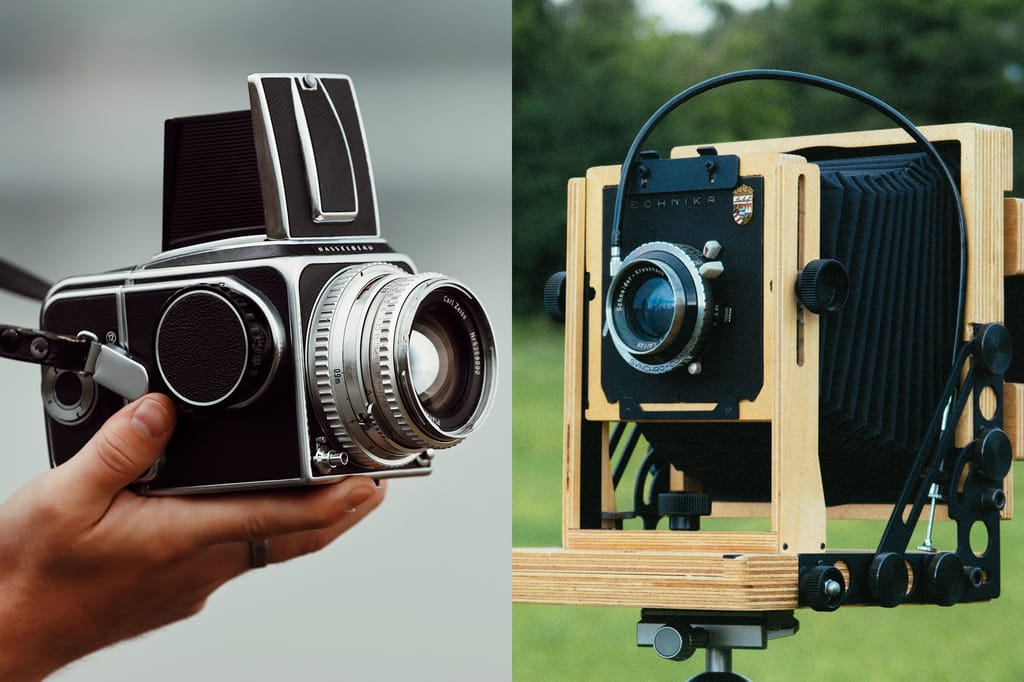
Choosing between medium-format film and large-format film is really a choice between two different creative rhythms. Medium format gives you a bigger negative than 35mm while still feeling relatively portable and roll-friendly. Large format, especially 4×5 film, slows the process down and rewards careful composition, camera movements, and a more hands-on approach.
At KEH, we think of film camera formats less like a ladder and more like a set of tools. There isn’t a single “best” format. The right one depends on how you like to shoot, how much gear you want to carry, and how involved you want to be in making each frame.
Medium format film usually refers to roll film, most often 120 film, loaded into cameras that produce larger frames than 35mm while still allowing multiple exposures per roll. Large-format film usually means individual sheets, with 4×5 film being one of the most common starting points, loaded into film holders.
That difference changes almost everything: how quickly you shoot, how much gear you carry, how you focus, and how carefully you plan each frame. Medium format feels like a thoughtful step up from 35mm. Large format is a much more deliberate process, with the camera playing a bigger role in how you make the photograph.
Here’s the short version:
Medium-format film sits between 35mm and large-format, and it’s one of the most approachable ways to make your negatives noticeably larger without completely changing your photographic workflow. Most medium format film cameras use 120 film, while some also accept 220 film, which is similar in width but traditionally offered more frames per roll because it had less backing paper.
The fun part is that medium format isn’t a single frame size. Depending on the camera, 120 film can produce popular formats like 6×4.5, 6×6, 6×7, and 6×9. A 6×4.5 camera gives you more frames per roll and often handles more like a familiar SLR, while 6×7 and 6×9 cameras lean into a larger negative and a more deliberate feel. The square 6×6 format has its own appeal, especially if you like composing without turning the camera sideways.
Photographers usually move up to medium format for a few practical reasons. The larger negative can offer more detail, smoother-looking grain, and more flexibility when scanning or printing. The viewfinder experience can also feel more immersive, whether you’re looking through a prism, a waist-level finder, or a rangefinder window. And because you still work from a roll, medium format film keeps a nice balance between intention and momentum.
If you’re browsing cameras, the Mamiya M645 Medium Format Camera Body is a classic 645-style entry point, the Pentax 645 Medium Format Camera Body offers a familiar SLR-like path into the format, and the Hasselblad 503CX Medium Format Camera Body represents the modular 6×6 system-camera experience many film photographers know and love.
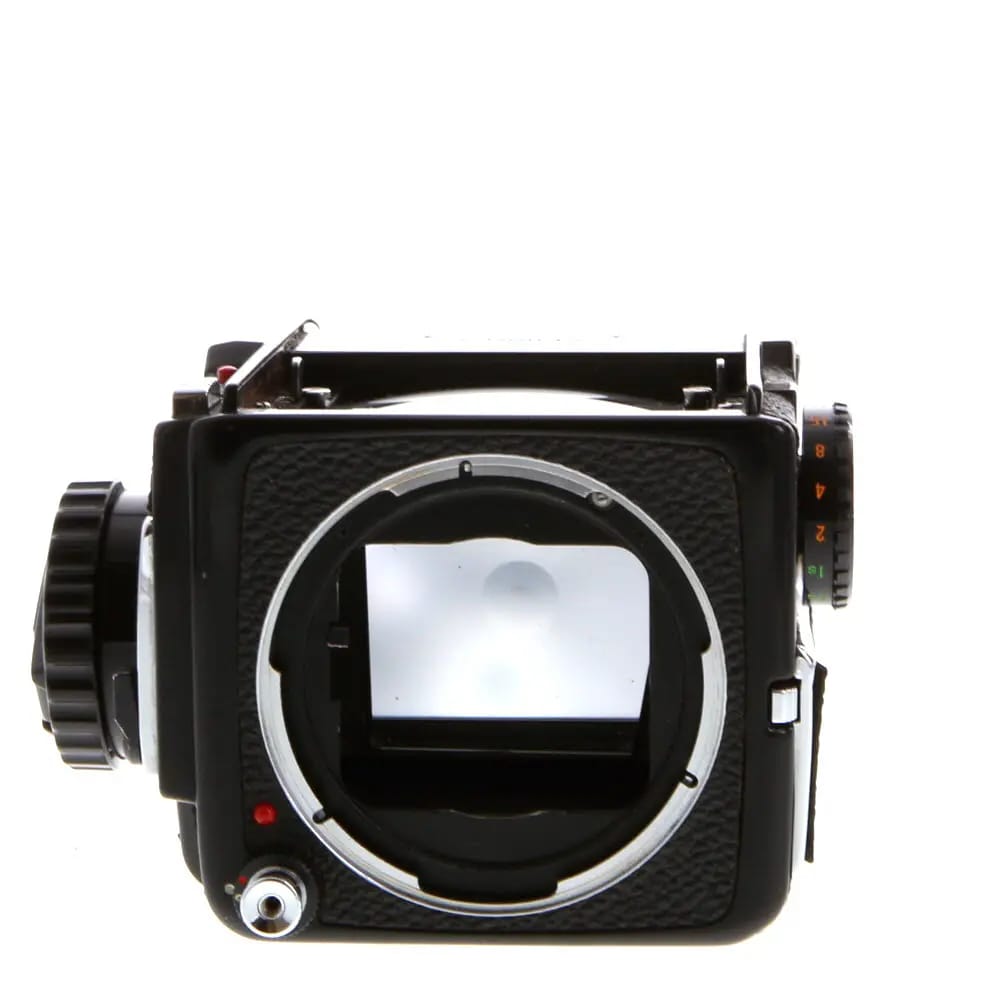
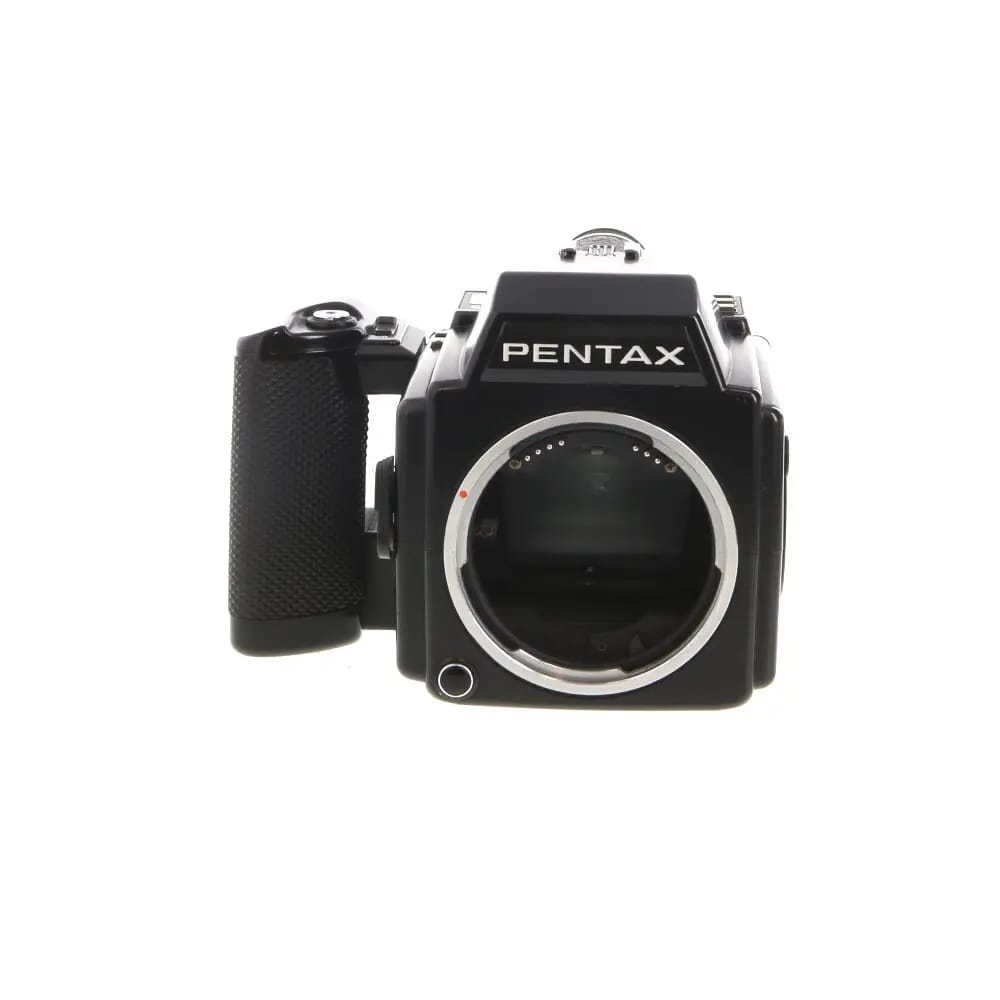
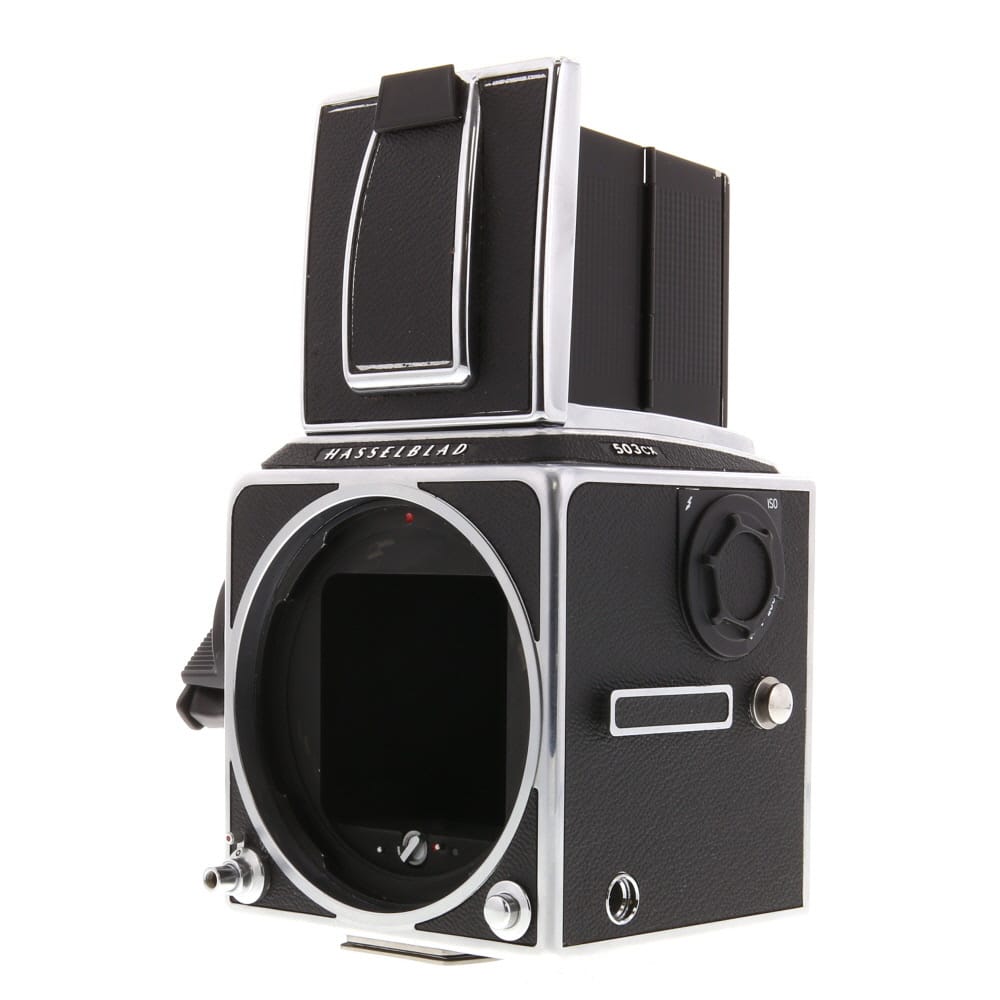
Medium format still asks you to slow down compared with 35mm, but it doesn’t usually stop the whole shoot. You can photograph portraits, landscapes, street details, family moments, studio work, and travel scenes without changing film after every frame. That makes it a strong middle ground for photographers who want a larger negative while still being able to respond to what’s happening in front of them.
It also keeps the gear manageable. Depending on the system, you may need a camera body, lens, film back or insert, and light meter, but the overall setup can still be relatively straightforward. It’s more involved than many 35mm setups, but it isn’t as methodical as loading sheet-film holders and working under a dark cloth.
Large format film is the slower, more deliberate side of analog photography. Many photographers begin with 4×5 sheet film because it’s widely supported, large enough to feel meaningfully different, and still more practical than larger sheet-film sizes.
Instead of loading a roll, you load individual sheets of 4×5 film into film holders. A standard holder typically carries two sheets, one on each side. You compose and focus on the ground glass at the back of the camera, often viewing an upside-down and reversed image, then insert the holder, pull the dark slide, make the exposure, and replace the slide.
There’s a learning curve, but that’s also part of the appeal. Large format is for photographers who enjoy building the picture slowly and making deliberate decisions before pressing the shutter.
A field camera like the Chamonix 45F-2 4×5 Field Folding View Camera makes 4×5 more portable for landscape and location work. A monorail option like the Calumet CC400 4×5 Monorail View Camera Body is better suited to studio, product, and architectural setups where precision matters more than packability. A wood field camera, such as the Wisner 4X5 Technical Field Camera, offers another approach for photographers who want the classic large format experience in the field.
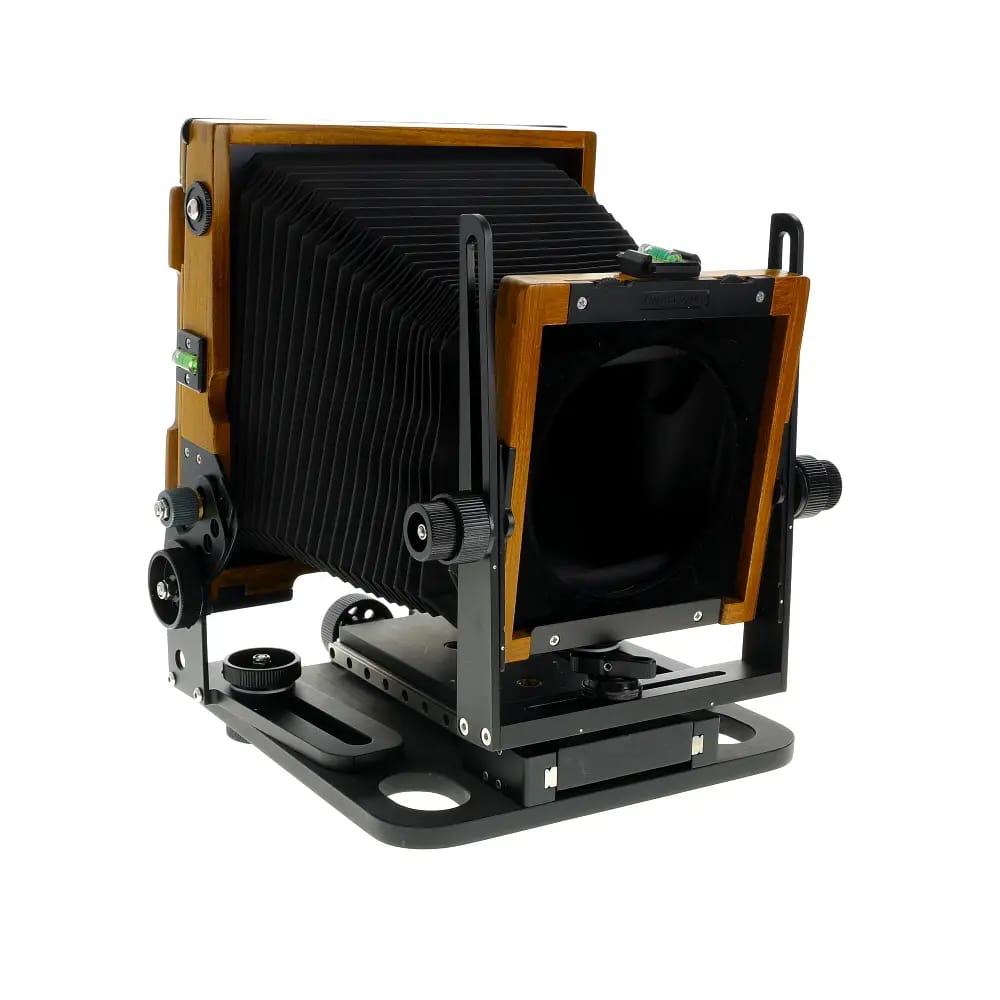
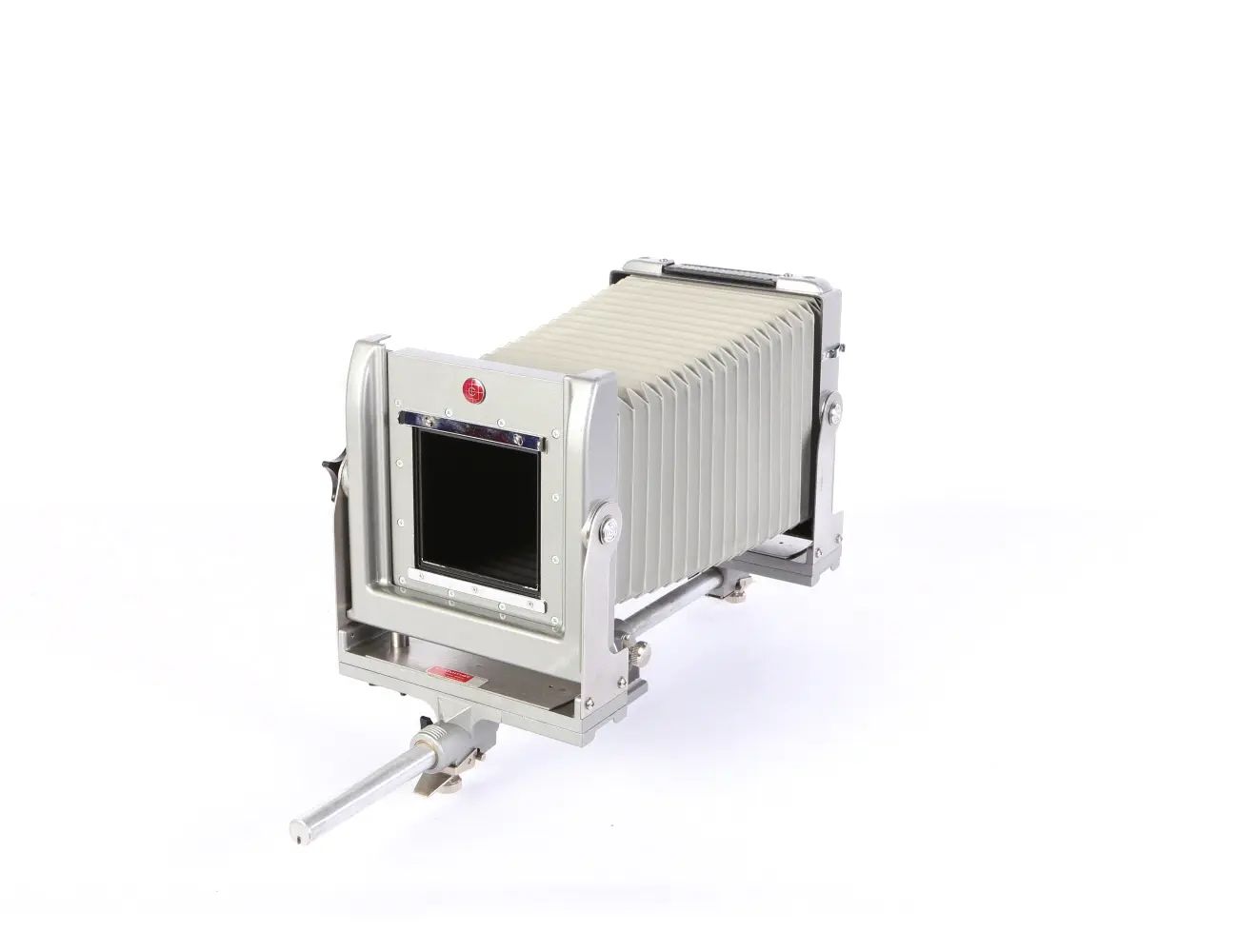
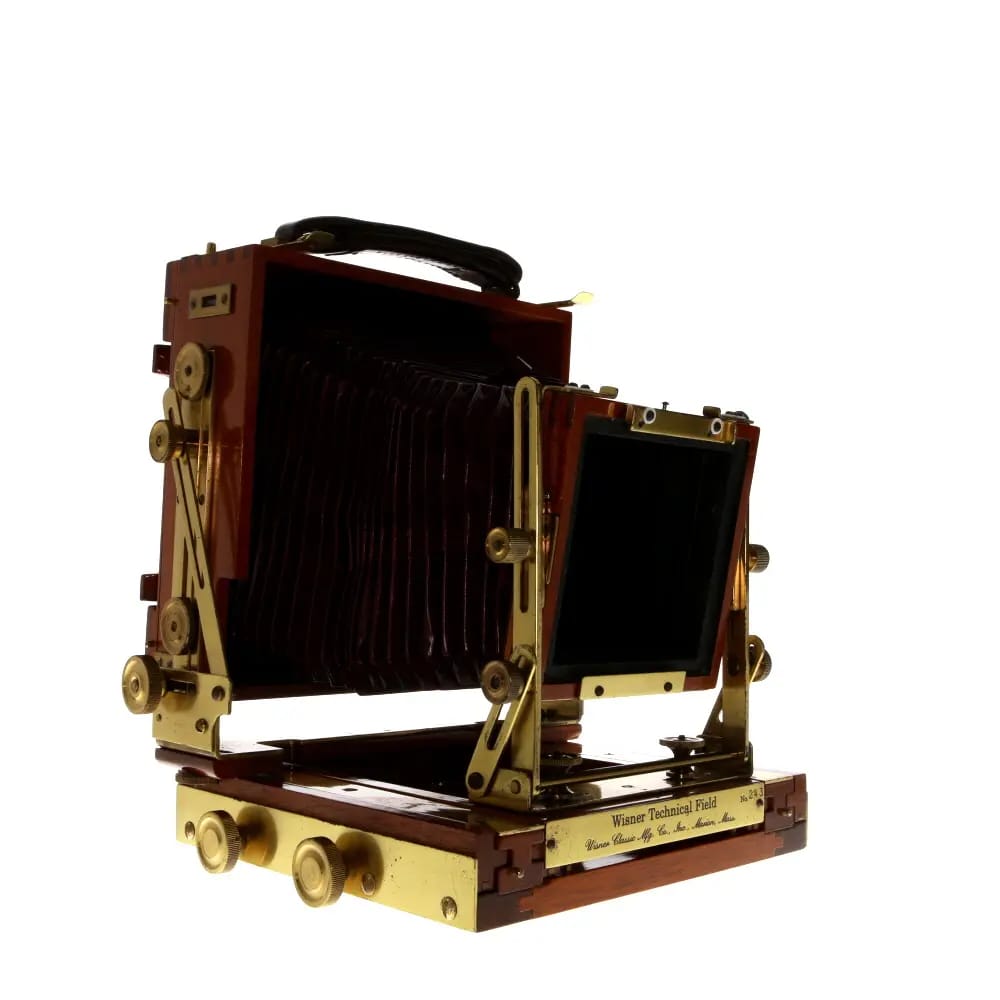
One of the biggest practical advantages of large format is camera movement. Instead of the lens and film staying locked in parallel like they do on most smaller cameras, the front and rear standards can move independently.
You don’t need to become a view-camera expert on day one. Start with basic focus and framing, then add one movement at a time. Large format rewards patience and practice.
A comparison table could give you the quick version, but the more useful question is how each format actually changes the way you shoot.
Image quality and detail
Workflow and pace
Camera handling
Movements
Cost per frame and mindset
120 film vs 4×5 film is not just about size. It’s about how you want your shooting session to feel. With 120 film, you load once and get a sequence of photographs. With 4×5 film, you prepare each sheet, carry holders, and treat every exposure as its own decision.
Choose 120 film when you want to shoot portraits with small changes in expression, walk around a city, make several landscape compositions before the light changes, or learn a larger format without adding too many new steps. Choose 4×5 film when the slower process is part of the appeal: architecture, still life, carefully planned landscapes, and projects where one excellent frame matters more than a whole roll of options.
The best format is the one that makes you want to keep shooting. If your camera feels like a chore, even the biggest negative in the world will end up on the shelf.
Choose medium format if:
Choose large format if:
If you’re torn, be honest about your shooting style and how much setup you’re willing to embrace. Medium format often makes more sense for regular shooting. Large format is compelling when the process itself is part of the reward.
Medium and large formats aren’t steps on a ladder. They’re different tools for different ways of seeing and working.
Choose medium format when you want more negative area without giving up momentum. Choose large format when slowing down, controlling perspective, and building each frame are part of the photograph you want to make.
And when you’re ready to experiment, pre-owned gear makes it easier to explore a format without assuming your first choice has to be your last. With KEH Certified™ pre-owned gear, you can explore different cameras and systems with the confidence that each piece has been inspected, graded, tested, cleaned, and backed by a 180-day warranty.
And if your creative direction changes, Better Trade™ by KEH makes it easier to move into the next format, camera, lens, or accessory that fits where you’re headed.
You don’t need to commit to one format forever. You just need the right tool for the way you want to photograph.
Medium format is not inherently better, but it does give you a larger negative than 35mm film. That can mean more detail, smoother-looking grain, and more flexibility for prints or scans. 35mm still wins when you want lighter gear, more frames per roll, and faster shooting.
Large format offers more control and a larger negative, especially with 4×5 film, but it also takes more time and gear. Medium format is usually more practical for portraits, travel, and handheld work. Large format is better suited to deliberate setups, sheet film, and situations where camera movements are useful.
Yes. Many photographers move from 35mm to medium format with little trouble, especially with 645 cameras. You’ll need to learn how to load 120 film, meter carefully, and work with fewer frames per roll, but the fundamentals of photography remain familiar.
Yes, but expect a steeper learning curve. You’ll need film holders, a tripod, a lens, a way to meter, and patience with ground-glass focusing. Start simple, take notes, and make your first goal clean exposures rather than perfection.
120 film is roll film that gives you multiple frames per load. 4×5 film is sheet film loaded into holders, generally allowing one exposure at a time per side. That makes 120 faster and more flexible, while 4×5 is slower and more controlled.
Not always. If you mostly shoot portraits, travel, or casual landscapes, medium format may give you everything you need. If you photograph buildings, interiors, tabletops, or scenes where perspective and focus control matter, large format movements can be a major advantage.