You
have no items in your shopping cart.
An Introduction To Demystifying The Nikon F-Mount
January 04, 2021
1 min read


What you will learn: If you’ve ever picked up a Nikon lens and wondered what “AF-S,” “AI-S,” or “AF-P” actually means, you’re not alone. The Nikon F-mount has been in production since 1959, and over six decades it accumulated a long list of lens designations that can feel overwhelming even to experienced photographers. This guide breaks down each major F-mount lens type, from the original Non-AI lenses of the 1950s through the modern AF-P stepping-motor lenses, explaining what each designation tells you about autofocus, metering, and compatibility with your camera body.
Launched in 1959 with the original Nikon F SLR and still kicking today, the F-mount is one of the longest-produced mounts for any camera system, compatible with over 400 Nikkor lenses and countless third-party glass.
While Nikon has already launched their next generation, the Z-mount, for their latest line of mirrorless cameras, there’s no plan to end the F-mount just yet. The D780 and the D6, released in early 2020, were the most recent F-mount Nikon DSLRs to join the line-up, and there’s rumors of a replacement for the D850 coming in 2021, as well as some new lenses.
Nikon shifted its primary focus to the Z-mount system for mirrorless cameras, the F-mount is far from obsolete. Millions of F-mount lenses are still in active use, and the FTZ and FTZ II adapters let photographers mount nearly all of them on current Nikon Z-series cameras, often with full autofocus and metering. Whether you’re shooting an older Nikon DSLR or have moved to mirrorless, understanding these lens designations is essential to building a lens collection that actually works with your camera.
With over 60 years of innovation that carried Nikon from manual focus to autofocus, from manual exposure to auto exposure, and from film to digital, Nikon has stacked up a bunch of different versions of F-mount lenses. So many, in fact, that even a seasoned (read, “old and forgetful”) photographer like myself needs a periodic reminder of the nomenclature to distinguish between variations.
This time around, I’m writing it down for posterity. I’m not going to pretend that this is a comprehensive list by any means, but it covers the basics, and should serve as an introduction to some of the nomenclature. Strap in, and let’s try to make order out of chaos.
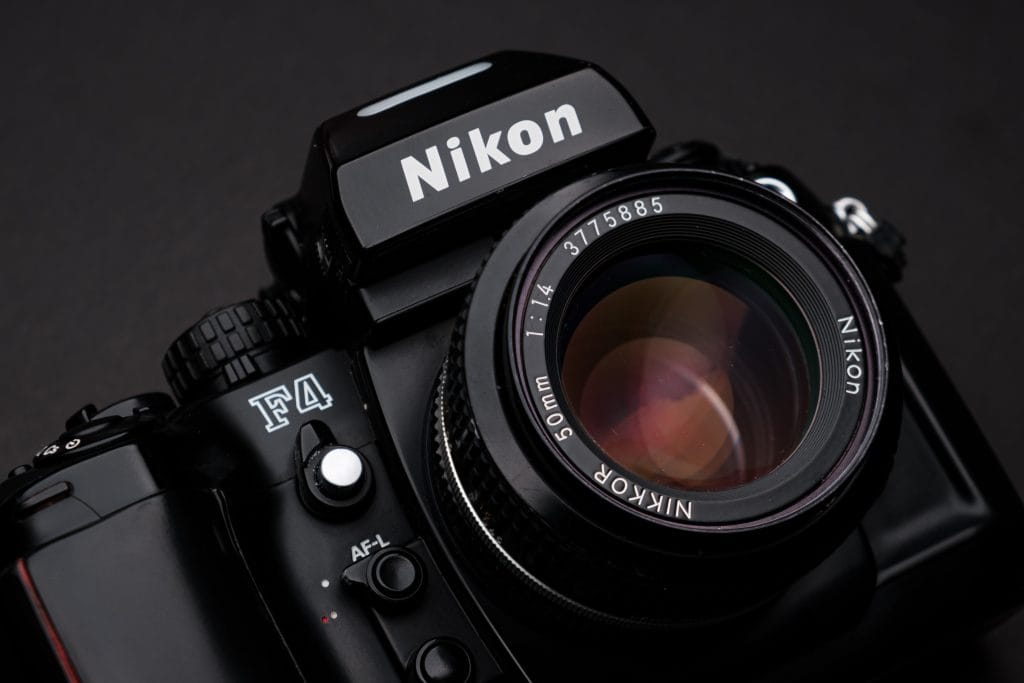
This is the oldest designation of F-mount lenses, introduced in 1959 and produced until the late ’70s. Non-AI lenses are as simple as it gets—manual focus, and a manual aperture ring with a meter-coupling prong sticking out the top.
Early versions of these lenses were marked “Nippon Kogaku Japan” and the focal length was stated in centimeters (for example, “5cm” instead of “50mm”). From 1965 on, they switched to using millimeters. After 1971, the “Nippon Kogaku Japan” was also changed to simply read “Nikon”.
The most important thing to note about Non-AI lenses is that they can damage some Nikon camera bodies due to that prong sticking up from the aperture ring, so it’s best to check compatibility before purchase. A simple Google search of your camera model + whatever lens you’re considering should give you a good idea. When in doubt, you can also give us a call at 1-800-DIALKEH and we should be able to clear things up for you.
Non-AI lenses are also not supported on the FTZ or FTZ II adapter, so they cannot be safely mounted on Nikon’s current Z-mount mirrorless cameras without a separate professional conversion to AI specifications.
Introduced in 1977, AI lenses feature a mechanical system for coupling the lens with the camera’s exposure—this way, a lens can automatically communicate its maximum aperture value to the camera’s meter.
AI lenses also feature a second row of aperture numbers closer to the mount, so they can be seen through a small window in the viewfinder. This allows the photographer to know their aperture without having to take their eye away from the viewfinder. Despite the changes, AI lenses are still manual focus and manual aperture, just like Pre-AI lenses.
In general, you can meter through AI lenses with modern professional Nikon DSLRs, but some prosumer and consumer bodies will not be able to do so. You can still use the lens on these bodies, but you’ll have to meter manually or use an external light meter.
Like all Nikkor F-mount mechanical lenses, there are no electronic contacts communicating with the camera body, so the aperture value and focal length will not be recorded in the EXIF data of your digital photos.
On Z-mount mirrorless cameras using the FTZ or FTZ II adapter, AI lenses can be mounted and will meter correctly off the sensor, though you will need to enter the lens’s focal length and maximum aperture in the camera’s non-CPU lens menu to get accurate EXIF data and in-body stabilization.
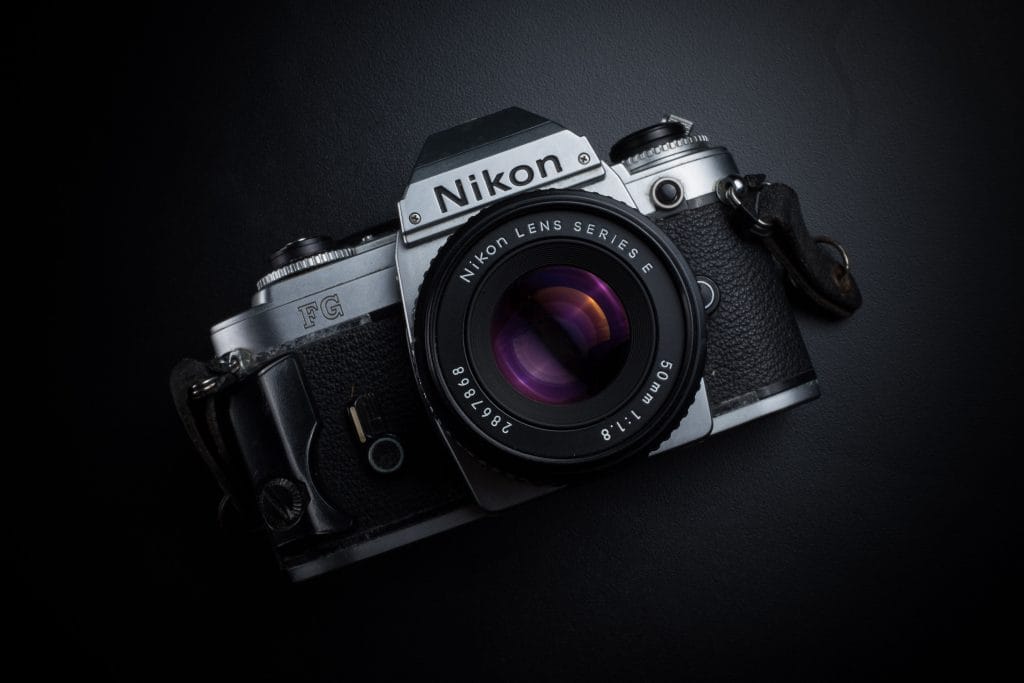
Series E lenses (not to be confused with AF-E lenses, explained below) are a line of AI lower-cost lenses released in the 1980s for Nikon’s amateur line of cameras. They don’t carry the Nikkor name on the lens, and are displayed as Nikon Series E. Some of these lenses were later updated to AI-S.
With AI-S, came the ability for the camera body to switch the aperture value on the lens, allowing for aperture-priority shooting. This evolution was introduced in 1981, but it’s still relevant, as Nikon continues to make a handful of AI-S lenses. They are manual focus, but allow the appropriate camera bodies to control the aperture mechanically.
Like AI, any AI-S lens can be mounted on modern Nikon F-mount bodies, however, some entry-level cropped-sensor DSLRs (like the D5600 or the D3500, for example) will lack the ability to meter through the lens.
AI-S lenses are also fully compatible with Z-mount cameras through the FTZ adapter, with the same manual-focus, sensor-based metering behavior as AI lenses.
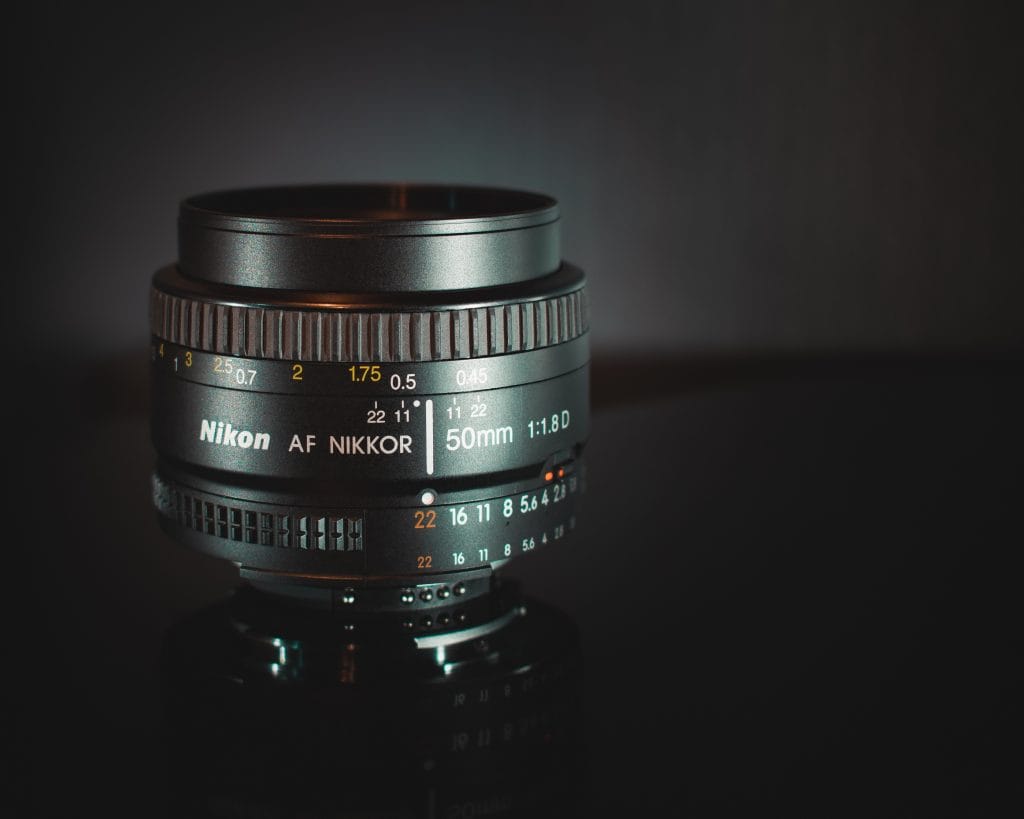
Nikon’s first mainstream autofocus system (not counting the F3AF), denoted by AF NIKKOR on the barrel of the lens, was launched in the mid-1980s. Autofocus is achieved through a motor in the camera body, instead of the lens itself. Basically, it uses a mechanical coupling between the camera body and the lens to shift the glass elements, and a CPU inside the lens communicates the focal length and maximum aperture with the body through electronic contacts in the mount.
AF NIKKOR lenses can be used on most Nikon bodies that support multiple modes (Auto, P, A, S, M), and can also be manually focused by hitting a switch. Note that there are several distinctions of AF lenses, including D, E, and G (usually noted after the maximum aperture, i.e. Nikkor 35mm f/2 D).
AF-D lenses communicate focus distance with the camera body through the CPU. AF-E lenses (oh boy—not to be confused with SERIES-E lenses, as we talked about above—confused yet?) make use of an electronic diaphragm to control automatic aperture, rather than the mechanical system from AI-S lenses. And finally AF-G lenses lack an aperture ring altogether, since aperture can be controlled through the camera body via a dial.
The nature of this AF system means there’s quite a bit of mechanical noise when focusing—something that was later improved by including a quiet motor inside the lens, instead of having to depend on the camera body to do the heavy lifting.
The advent of AF-S brought an internal autofocus motor to F-mount lenses, making the system faster, more accurate, and quieter. These lenses use Nikon’s Silent Wave Motor (SWM) powered by ultrasonic vibrations.
AF-S lenses can be used on F-mount film camera bodies from the ’90s on (with some exceptions, like the F55/N55) and all Nikon DSLR bodies.
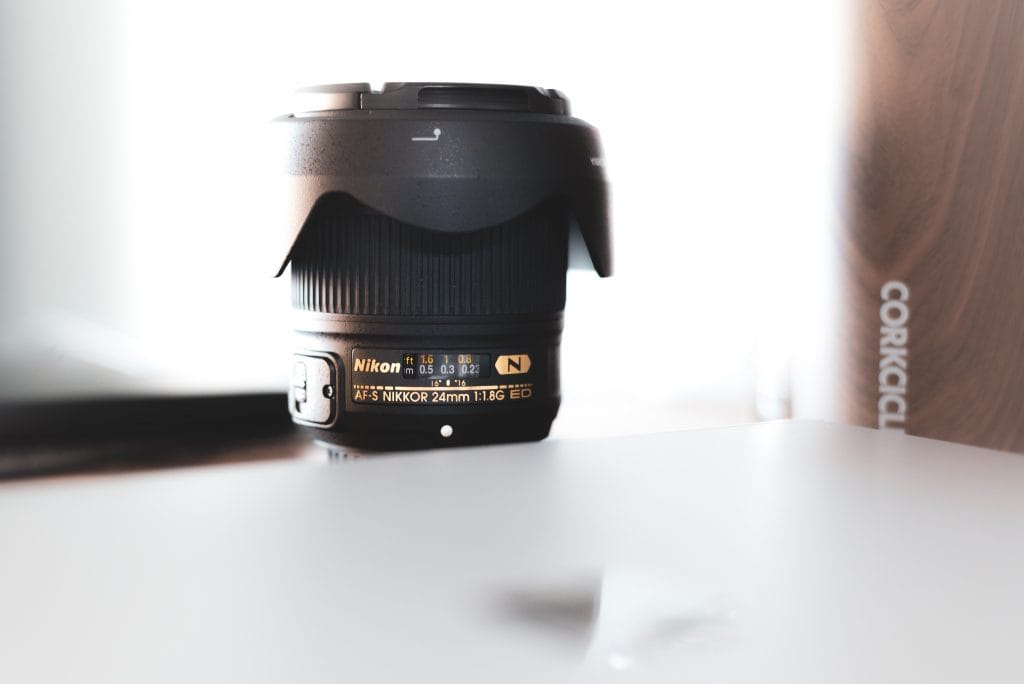
However, since Nikon has both full-frame and APS-C DSLR bodies available, they denote which lenses are for which system by using the DX/FX code. FX lenses are full frame, and DX lenses are cropped frame. You can use FX lenses on an APS-C body, albeit at a 1.5x multiplier of the focal length, however, DX lenses are not designed to be used with full-frame bodies.
AF-P lenses use stepping autofocus, or “Pulse” technology, allowing for an even smoother and quieter operation than AF-S lenses. These types of lenses are ideal for videography, as it’s possible to pull focus smoothly, not in steps, and the motor is quiet enough not to be picked up by a nearby microphone recording audio.
These lenses lack a physical AF/MF switch, as well as a VR on/off switch for applicable models, making them ideal for pro-level bodies, but not fully compatible with a host of consumer and prosumer DSLRs.
On Z-mount cameras, AF-P lenses mount via the FTZ adapter with full autofocus and metering, making them one of the most travel-friendly options for photographers transitioning from F-mount DSLRs to Z-mount mirrorless bodies.
Hopefully, you’ve come away with clarity on the every-confusing Nikon F-mount. It’s certainly a lot to consider, so again, if you need some guidance, just give us a call at 1-800-DIALKEH, or browse our selection of used Nikon F-mount lenses and Nikon DSLR and mirrorless bodies. We grade every lens and camera in detail and back it with a 180-day warranty, so you can buy the right glass for your setup with confidence.
I’ll follow up this post in the future with an explanation of the variety of acronyms that you’re likely to see in a Nikon lens product name.