You
have no items in your shopping cart.
KEH Comparison Guide: Canon G7X Mark II vs. Canon PowerShot V1
July 27, 2026
1 min read

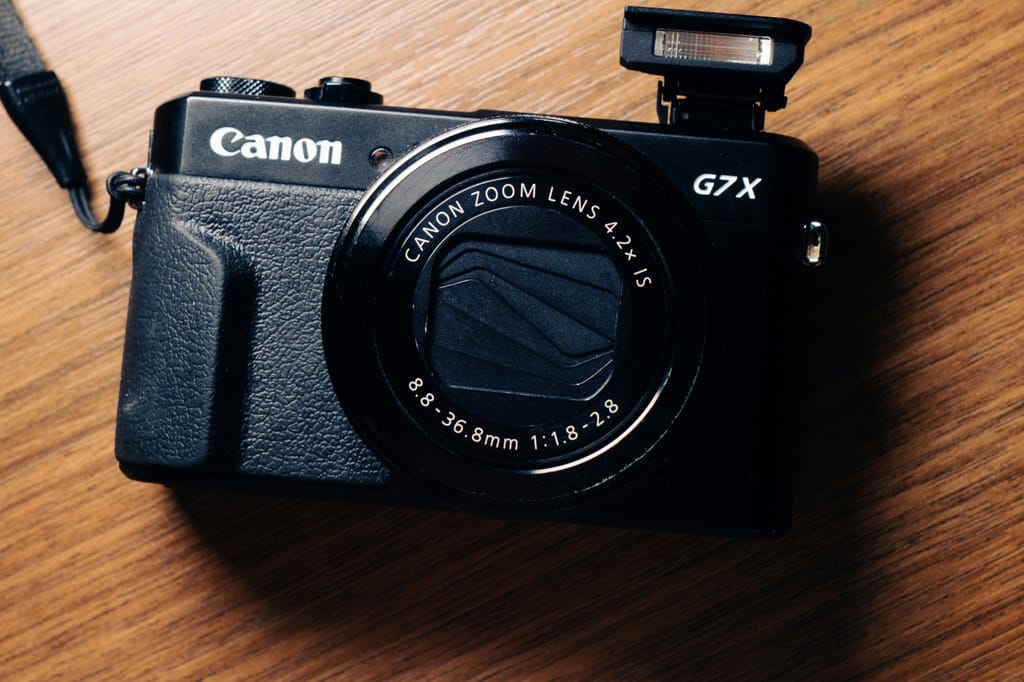
Choosing a compact creator camera in 2026 should be simple, but it rarely is. One camera has years of influencer credibility (it’s even been called 2026’s most viral compact camera), a bright zoom lens, and true pocket appeal. The other is newer, more video-focused, and built for creators who want higher-end features without carrying a mirrorless kit. If you’re deciding between the Canon G7X Mark II and the Canon PowerShot V1, the right choice depends less on which camera is “better” and more on how you actually shoot. Canon lists the G7 X Mark II with a 20.1MP 1.0-inch CMOS sensor, 24–100mm equivalent lens, and f/1.8–f/2.8 aperture, while the PowerShot V1 uses a larger 1.4-type CMOS sensor, offers up to 22.3MP stills, and covers a wider 16–50mm equivalent range for stills. If you’re still sorting out what matters most in a Canon point-and-shoot, this compact camera buying guide is a helpful companion read.
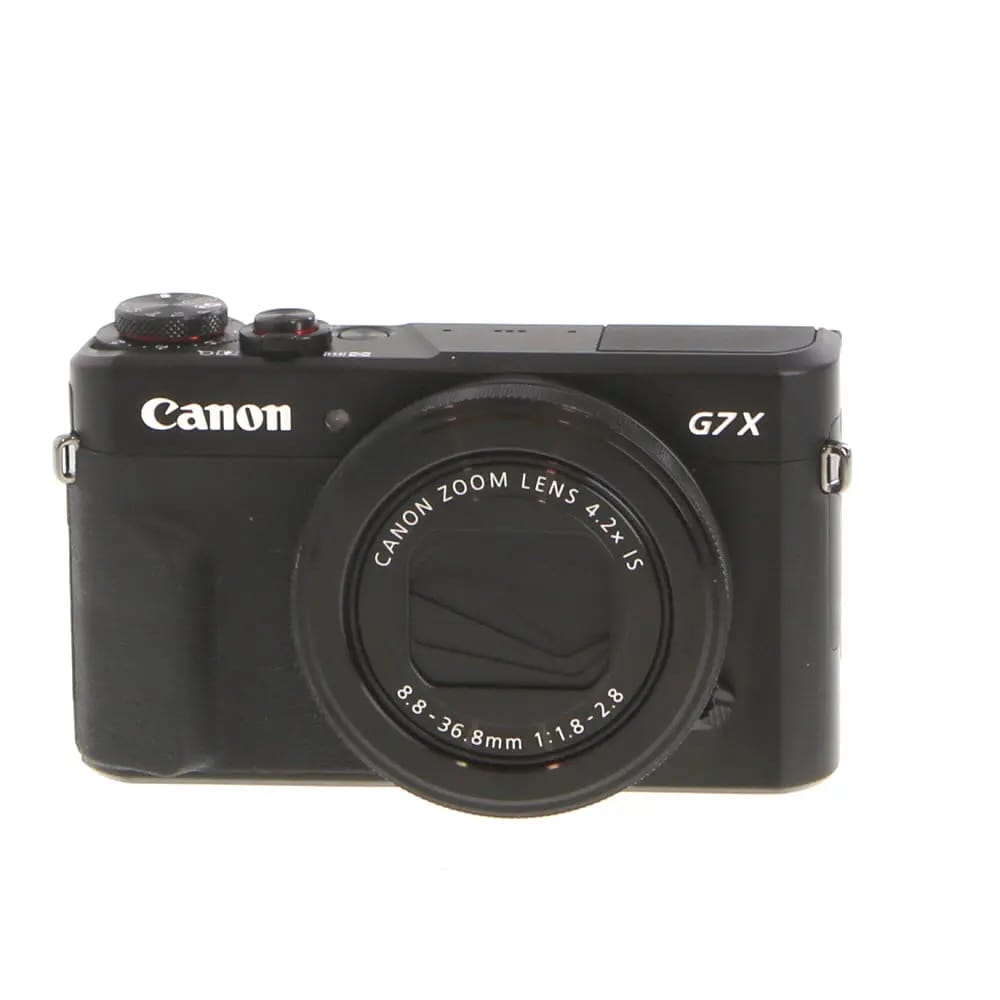
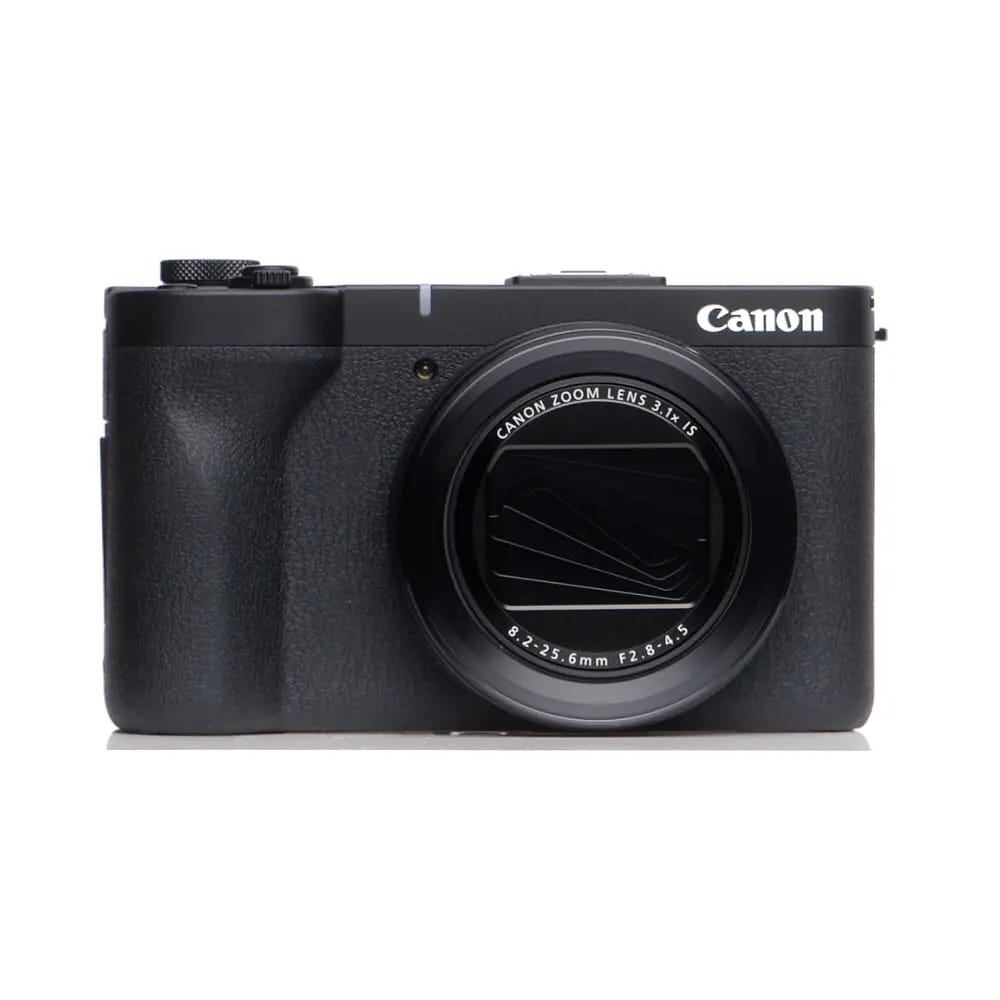
Choose the Canon G7X Mark II if you want a tiny, stylish, walk-around camera that makes everyday photos and casual videos feel effortless. It is especially strong for travel snapshots, social clips, food photos, street scenes, and anyone who wants a compact camera that feels less technical than a full creator rig. Its 24–100mm equivalent zoom gives you more reach than the V1, and the f/1.8–f/2.8 aperture range keeps the lens bright across practical everyday focal lengths.
Choose the Canon PowerShot V1 if your priority is video. It is the stronger pick for vloggers, solo creators, talking-head clips, product demos, livestreaming, and hybrid creators who want a compact camera with modern recording options. Canon positions the V1 as a video creator camera, with features like a wide-angle zoom, Dual Pixel CMOS AF, a cooling fan, and quick switching between stills and movies.
The short answer: the G7X Mark II is the classic pocketable lifestyle camera; the PowerShot V1 is the better long-term answer if you are searching for the best vlog camera in a compact Canon body.
The G7X Mark II uses a 1.0-inch sensor, which remains a sweet spot for a compact Canon point and shoot. You get more depth and cleaner files than most phones in tricky light, but the camera still fits easily into a jacket pocket or small crossbody bag.
The PowerShot V1 steps up to a 1.4-type sensor. In practical terms, that gives creators more room for low-light capture, dynamic range, and subject separation than a typical compact sensor. Canon lists the V1’s sensor at 18.4 x 12.3mm, with approximately 22.3MP maximum effective pixels for still photography.
The G7X Mark II gives you the more versatile everyday zoom. Its 24–100mm equivalent range is useful for wide travel scenes, portraits, food details, and casual telephoto framing. If you like zooming in on details without moving your feet, the G7X Mark II feels more flexible.
The PowerShot V1 is wider and more vlog-friendly. Its lens is equivalent to about 16–50mm for stills and about 17–52mm for 4K 16:9 movie recording, which is better when you are holding the camera at arm’s length or filming in a small room.
The G7X Mark II workflow is built around speed and simplicity. Turn it on, flip the screen up, frame yourself, and shoot. That is a big reason it became a favorite among creators long before “creator camera” became a common category.
For daily vlogs, it is ideal when you want short clips, fast edits, and minimal setup. You can record lifestyle footage, coffee shop clips, travel moments, outfit details, or behind-the-scenes snippets without drawing much attention. The camera’s size also makes it easier to keep with you, and the best camera for everyday content is often the one you actually bring.
The tradeoff is that the G7X Mark II is not designed around today’s heavier video demands. It records Full HD rather than 4K, relies on internal audio, and does not offer the more advanced monitoring or heat-management features that video-first creators may want.
The PowerShot V1 workflow is more deliberate and creator-focused. It is still compact, but it is built for people who plan to film often. The wider lens helps with handheld vlogging, the vari-angle screen makes self-framing easier, and the still/movie switch supports quick changes between photo and video capture. Canon’s V1 specifications list a 3.0-inch vari-angle rotating LCD with touch controls, while the product page also highlights a flip-out LCD and front tally light for self-recording.
This matters if you create content on a schedule. A sit-down creator can plug in a microphone, monitor audio with headphones, record higher-resolution clips, and use the camera in a more repeatable studio or travel setup. Canon also notes that the V1 can be used for video calls and streaming when connected to a computer via USB.
For video, the PowerShot V1 is the clear winner. It supports 4K UHD recording at 29.97, 23.98, and 25 fps, plus cropped 4K at 59.94 or 50 fps. It also supports Canon Log 3 and 10-bit recording options, which gives experienced creators more flexibility for color grading.
The G7X Mark II is more limited but still useful. Its Full HD 1080p footage can look great for social platforms, especially when you are filming in good light and want a quick edit. Canon’s specifications show MP4 video using MPEG-4 AVC/H.264 with stereo AAC audio, and separate Canon specification materials list Full HD 1920 x 1080 recording at 59.94 fps.
If your workflow is primarily Instagram Stories, casual reels, travel memories, or quick YouTube clips, Full HD may still be enough. If you crop, stabilize, color grade, deliver in 4K, or want more future-proof footage, the V1 makes more sense.
The G7X Mark II is arguably more charming as a stills camera. Its longer zoom range makes it easier to shoot portraits, details, street scenes, and travel moments without swapping lenses or relying on digital zoom. The bright f/1.8 wide end also helps indoors, while the 100mm equivalent telephoto end is useful for flattering close-ups and compressed backgrounds.
The PowerShot V1 produces larger still files and benefits from a larger sensor, but its shorter zoom range changes the way you shoot. It is excellent for wide lifestyle photos, environmental portraits, food, travel, and creator thumbnails. It is less ideal if you frequently want tighter framing from a distance.
For everyday shooters, this is one of the biggest decision points. If you want a broader perspective on where the G7X line sits among popular compacts, here’s a deeper dive on how the Canon G7X compares.
For everyday shooters, this is one of the biggest decision points. If you think like a photographer, the G7X Mark II’s lens range may feel more natural. If you think like a creator who shoots photos to support video content, the V1 is more aligned with that workflow.
Audio is where the comparison becomes one-sided. The G7X Mark II is fine for casual clips, room ambience, and quick point-and-shoot video, but it does not offer the same audio workflow as a modern creator camera. Canon’s interface specifications list stereo audio out, while the recording format uses stereo AAC audio, so serious creators will often pair the G7X Mark II with a separate audio recorder or wireless mic system that records internally.
The PowerShot V1 is better equipped for creator audio. Canon’s specifications list a built-in stereo microphone, a 3.5mm external microphone input, and a 3.5mm headphone terminal. Canon’s V1 product page also describes a built-in microphone array, included windscreen, mic jack, and headphone jack for external devices.
If you film interviews, tutorials, product demos, or talking-head content, the V1’s audio features can save time and improve consistency. Better audio often makes a video feel more professional before viewers even notice resolution.
Low light is more nuanced than simply choosing the newer camera. The G7X Mark II has a very bright lens for its size, especially at the wide end. That f/1.8 aperture helps keep ISO lower when you are shooting indoors, at restaurants, or at night.
The PowerShot V1 counters with a larger sensor and newer processing, but its lens is slower at f/2.8–f/4.5. In a wide handheld vlog, the V1 can still perform well because the sensor is larger and the lens starts wide. At the telephoto end, the G7X Mark II may hold an aperture advantage, but the V1 has the stronger overall video system. For low-light photos, choose based on framing: G7X Mark II for a brighter zoom and more reach, V1 for wider scenes and cleaner hybrid files. For low-light video, especially creator work with controlled lighting or external audio, the V1 is the better pick.
The G7X Mark II is easier to love immediately. It feels like a traditional pre-owned camera you can slip into a pocket, hand to a friend, or use without building a rig. The menu system is familiar, the controls are approachable, and the tilting screen is simple for selfies and low-angle shots.
The PowerShot V1 has more capability, but with that comes more setup. You may spend time choosing recording formats, stabilization settings, audio levels, and color profiles. That learning curve is worth it if you create regularly, but casual shooters may not need everything it offers.
So ask yourself: do you want a camera that gets out of the way, or a compact system you can grow into?
Buying a pre-owned camera is especially smart in a category where demand can spike, models can go in and out of stock, and creator trends move quickly. Instead of chasing hype blindly, you can compare condition grades and choose the right value for your budget.
KEH Certified™ standards are built for confidence: gear is fully inspected, graded, and ready to create. KEH equipment receives a quality rating after a thorough 10-step inspection process, and our items are inspected, renewed, graded, and backed by a 180-day warranty.
That matters with compact cameras because you cannot swap the lens if something is wrong. A trusted grading system helps you evaluate cosmetic condition while knowing the camera is expected to work as intended unless otherwise noted. If you’re also weighing other Canon options beyond these two compacts, this Canon camera buyer’s guide is a solid next step.
If your priority is classic portability, warm everyday stills, simple 1080p video, and a compact look that still feels iconic in 2026, the Canon G7X Mark II remains a compelling Canon point and shoot. If your priority is serious vlogging, 4K recording, external audio, livestreaming, modern autofocus, and a creator workflow you can keep using as your content grows, the Canon PowerShot V1 is the stronger choice.
The best answer in the Canon G7X Mark II vs Canon PowerShot V1 debate is this: pick the G7X Mark II for pocketable photo-first simplicity, and pick the PowerShot V1 if you want the best vlog camera experience in this comparison. Either way, shopping KEH Certified™ pre-owned gear can help you get reliable creative tools without overbuying.
Yes, if you want a compact, easy-to-use camera for everyday photos, travel, and casual video. Its biggest limitations are video-related: no 4K, fewer modern creator features, and a simpler audio workflow.
Yes. The PowerShot V1 is the better vlog camera because it offers wider framing, 4K recording, a vari-angle screen, external mic input, headphone monitoring, and creator-focused controls.
The G7X Mark II may be more versatile for everyday photography because of its 24–100mm equivalent zoom. The PowerShot V1 has the larger sensor and newer imaging pipeline, but its shorter zoom range is more wide-angle focused.
No. The G7X Mark II is a Full HD camera. If 4K video is important to your workflow, choose the PowerShot V1.
Buying pre-owned can be a smart move, especially if you want a reliable compact camera without paying for more features than you need. Look for clear condition grading, included accessories, and inspection standards. KEH Certified™ gear is fully inspected, graded, and ready to create.
The G7X Mark II is easier for beginners who want simple point-and-shoot operation. The PowerShot V1 is better for beginners who specifically want to learn video creation and grow into more advanced settings.
Yes, but in different ways. The G7X Mark II gives you optical zoom and a dedicated camera feel. The PowerShot V1 gives you a stronger creator workflow, better audio options, and more video flexibility than most phone-first setups.