You
have no items in your shopping cart.
Why Film SLRs from the ’70s and ’80s Are Having a Moment
September 08, 2026
1 min read

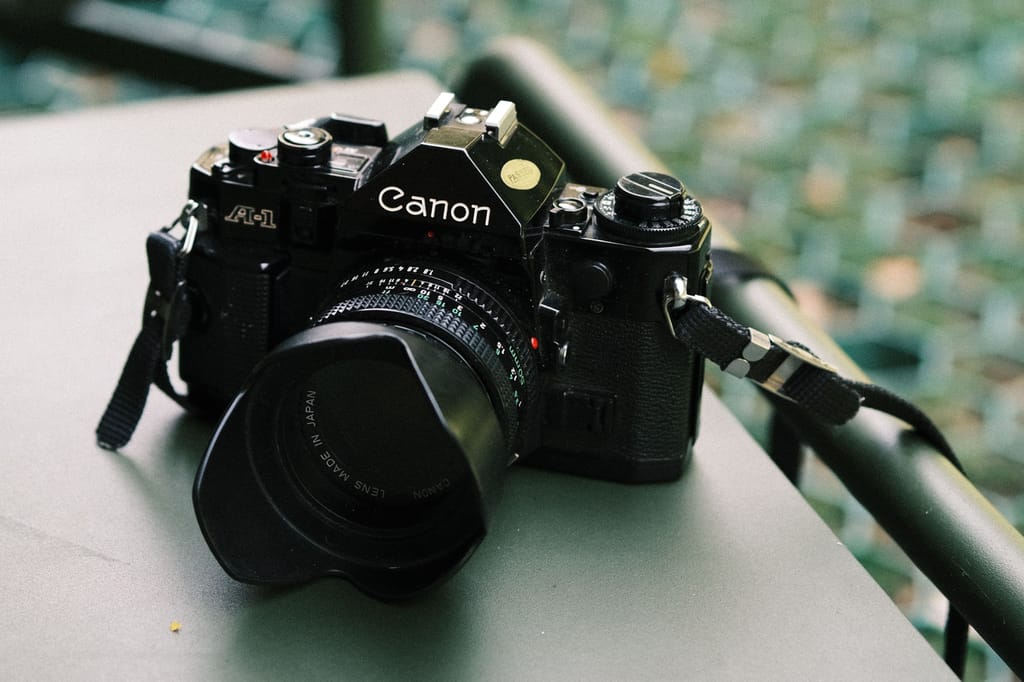
Modern cameras deliver instant results: tap the shutter, check the screen, edit, share, repeat. A 35mm film camera asks for something else entirely: load the roll, choose carefully, wait for development, and meet your images later. So why would anyone choose old film cameras from decades ago when today’s gear is faster in nearly every way? From our view at KEH, the answer is simple: easier isn’t always more enjoyable.
Film cameras are popular again because they offer a slower, more tactile creative process at a time when photography can feel instant and disposable. With film photography, every frame has a cost, every setting matters, and every finished roll feels like a small project rather than a stream of files. That shift is exactly why the vintage film camera resurgence is not just about aesthetics; it is about participation.
A vintage film SLR gives you a direct relationship with light, focus, aperture, and shutter speed. You do not need to be an expert to enjoy that, but you do need to pay attention. For many photographers, that attention is the fun part.
There is also the benefit of circularity. Pre-owned classic film cameras were built to keep working, and choosing KEH Certified™ gear helps extend their useful life. Instead of treating cameras as short-term gadgets, photographers are bringing well-made tools back into regular rotation.
The film cameras from the 70s and 80s sit in a sweet spot. Many are compact enough to carry all day, sturdy enough for regular shooting, and simple enough that you can understand what the camera is doing. They are not computers disguised as cameras; they are machines that invite you to learn by turning dials, reading light, and seeing what happens.
That is why 1970s film cameras and 1980s film cameras remain so useful for 35mm film photography. They often have bright optical viewfinders, straightforward controls, and access to large lens systems. A mechanical film camera can keep operating without relying heavily on electronics, while later electronic bodies may add convenience such as aperture priority, shutter priority, or program exposure.
For beginners, this era can feel approachable rather than intimidating. You can start with a beginner film camera, learn exposure one roll at a time, and grow into more advanced techniques without immediately outgrowing the body.
When people ask our KEH team for a practical starting point, three vintage SLR cameras for beginners come up again and again: the Pentax K1000, the Canon AE-1 Program, and the Nikon FM2. Each one represents a different reason people are drawn to film SLR cameras today: learning, ease, and long-term confidence.
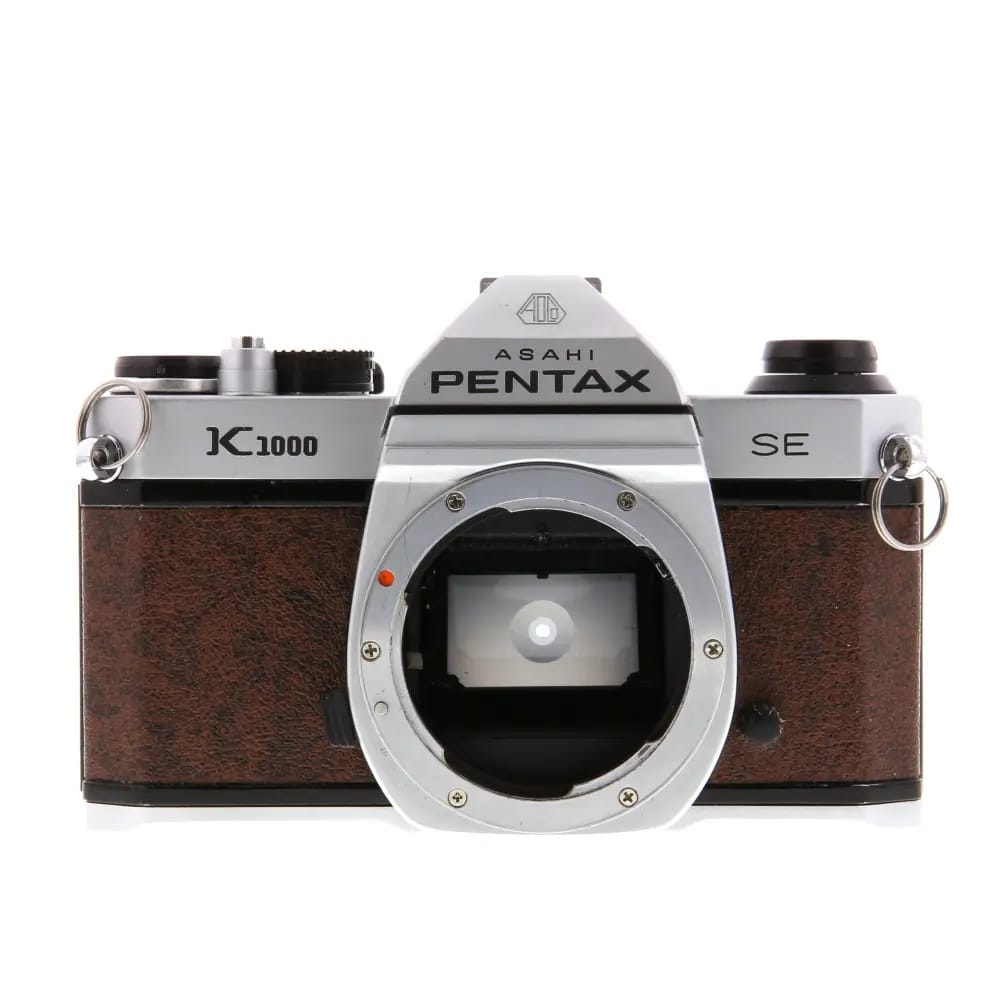
The Pentax K1000 is often recommended as the best film SLR for beginners because it keeps the learning process visible. It is a manual film camera with simple controls, a clear meter, and very little to distract you from exposure and composition. If you want to understand the relationship between aperture, shutter speed, ISO, and focus, this camera makes you do the work in a friendly way.
That does not mean it is only for students. Its appeal is that it stays useful after the basics click. Pair it with a normal Pentax K-mount lens, and you have a clean, dependable 35mm film camera for everyday walks, portraits, and travel.
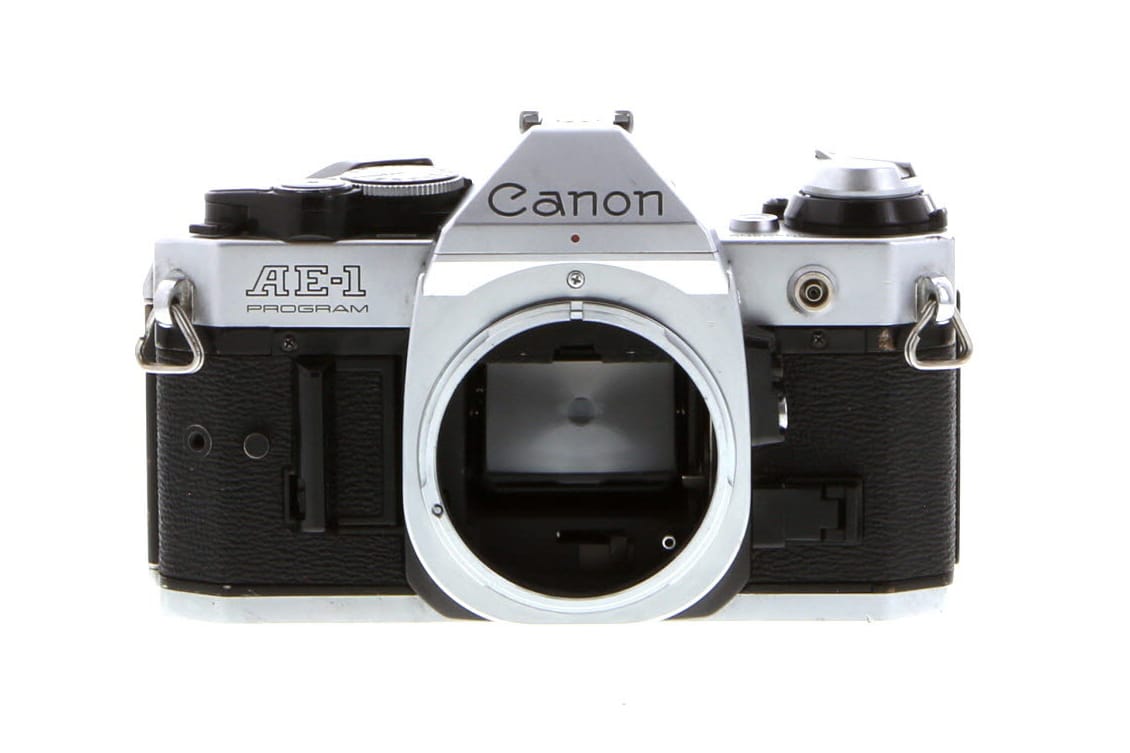
The Canon AE-1 Program is the camera for someone who wants film but also wants a little help getting started. Program mode can handle exposure while you focus on timing and composition, then you can move into manual control as your confidence grows. That makes it one of the most approachable answers for anyone searching for the best vintage film camera for beginners without wanting the whole experience to feel like homework.
It also gives access to Canon FD vintage camera lenses, which are a major reason the system remains popular. A simple 50mm lens is enough to begin, while wider and longer options let you shape the kit around portraits, street scenes, landscapes, or family photos.
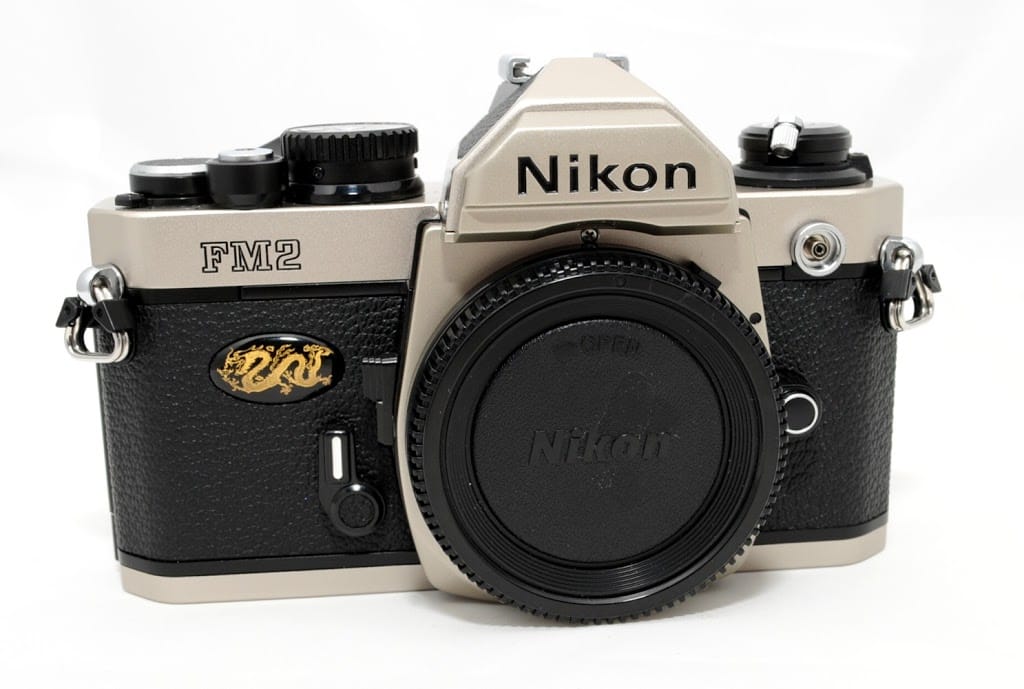
The Nikon FM2 tends to appeal to photographers who want a tougher, more advanced vintage film SLR. It is still hands-on and compact, but it feels like a camera you can grow with. For photographers who already enjoy analog photography or want a body with a reputation for durability, it makes a lot of sense.
The FM2 also benefits from the Nikon F-mount ecosystem. If lenses matter to you—and they should—this system offers room to build carefully over time. As KEH gear mentors, we often remind shoppers that the camera body starts the experience, but the lens system shapes where it can go.
Film is worth choosing when the process itself matters to you, not just the finished image. Digital is worth sticking with when speed, flexibility, and volume are central to the job. Most photographers do not need to pick one forever; many use both depending on the project.
A balanced way to think about it:
This is why the question is not really “film or digital?” It is “what kind of shooting experience do you want today?”
The best vintage film cameras are not always the rarest, prettiest, or most talked-about online. The right choice is the camera that fits your learning style, lens goals, repair expectations, and budget. If you are wondering how to choose a vintage film camera, start with function before personality.
Here is a practical checklist:
At KEH, condition grades are designed to make this easier. A Bargain-grade body can be a smart, affordable film camera if you are comfortable with visible wear, while Excellent or Excellent Plus may be better if you want a cleaner-looking piece of gear. KEH Certified™ items are inspected and graded, and eligible purchases include a 180-day warranty, which helps remove some of the guesswork that can come with pre-owned vintage film cameras.
Look for a camera that works reliably, has a lens system you can actually afford, and matches how much control you want while learning. The phrase what to look for in a vintage film camera covers more than whether the shutter fires. You are buying a tool that should make shooting feel inviting, not mysterious in a bad way.
Start with the shutter, meter, film advance, rewind mechanism, viewfinder, battery compartment, and lens mount. Check whether the light seals look fresh or degraded, and pay attention to notes about haze, fungus, scratches, or oil on aperture blades when choosing lenses. A vintage 35mm camera does not need to look flawless, but it should be described clearly.
This is where KEH’s pre-owned process is helpful. Because our team grades gear and calls out important condition notes, shoppers can compare old film cameras without pretending every listing is the same. And if you already own a camera that needs attention, KEH repair services can help you understand whether service is realistic.
A common beginner mistake is choosing a body first and thinking about lenses later. We get it—the camera is the fun part to hold. But vintage camera lenses determine how your images look, how much light you can gather, and how flexible your kit becomes.
For a first 35mm film camera, a 50mm lens is usually a practical starting point. It is compact, natural-looking, and useful for portraits, street photography, travel, and everyday scenes. After that, you might add a 28mm or 35mm lens for wider storytelling, or an 85mm to 135mm lens for portraits and details.
Lens availability also affects long-term cost. Pentax K-mount, Canon FD, and Nikon F-mount systems all have deep histories, but prices and conditions vary. KEH’s buy/sell/trade options can help you adjust your kit as your style changes instead of letting gear sit unused on a shelf.
The Pentax, Canon, and Nikon bodies above are strong starting points, but they are not the only classic film cameras worth your attention. The Olympus OM-1 is loved for its compact feel and bright viewfinder, which makes it appealing for travel and everyday carrying. The Minolta X-700 adds electronic convenience and program exposure, giving beginners a friendly path into manual control.
These models also show why “best 35mm film SLR” is not a one-size-fits-all answer. The best vintage film camera for beginners is the one that matches your patience, your hands, your lens preferences, and your appetite for automation.
Buying pre-owned film gear can feel intimidating because every camera has history. That is part of the charm, but it is also why trustworthy grading matters. At KEH, our goal is to make the search for affordable film cameras feel more like guided shopping and less like decoding a mystery listing.
KEH Certified™ gear is inspected, graded, and backed by a 180-day warranty on eligible grades. Our condition grades help distinguish cosmetic wear from functional concerns, and our team can help you consider whether a camera is a good fit for learning, collecting, or regular shooting. When you are ready to change directions, buy/sell/trade options, keep gear moving through a circularity-minded system.
That educational-first approach matters because film photography rewards confidence. You do not need to know everything before your first roll. You just need a camera that works, a lens that fits, and a little guidance from people who enjoy helping gear find its next photographer.
So, why are vintage film cameras popular? Because they make photography feel intentional again. They slow the process down, ask you to participate, and turn each roll into a small creative commitment.
If you are exploring a beginner film camera, a vintage 35mm camera, or a full analog photography kit, our KEH pros are here to help you sort through your options without the pressure. Browse KEH Certified™ pre-owned gear, compare condition grades, trade what you are not using, or talk with us about repair options. The point is not just to own a camera from another era—it is to put a capable tool back in your hands and make new work with it.
Keep your vintage cameras in peak condition with KEH Repairs.
Many are still genuinely capable photographic tools—if they’re in good working condition. The key is to focus on function (shutter, meter, film advance, seals) and to buy from a source that clearly describes the condition and can support you if service is needed.
There isn’t one universal “best.” A fully manual option like the Pentax K1000 is great if you want to learn exposure fundamentals hands-on. If you’d rather ease in with some automation, the Canon AE-1 Program can be a friendlier on-ramp while you build confidence.
Prices vary widely by model, condition, rarity, and current demand. A vintage film camera isn’t inherently expensive—and it’s smart to budget for the full experience (film, development, and a lens) rather than just the body.
It depends on the camera. Some bodies use batteries only for the light meter, while others need a battery to operate the shutter or exposure modes. Before you buy, confirm what powers the camera and whether the battery type is easy to find.
Check shutter operation, meter behavior, film advance and rewind, light seals, battery compartment condition, viewfinder clarity, and overall body function. If you’re buying a lens too, look for issues like haze, fungus, scratches, and stiff focus or aperture blades.
Often, yes—especially on mirrorless cameras—using the right mount adapter. Compatibility varies by lens mount and camera system, and some setups will be manual-focus and manual-aperture only, so it helps to confirm how the lens will operate before you commit.
It can have a learning curve, but it’s very learnable—and the constraints are part of what makes it rewarding. Starting with a camera that matches your comfort level (fully manual or with some automation) can make those early rolls feel a lot more enjoyable.