You
have no items in your shopping cart.
The Ultimate Film Gift Guide: Classic 35mm Cameras, Vintage Lenses, and Film Bundles
November 06, 2026
1 min read

Some gifts get opened and put away. A film camera is more likely to inspire a new hobby, a creative challenge, or a whole lot of photos worth keeping. Whether you’re shopping for someone who has been shooting film for years or introducing someone to their first roll, the right gear makes all the difference.
The good news? You don’t have to buy brand-new equipment to give a great photography gift. Classic 35mm cameras, vintage lenses, and film accessories offer plenty of ways to build a thoughtful kit without paying current retail prices. And with decades of camera systems to explore, there’s something for every kind of photographer and budget.
At KEH, we’ve been evaluating and keeping camera gear in circulation since 1979. Our KEH Certified™ pre-owned selection gives photographers access to classic equipment that’s been inspected and graded by people who know cameras inside and out. Here’s what to look for when shopping for the film photographer on your list.
The best photography gifts aren’t necessarily the most expensive or technically impressive. They’re the ones that fit how someone likes to shoot.
Before choosing a camera or lens, think about three things:
Not sure what they already own? Film, photography accessories, and gift cards are easy ways to give something useful without guessing at their setup.
Film photography doesn’t have to be an expensive hobby, but it’s worth looking beyond the camera’s price tag. A camera body might seem like a bargain until you realize it needs a separate lens, batteries, film, and developing.
Here are a few ways to approach your gift budget.
| Budget | What to Shop For | Gift Ideas |
| Under $150 | Film, accessories, and affordable film cameras | Rolls of film, camera straps, lens pouches, cleaning supplies, photography notebooks, and select entry-level SLR bodies |
| $150-$300 | Classic SLRs and entry-level camera kits | Canon AE-1, Pentax K1000, Minolta X-700, Nikon FE, and select camera-and-lens combinations |
| $300-$600 | Mid-tier SLRs and premium compact cameras | Nikon FE2, Nikon FM2N, higher-grade classic SLRs, and select premium point-and-shoots |
| $600+ | Professional and collectible film cameras | Nikon F3, Nikon F5, premium compact cameras, medium format systems, and Leica rangefinders |
These are planning ranges, not guaranteed package prices. Actual costs depend on the camera model, condition, included accessories, and availability. Some camera bodies in these ranges will need a separate lens, so account for that before purchasing.
Don’t forget the cost of shooting. Film photographers also need to pay for rolls of film, processing, and scanning. If you’re buying for someone new to film, leave room in the budget for their first few rolls and the cost of developing those images.
Browse KEH’s selection of pre-owned 35mm film cameras to compare available models and conditions.
A classic 35mm film camera is a gift that can keep someone shooting for years. The trick is choosing a model that matches how they want to work. Some cameras put every exposure decision in the photographer’s hands, while others offer automatic modes that make getting started easier.
Here are six classics worth knowing:
| Camera | Best For | Exposure Style | Lens Situation |
| Pentax K1000 | Photography beginners | Manual | Interchangeable K-mount lens; often sold body-only |
| Canon AE-1 Program | Beginners wanting flexibility | Program and Manual | Interchangeable FD lens; often sold body-only |
| Nikon FM2 | Experienced film shooters | Manual | Interchangeable F-mount lens; often sold body-only |
| Olympus OM-1 | Travel and everyday photography | Manual | Interchangeable OM lens; often sold body-only |
| Minolta X-700 | Learning photographers | Program, aperture-priority, and manual | Interchangeable MD lens; often sold body-only |
| Olympus Stylus | Casual shooters and beginners | Automatic | Fixed built-in lens |
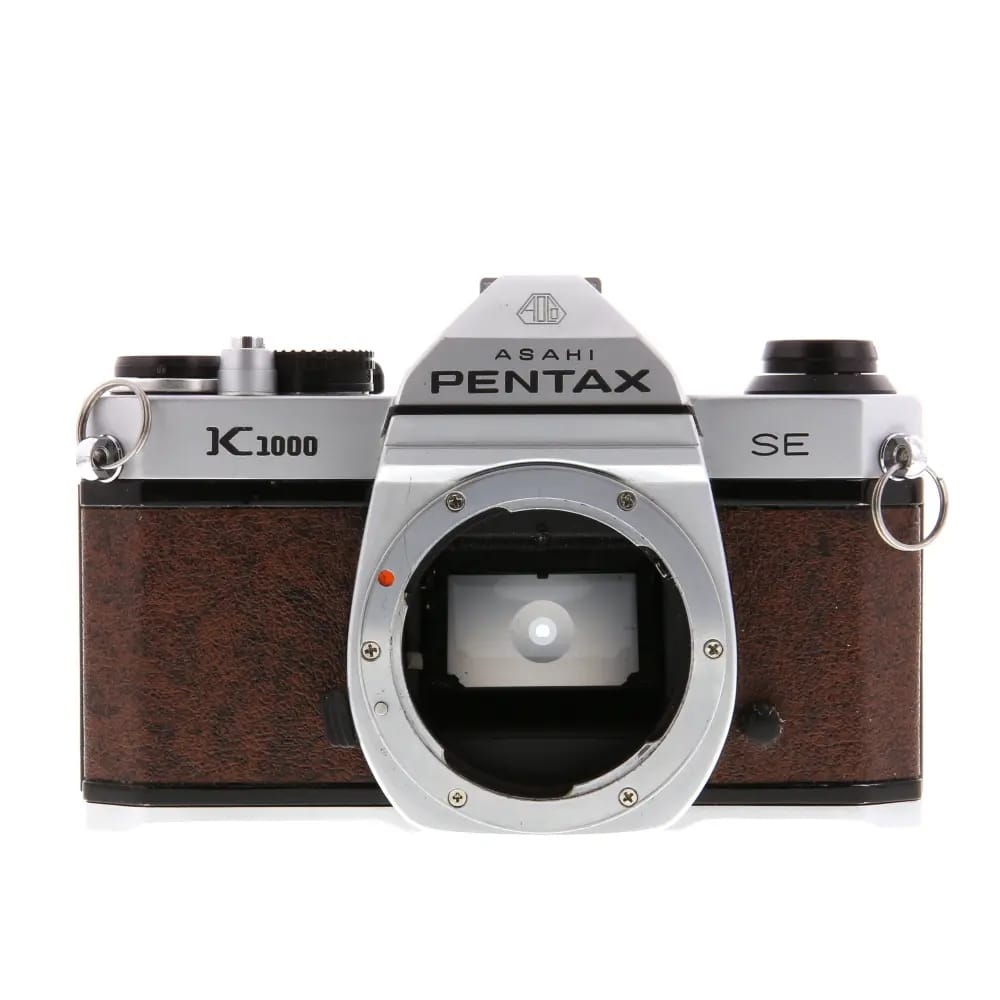
The Pentax K1000 has earned its reputation as one of the classic cameras for learning film photography. Its manual exposure controls make aperture, shutter speed, and focus part of the shooting experience, while the built-in light meter helps photographers understand how those settings work together.
It’s a particularly good gift for someone who wants to learn the fundamentals rather than let the camera make every decision.
Ownership details: The K1000 uses a battery to power its built-in light meter, but its mechanical shutter operates without one. That means the recipient can still shoot if the meter battery dies, although they’ll need an external meter or another way to determine exposure.
Lens situation: The K1000 is an interchangeable-lens camera, and body-only listings don’t include a lens. Pair it with a compatible Pentax K-mount 50mm prime lens.
What to pair it with: A compatible 50mm lens, a fresh meter battery, and a few rolls of ISO 400 film. This gives a new film photographer a practical starting setup.

The Canon AE-1 Program offers a little more flexibility than a fully manual camera. Its Program mode automatically selects aperture and shutter speed, while its manual mode gives photographers more control as their skills develop.
It uses Canon FD lenses, which makes building a compatible vintage kit relatively straightforward. Just remember that Canon FD and modern Canon RF or EF lenses aren’t interchangeable.
Ownership details: Unlike the mechanically operated K1000 and FM2, the AE-1 Program relies on battery power for its electronically controlled shutter and light meter. A working, compatible battery is essential to operating the camera.
Lens situation: The camera uses interchangeable Canon FD lenses. Many listings are body-only, so check the product listing before assuming a lens is included.
What to pair it with: A Canon FD 50mm f/1.8 lens, a compatible battery, and a few rolls of film. It’s a practical everyday focal length for portraits, street photography, and general shooting.
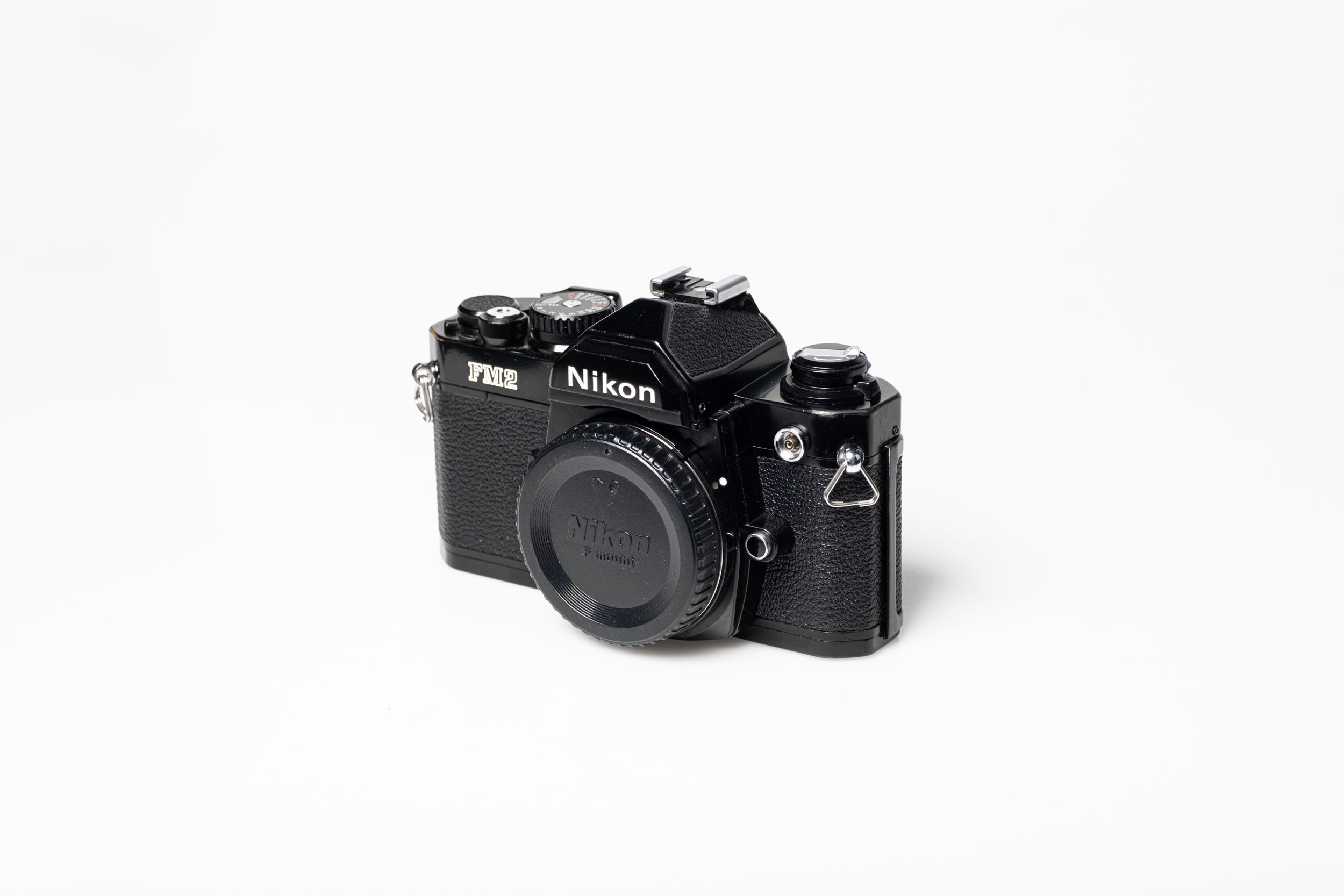
The Nikon FM2 is a dependable classic for photographers who prefer a hands-on shooting experience. Its mechanical shutter operates without batteries across its shutter-speed range, although the light meter requires battery power.
That mechanical design is part of its appeal. It’s a straightforward camera that puts the photographer in control and doesn’t need much convincing to get out and shoot.
Ownership details: The FM2 can continue shooting without a battery, but the built-in meter won’t function without one. This makes a compatible replacement battery an important addition to a gift kit.
Lens situation: The FM2 accepts compatible Nikon F-mount lenses. Pay attention to lens generation: older non-AI lenses can damage certain Nikon bodies unless properly modified. Verify compatibility before purchasing.
What to pair it with: A compatible Nikon F-mount 50mm prime lens, a meter battery, and a few rolls of film. This is a particularly good gift for someone who appreciates mechanical cameras and manual exposure.

The Olympus OM-1 offers the experience of a traditional SLR in a smaller, more compact body than many of its contemporaries. Its bright viewfinder and accessible manual controls make it a favorite among photographers who want a capable camera without carrying a bulky kit.
It’s a particularly thoughtful gift for someone who enjoys travel, everyday photography, or taking their camera along just because.
Ownership details: The original OM-1 has a mechanical shutter, so it can operate without a battery. Its built-in light meter, however, requires battery power. The original camera was designed for a mercury battery that is no longer commonly available. A compatible modern replacement or voltage-adapting solution may be necessary, so check the meter’s functionality and battery setup before purchasing.
Lens situation: The OM-1 uses interchangeable Olympus OM-mount lenses. A body-only listing won’t include the lens needed to take photographs.
What to pair it with: An Olympus OM Zuiko 50mm f/1.8 lens and a compatible meter battery. This classic combination makes a versatile everyday kit.
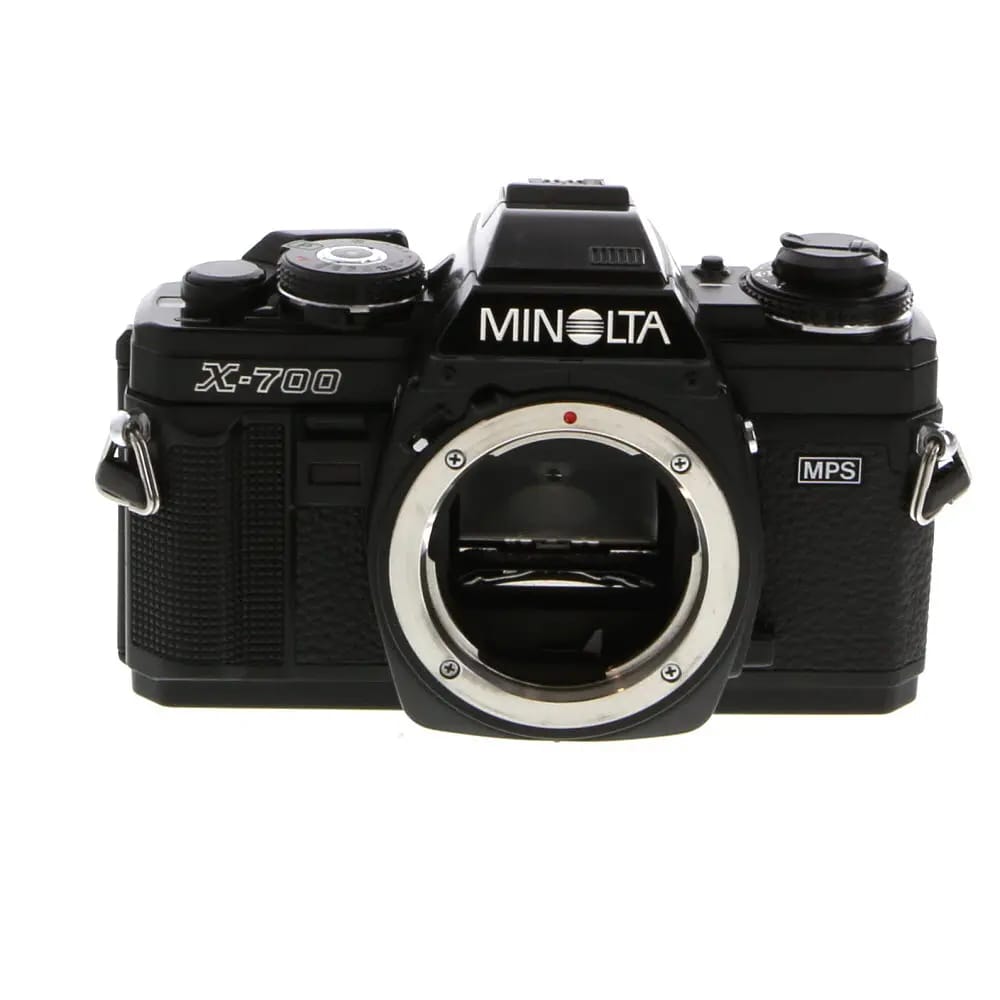
The Minolta X-700 is a great option for someone who wants room to grow. Its Program, aperture-priority, and manual exposure modes let photographers choose how much control they want over each shot.
It’s approachable enough for someone learning the fundamentals but capable enough to remain useful as their photography develops.
Ownership details: The X-700 is an electronically controlled camera, meaning it needs battery power for its shutter and light meter to operate. Make sure the gift includes the correct batteries or that the recipient knows which ones to purchase.
Lens situation: The camera uses Minolta MD and compatible SR-mount lenses. Many listings are body-only, so a lens needs to be purchased separately.
What to pair it with: A Minolta MD 50mm f/1.7 lens, compatible batteries, and a few rolls of ISO 400 film.

Not everyone wants to adjust aperture and shutter speed before taking a picture. For someone who simply enjoys capturing everyday moments, an Olympus Stylus point-and-shoot is an excellent alternative to a manual SLR.
These compact cameras are easy to carry, quick to use, and well suited to travel, street photography, and casual snapshots. The trade-off is less manual control, but that’s exactly what makes them appealing.
Ownership details: The Stylus uses batteries to power its electronic functions, including autofocus, shutter operation, flash, and film transport. A working battery is essential. Because the camera is more electronically dependent than a mechanical SLR, check that all major functions are working properly.
Lens situation: Unlike the SLRs above, the Stylus has a fixed built-in lens. There’s no additional lens purchase necessary.
What to pair it with: A compatible replacement battery, a few rolls of film, and a developing and scanning gift card. It’s one of the easiest ways to introduce someone to film photography without requiring them to learn a new system.
For someone who already owns a film camera, a vintage lens can be an especially thoughtful gift. Different focal lengths and maximum apertures change how a photographer approaches a scene, making a new lens an opportunity to experiment without replacing an entire camera setup.
Before buying, find out exactly which camera system the recipient uses. Canon FD, Nikon F, Pentax K, Minolta SR, and Olympus OM are different mounts. A lens that fits one system won’t automatically fit another.
If you’re unfamiliar with lenses, focal length is a good place to start. It determines how much of a scene the lens captures and how close or far away subjects appear in the frame.
Focal length isn’t the only consideration. A lens’s maximum aperture determines how much light it can gather and how much control photographers have over depth of field.
For example, a 50mm f/1.4 lens can open wider than a 50mm f/1.8, making it useful in lower-light conditions and when photographers want a shallower depth of field.
Faster lenses can make particularly exciting gifts for photographers who enjoy shooting portraits, indoor scenes, or available-light photography.
Explore KEH’s selection of pre-owned lenses to find vintage glass across a variety of camera systems.
Vintage glass isn’t limited to film photography. Many photographers adapt older manual-focus lenses to modern mirrorless camera systems, opening up decades of classic optics for digital shooting.
However, there are a few trade-offs:
Learn more about adapting vintage lenses to digital bodies with this guide.
Condition matters just as much as the lens itself. Normal cosmetic wear doesn’t necessarily affect performance, but certain optical and mechanical issues can.
Pay attention to:
A lens with character is one thing. A lens with problems is another.
Sometimes the best gift isn’t a single piece of equipment. It’s a complete kit that gets someone out shooting without needing to make another trip to the store.
When building a film photography bundle, think beyond the camera itself. A recipient needs a way to expose their film, load it into the camera, and eventually get those photographs developed and scanned.
Here are three ways to put together a film photography gift.
Introduce someone to film photography with a setup that makes getting started easy.
Why it works: A point-and-shoot removes much of the technical learning curve. The recipient can load a roll, frame a photograph, and start shooting without worrying about interchangeable lenses or manual exposure settings.
Before gifting, confirm that the camera’s autofocus, flash, shutter, and film transport are functioning. Also check whether the camera comes with a working battery.
For the photographer who wants to understand exposure and take a more hands-on approach, build a simple SLR kit.
Why it works: One camera, one lens, and enough film to practice will go much further than a box full of accessories they might never use. Just remember that different camera bodies have different power requirements. A mechanical camera like the K1000 can shoot without a battery, while the AE-1 Program requires one to operate its shutter.
If the recipient is new to interchangeable-lens cameras, make sure the lens is included and compatible before wrapping the gift.
Shopping for an experienced film photographer? Skip the beginner kit and give them something that adds to their existing setup.
Why it works: Experienced photographers usually have specific preferences, from the lenses they use to the film stocks they love. A compatible vintage lens or a selection of film gives them something new to experiment with without duplicating equipment they already own.
If you’re unsure which lens or accessory they need, a KEH gift card lets them choose the right addition to their kit.
Vintage camera gear has history. That’s part of the appeal, but it also means the individual camera matters more than the model name.
Two cameras that look identical can have very different mechanical histories. Shutters can become inaccurate, light seals can deteriorate, and meters can stop functioning properly over time.
When shopping for a pre-owned film camera, here’s what deserves attention:
| What to Check | Why It Matters |
| Shutter operation | Shutter speeds need to function consistently. |
| Film advance and rewind | Both are essential to loading and shooting a roll. |
| Light seals | Deteriorated seals can cause unwanted light leaks. |
| Light meter | An inaccurate meter can lead to inconsistent exposures. |
| Battery requirements | Some cameras need batteries for metering, while others require them for shutter operation and other electronic functions. |
| Lens inclusion | Body-only listings don’t include the lens needed to take photographs. |
| Lens optics | Haze, fungus, and separation can affect image quality. |
| Included accessories | Straps, caps, cases, and batteries aren’t always included. |
It’s also worth checking whether the camera’s meter has been tested and whether it requires a specialty battery or adapter. Older film cameras don’t all operate the same way, and a camera that looks ready to shoot might need a little additional equipment.
This is where buying from an experienced camera retailer makes a difference.
At KEH, our KEH Certified™ pre-owned gear is inspected and graded, giving shoppers more information about the equipment they’re considering. Instead of taking a chance on an unknown camera’s history, you can shop with the confidence that comes from decades of experience evaluating photography equipment.
Pre-owned also opens up a much wider selection of classic gear. You can find discontinued camera bodies, vintage lenses, and accessories that aren’t available new, often at a more accessible price than their modern counterparts.
It’s a smarter way to build a photography kit, keep great equipment in circulation, and give someone a gift with plenty of life left in it.
Not every photography gift needs to be a camera or lens. Sometimes the most useful additions are the small things that make shooting easier.
For everyday shooting
For learning film photography
For protecting their gear
For completing the experience
And if you’re still unsure, don’t underestimate the usefulness of a gift card. Experienced photographers tend to know exactly what they want next.
A great photography gift doesn’t have to be the newest camera or the most expensive lens. Sometimes it’s a classic 35mm SLR that introduces someone to manual photography, a vintage lens that changes how they see a scene, or a few rolls of film that get them out the door.
The best gift is one they’ll actually use. That means choosing equipment that fits their experience level, checking what comes in the box, and accounting for everything they’ll need to take their first photographs.
Explore KEH’s selection of KEH Certified™ pre-owned film cameras, vintage lenses, and photography accessories to find something they’ll be excited to unwrap.
A working 35mm point-and-shoot paired with a few rolls of ISO 400 color negative film is a simple introduction to film photography. For someone interested in learning manual exposure, a camera like the Pentax K1000 or Canon AE-1 Program makes a great starting point. Just make sure the camera includes a compatible lens when needed and has the correct batteries.
It depends on the type of camera and whether you’re purchasing a complete setup. Film, accessories, and some entry-level camera bodies can fit into a smaller budget, while complete SLR kits and premium point-and-shoots typically require a larger investment. Remember to account for a lens, batteries, film, and developing costs rather than budgeting for the camera body alone.
Some do, but it depends on the model. Mechanical cameras like the Pentax K1000 and Nikon FM2 can operate their shutters without batteries, although their built-in light meters require power. Electronic cameras like the Canon AE-1 Program and Minolta X-700 require batteries for shutter operation. Always check the specific model’s requirements before purchasing.
Not necessarily. Many SLR cameras are sold as body-only, meaning the recipient will need a compatible interchangeable lens before they can take photographs. Point-and-shoot cameras like the Olympus Stylus have a fixed built-in lens. Always check the product listing to see exactly what’s included.
At a minimum, you’ll need a working camera, a compatible lens if the camera uses interchangeable lenses, the correct batteries if required, and a roll of film. After shooting, the film needs to be developed. Most beginners will also want their images scanned so they can view and share their photographs digitally.
A point-and-shoot typically automates focusing and exposure, making it easier to use without adjusting settings. An SLR gives photographers more direct control over focus, aperture, and shutter speed, depending on the camera model. Both offer great ways to shoot film, but they suit different preferences.
Many classic film cameras were built to last, but age and maintenance history matter. Shutter accuracy, light seals, film transport, and light meter function should all be considered before buying. Shopping inspected and graded KEH Certified™ pre-owned equipment helps take some of the guesswork out of choosing vintage gear.
It depends on what the recipient already owns. If they’re new to film, a complete camera and lens setup is the more practical choice. If they already have a compatible camera system, a vintage lens can expand their creative options. Always confirm mount compatibility before purchasing.
Look for something that complements their existing setup. A compatible vintage prime lens, a selection of film stocks, a handheld light meter, or a camera bag can all make thoughtful gifts. When in doubt, a gift card gives them the freedom to choose.